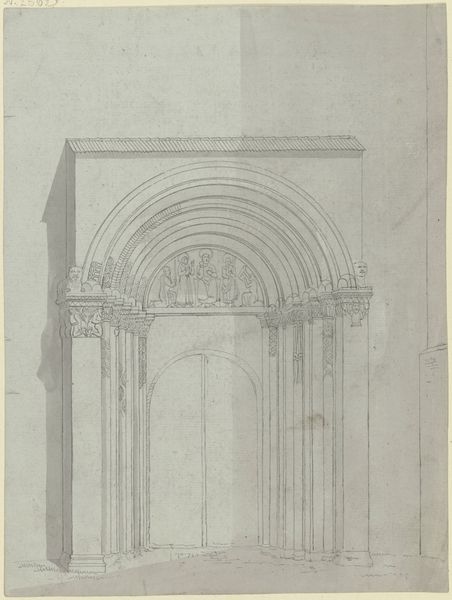
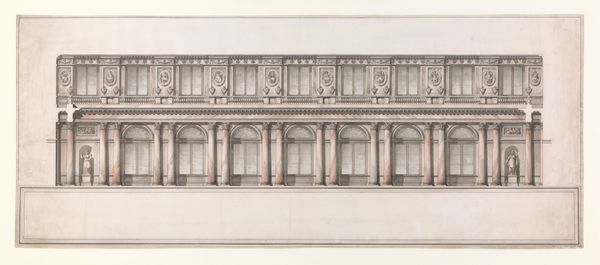
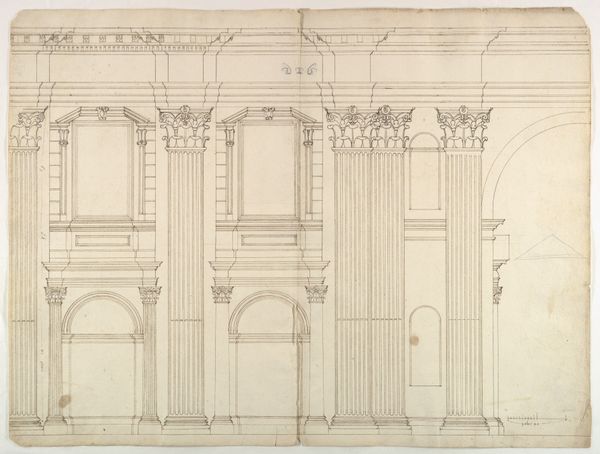
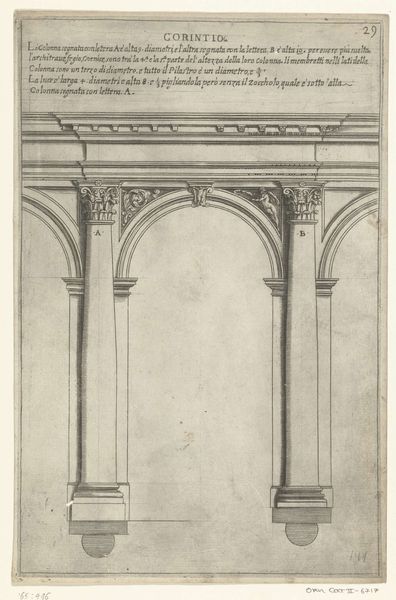
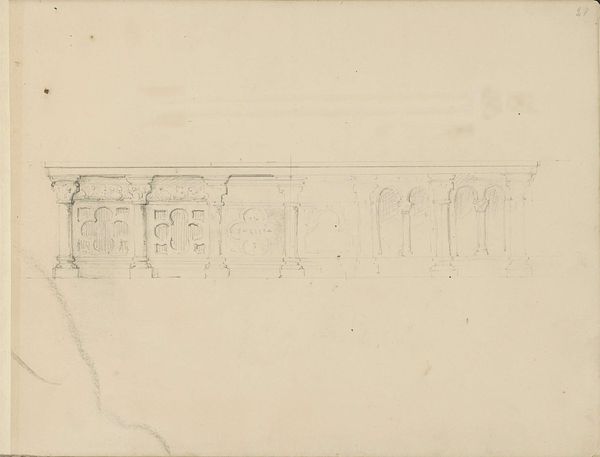
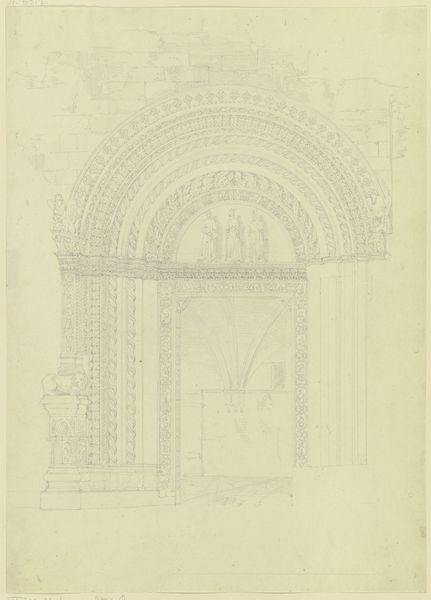
Fotoreproductie van een tekening van zuilen in de kloostergang van Sint-Jan van Lateranen 1860 - 1880

Dimensions: height 180 mm, width 267 mm, height 315 mm, width 478 mm
Copyright: Rijks Museum: Open Domain
Curator: The starkness of this architectural study is what gets me first. Editor: I see that too; there’s an almost ghostly quality to it. It evokes a sense of timelessness but also hints at the decay that time brings. This gelatin silver print, "Fotoreproductie van een tekening van zuilen in de kloostergang van Sint-Jan van Lateranen," attributed to Jean Pierre Emanuel Lampué, was made sometime between 1860 and 1880. The location is in Rome: St. John Lateran. Curator: The architectural elements depicted here -- specifically the columns -- become almost sculptural. And you can tell how they sought to render that specific three-dimensional form. The contrast of light and shadow highlights the inherent play with perspective. Editor: Absolutely. Considering the socio-political environment of 19th-century Europe, the fascination with historical sites and architectural grandeur can be viewed as a form of cultural legitimization and perhaps an imperialistic gaze upon what was considered the cradle of Western civilization. Rome represented both the height of power and the center of Catholicism, a complicated dual message. Curator: Good point! This photograph serves as more than a simple documentation of the architecture. It embodies the romantic allure that Rome held during this era. We see photography just beginning to transform how architectural details were disseminated— influencing both artistic practices and historical documentation. Editor: And the repetitive patterns evoke feelings of order, even power, in its original architectural context. We also need to note who gets to be represented and celebrated throughout history. This could be the kind of photo selected for the archive versus say, architectural documentation of laborers homes during industrialization. Curator: That’s definitely a dimension to consider as we analyze the motivations of what kind of imagery we create, select, preserve, and exhibit, for various reasons. The formal qualities meet political considerations; these buildings were meant to project stability, permanence, power. Editor: Right. It's about unpacking those layers of intent, consciously or unconsciously embedded within the artwork. The fact that it survived lets us investigate all that in retrospect. Curator: Indeed. Thank you for sharing your perspective. Editor: Likewise! The historical echoes are always worth examining.
Comments
No comments
Be the first to comment and join the conversation on the ultimate creative platform.
 React
React Comment