About this artwork
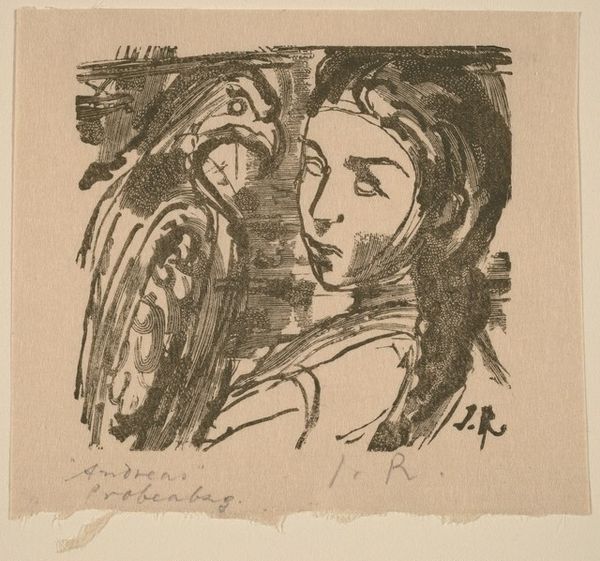
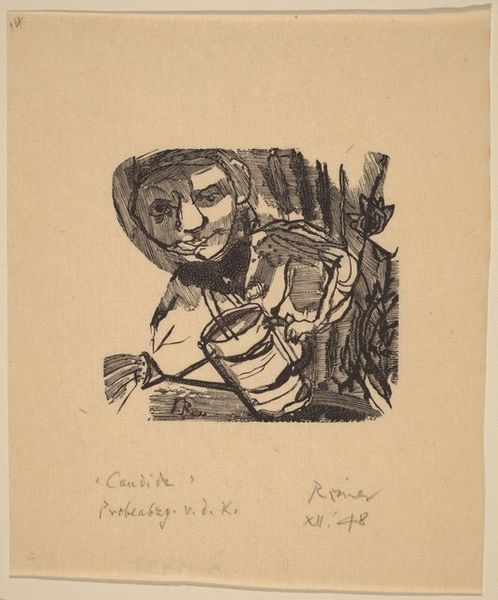
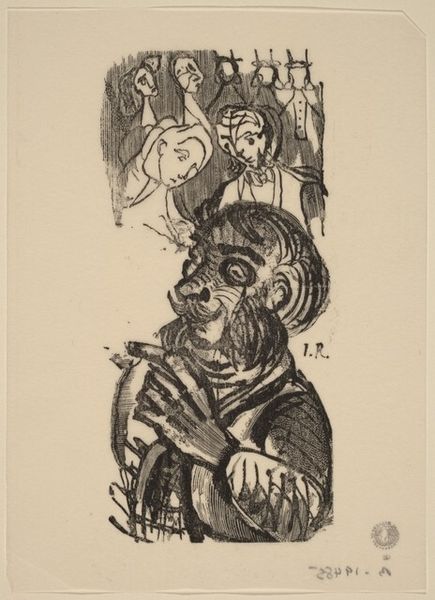
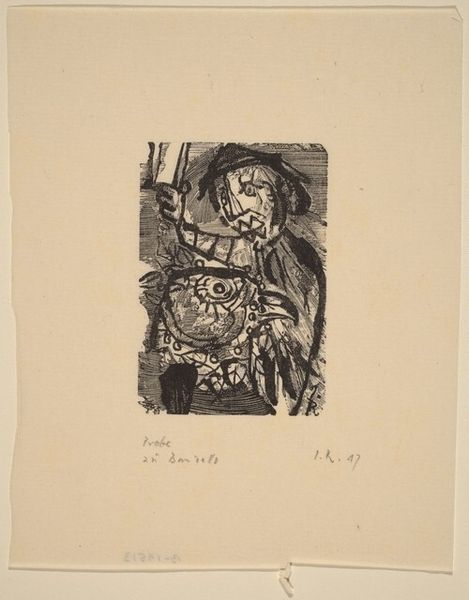
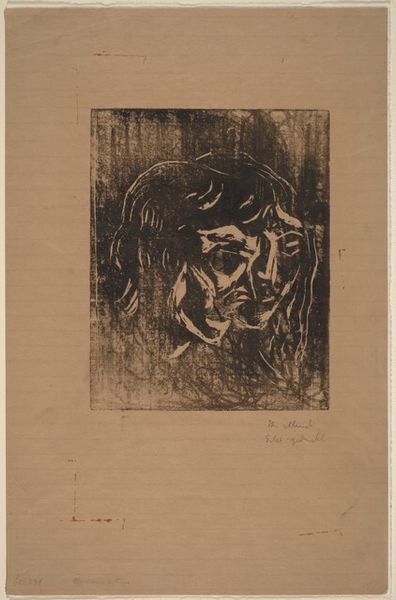
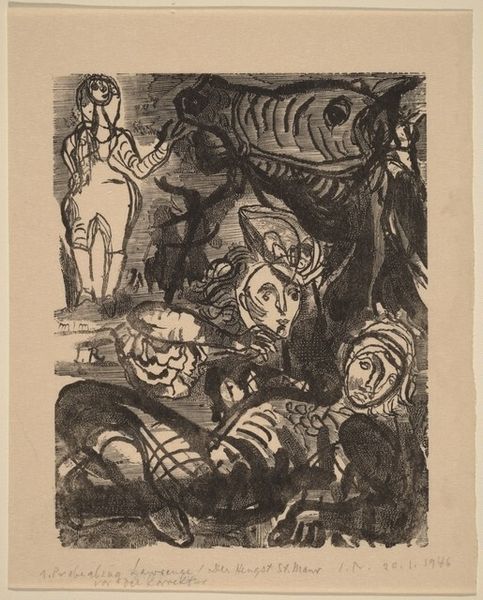
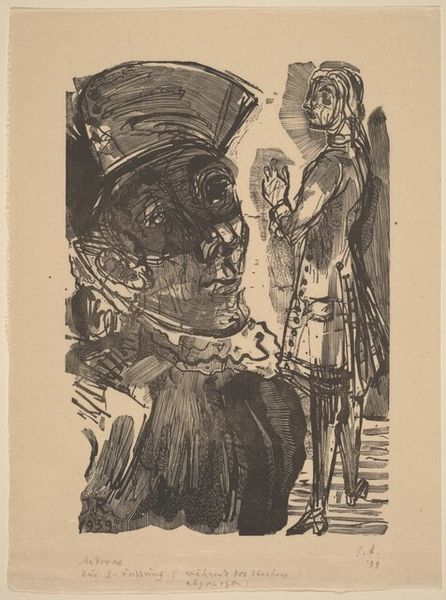
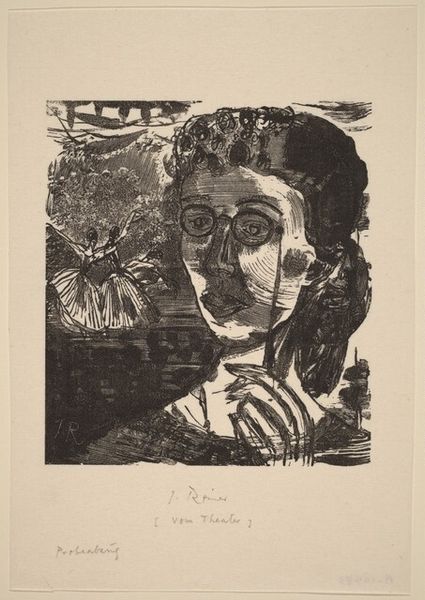
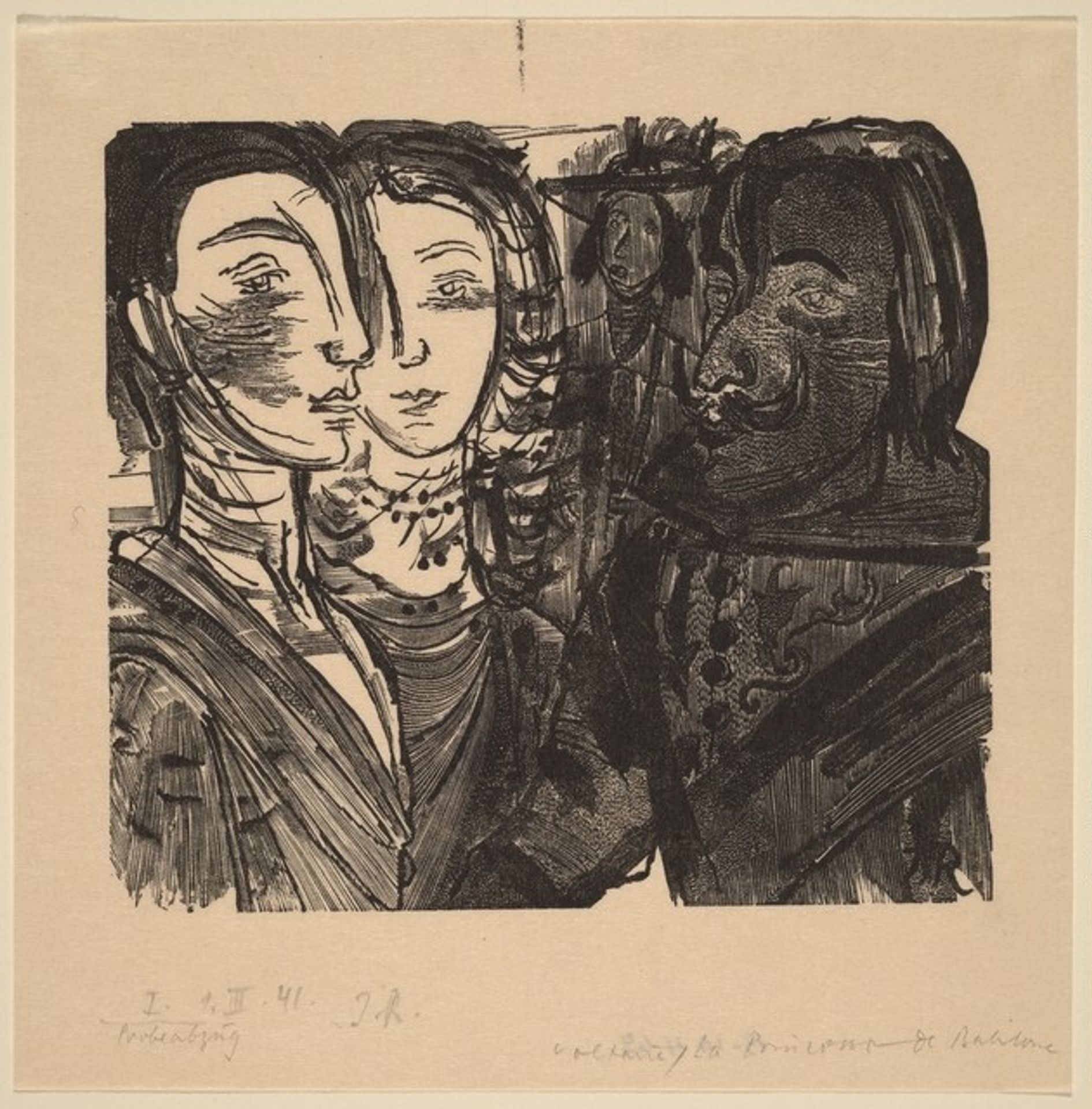
Imre Reiner created this illustration to Voltaire's "La Princesse de Babilone" using graphic techniques that feel both precise and spontaneous. There is a real sense of process. The stark contrast and linear quality of the print immediately grab you. Notice how Reiner uses hatching and cross-hatching to build up shadows, defining the figures with bold, expressive lines. Take, for instance, the face on the left. See how those deeply etched lines not only describe form, but also seem to convey a sense of character, almost a ruggedness. That dense, almost aggressive mark-making gives the print a tactile quality, like you could feel the pressure of the tool on the plate. This reminds me of the work of Picasso, particularly his graphic work, but with a darker, more brooding energy. Ultimately, it invites us to revel in the beauty of imperfection, where meaning is not fixed, but emerges through the very act of looking.
Illustration to Voltaire, "La Princesse de Babilone"
1941


Artwork details
- Medium
- drawing, graphic-art, print, ink
- Copyright
- National Gallery of Art: CC0 1.0
Tags
portrait
drawing
graphic-art
ink drawing
figuration
ink
portrait drawing
history-painting
Comments
Be the first to share your thoughts about this work.
About this artwork
Imre Reiner created this illustration to Voltaire's "La Princesse de Babilone" using graphic techniques that feel both precise and spontaneous. There is a real sense of process. The stark contrast and linear quality of the print immediately grab you. Notice how Reiner uses hatching and cross-hatching to build up shadows, defining the figures with bold, expressive lines. Take, for instance, the face on the left. See how those deeply etched lines not only describe form, but also seem to convey a sense of character, almost a ruggedness. That dense, almost aggressive mark-making gives the print a tactile quality, like you could feel the pressure of the tool on the plate. This reminds me of the work of Picasso, particularly his graphic work, but with a darker, more brooding energy. Ultimately, it invites us to revel in the beauty of imperfection, where meaning is not fixed, but emerges through the very act of looking.
Comments
Be the first to share your thoughts about this work.