1890
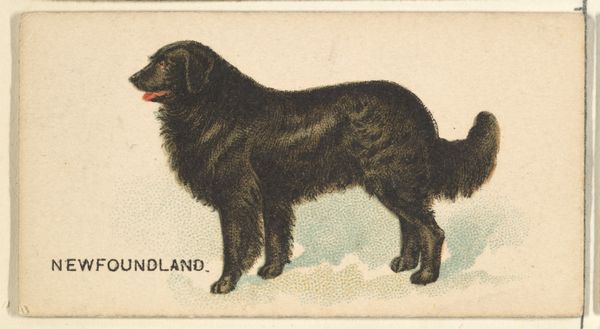
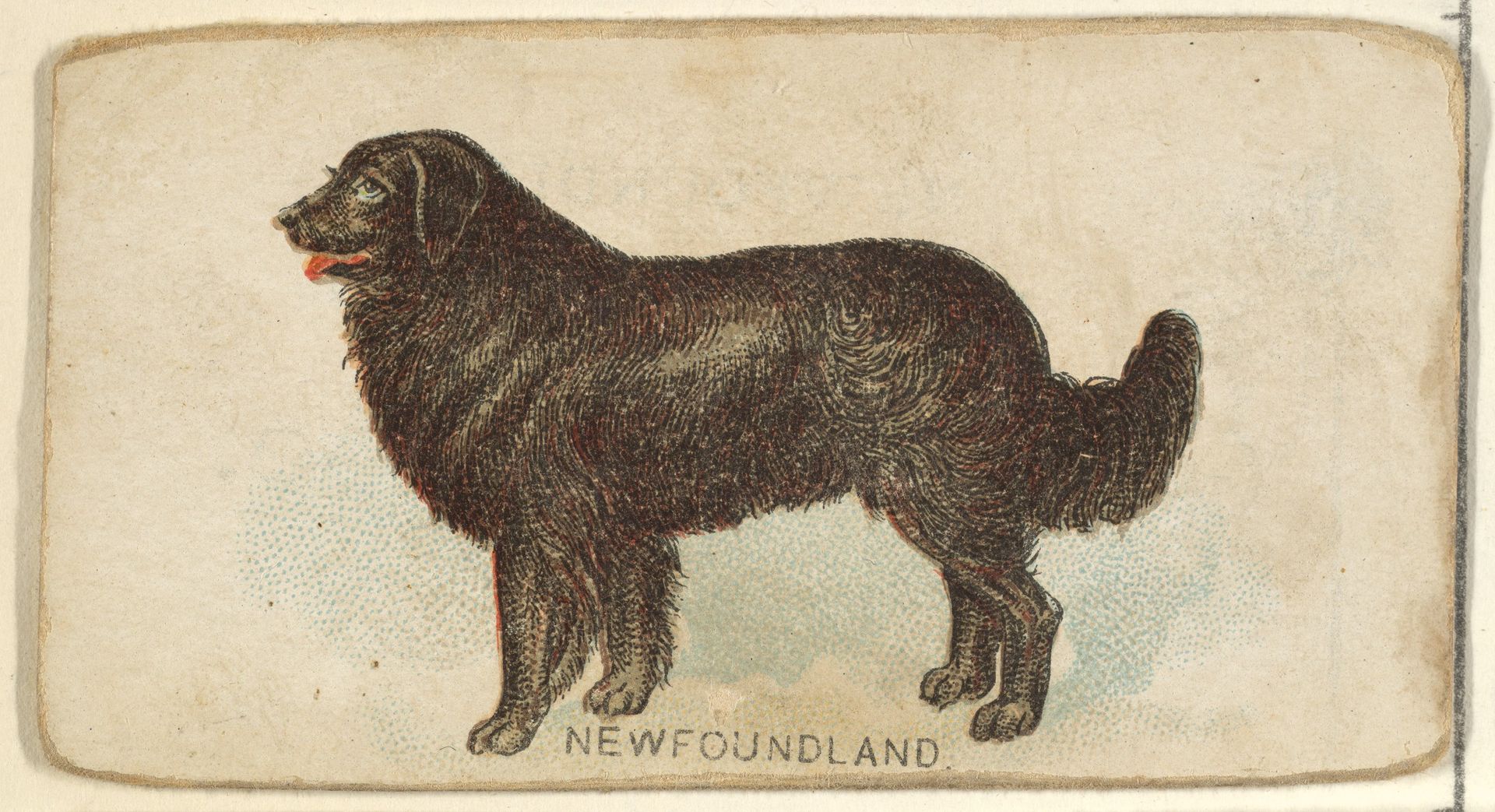
Newfoundland, from the Dogs of the World series for Old Judge Cigarettes


Listen to curator's interpretation
Curatorial notes
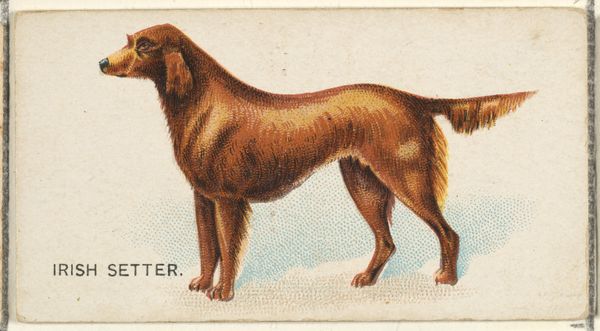
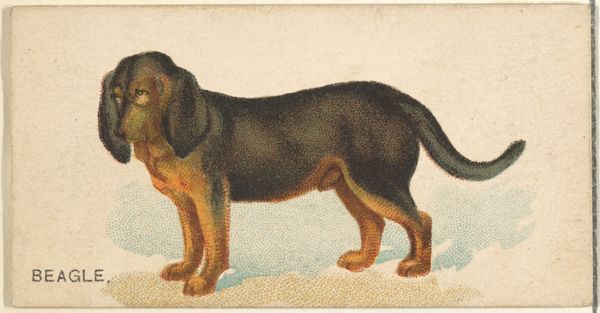
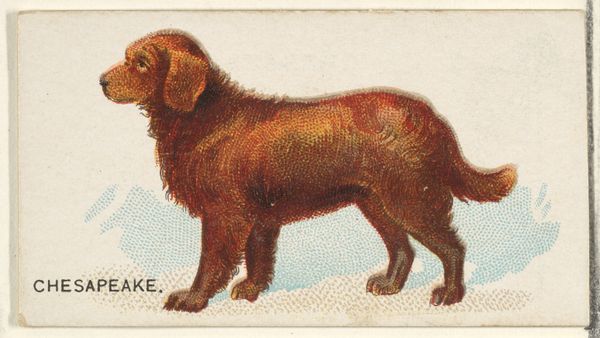
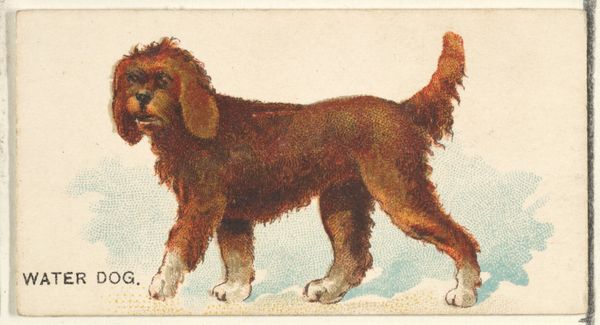
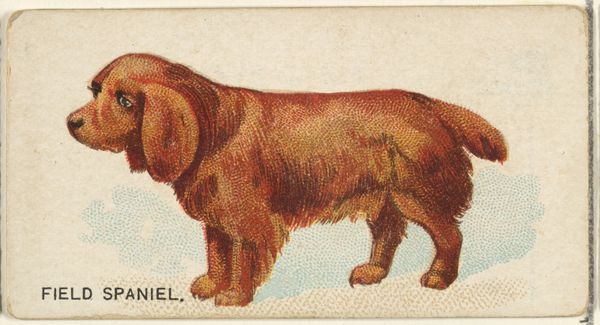
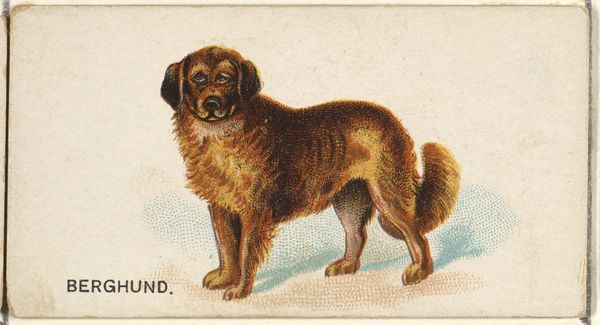
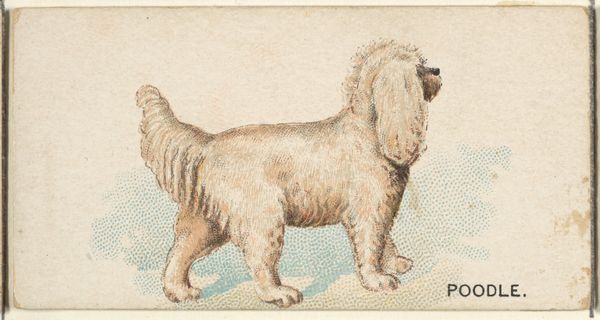
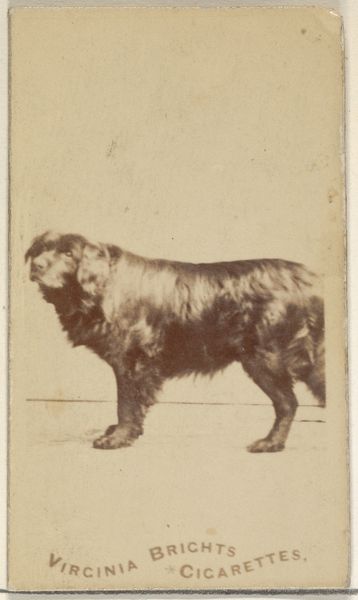
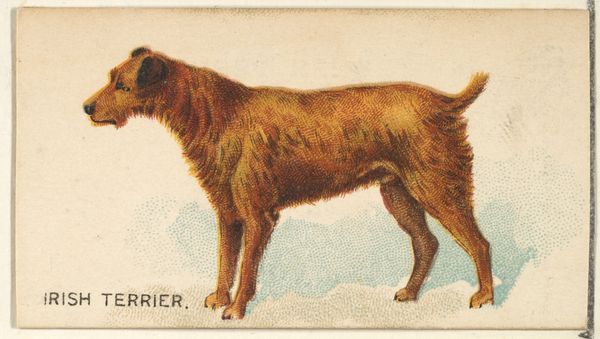
Editor: This is "Newfoundland, from the Dogs of the World series for Old Judge Cigarettes," a coloured-pencil drawing printed around 1890. It's a straightforward depiction of a Newfoundland dog, but it’s also a little unsettling in its simplicity. What strikes you about this piece? Curator: I see a seemingly benign image, yet embedded within it are complex layers of cultural and historical context that can't be ignored. This was produced for a cigarette company; the link between marketing, desire, and even colonialism leaps out. Consider the history of dogs and humans in relationship to power. Where do you see the Newfoundland situated in this legacy? Editor: That's an angle I hadn't considered! The dog seems presented almost as a commodity, fitting the capitalist mindset. Curator: Precisely. Moreover, consider the title: "Dogs of the World." What world is being represented, and who is doing the representing? Think about the power dynamics at play when categorizing and commodifying animals, especially during a time of intense imperial expansion. It pushes me to think of critical race studies, animal studies, and visual culture theory together. Editor: So, it’s not just a simple drawing of a dog; it’s about the values and the historical context reflected through the drawing. Curator: Exactly. Images like these participated in constructing a world-view, shaping perceptions of animals and place within very specific historical power structures. These trading cards both create and reflect existing social narratives of class, value, and domination. Editor: This has definitely given me a new perspective on everyday images! Curator: It’s a good reminder to critically analyze everything we see and question its cultural role.