About this artwork
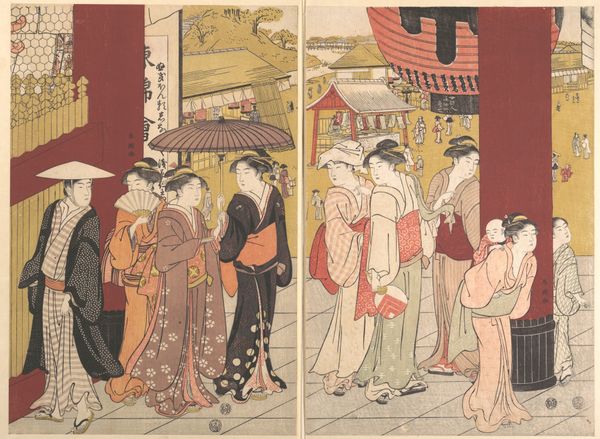
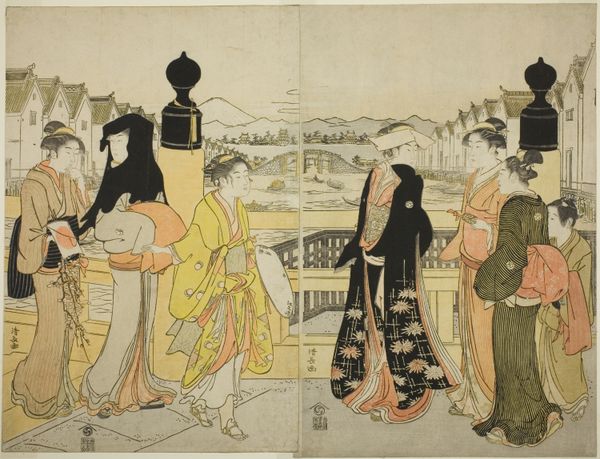
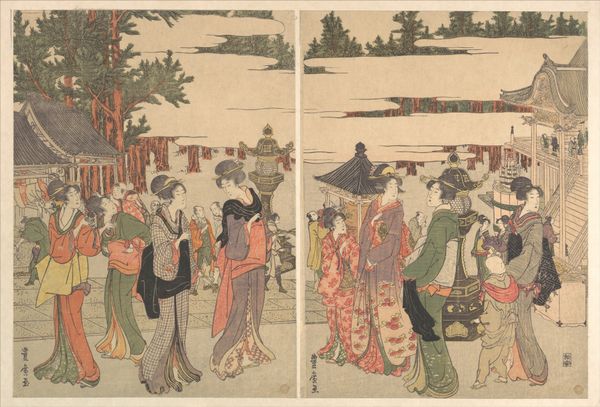
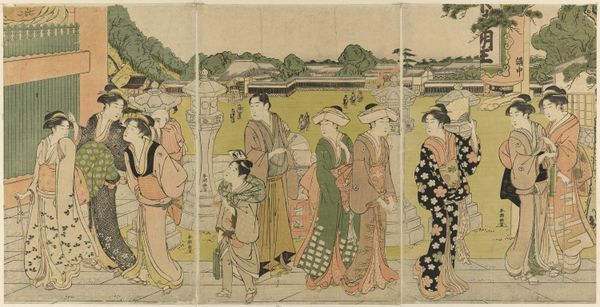
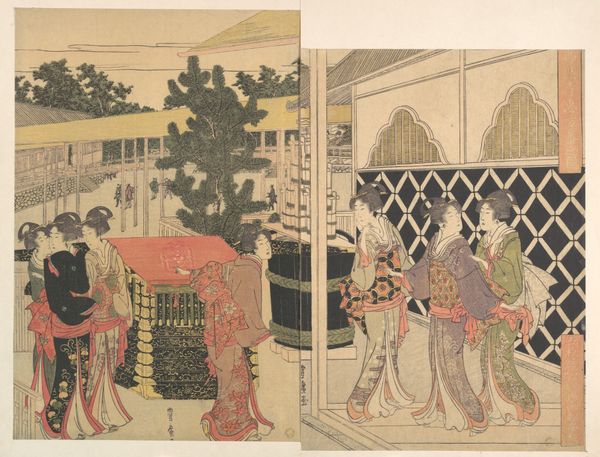
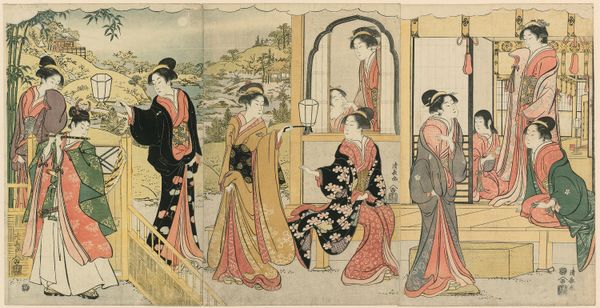
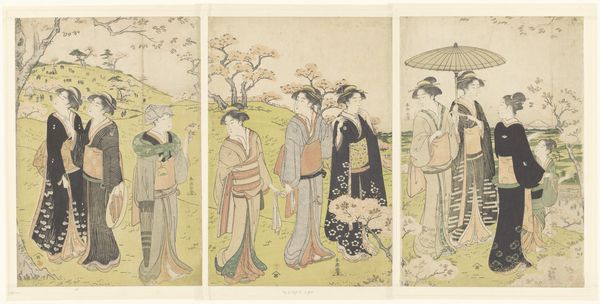
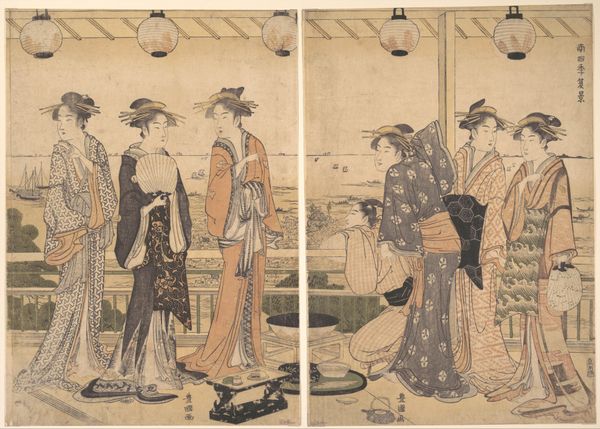
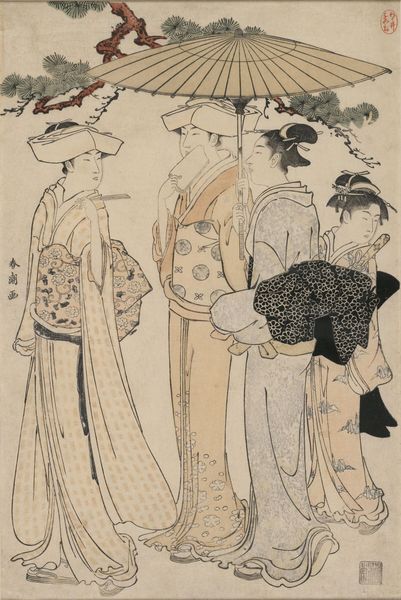
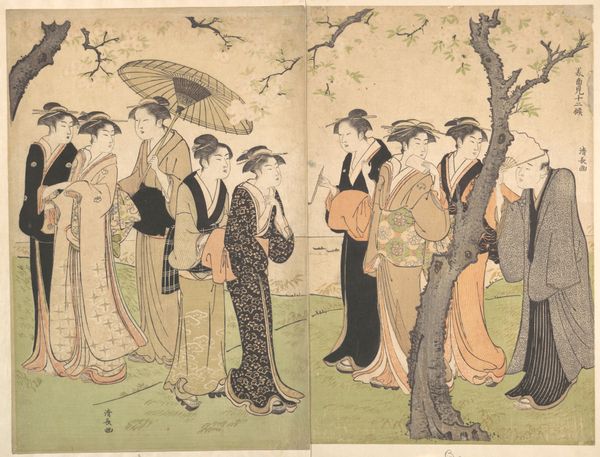
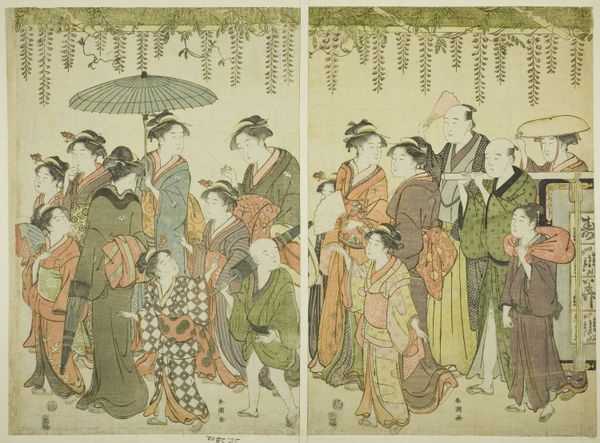
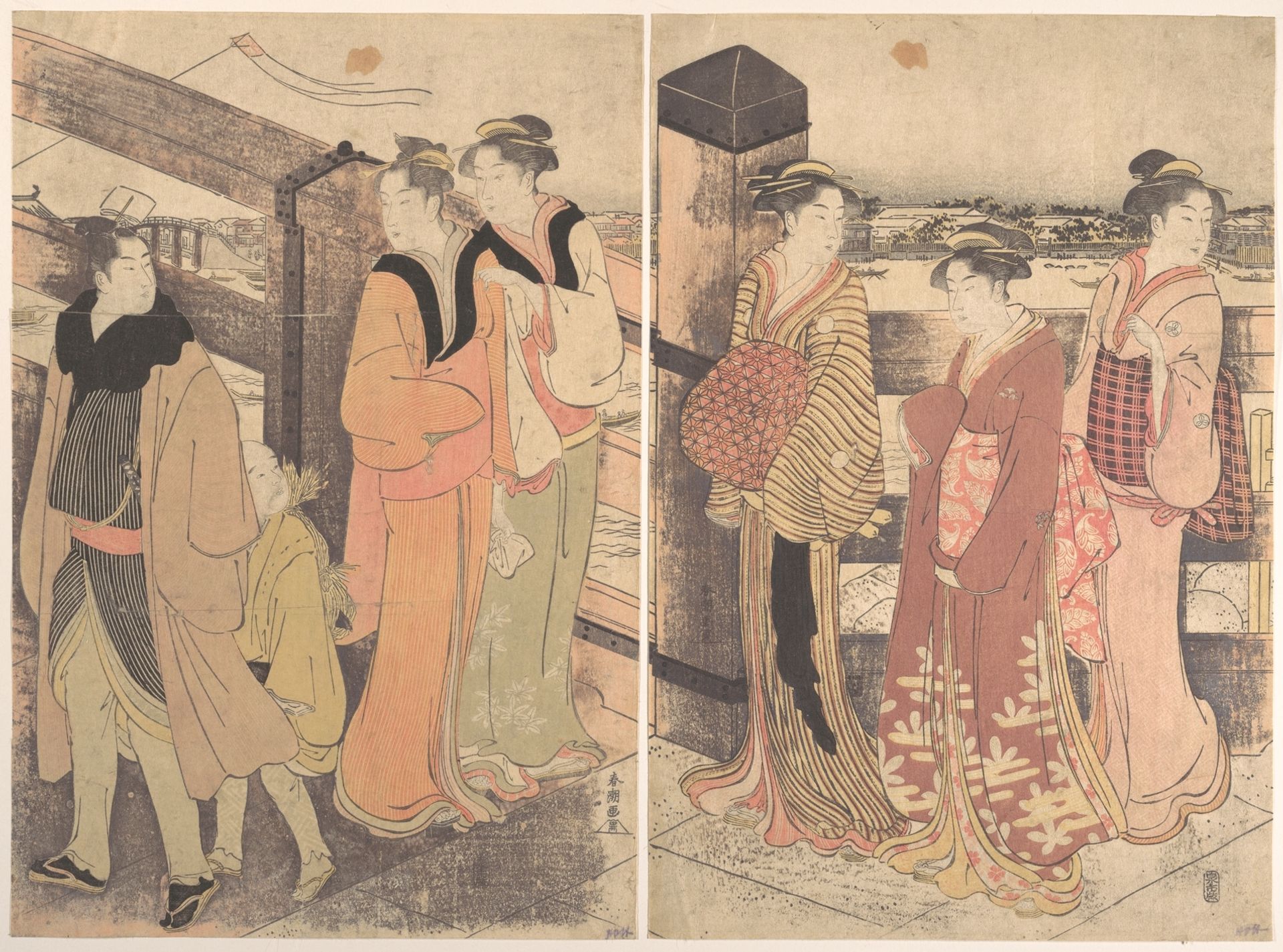
This diptych was made by Katsukawa Shunchō using woodblock printing, a process known as *ukiyo-e*, or “pictures of the floating world.” The *ukiyo-e* tradition involved a division of labor: the artist created the original design, which was then meticulously carved into woodblocks by specialist artisans. Separate blocks were required for each color, and these were printed in sequence to create the final image. The flat planes of color, sharp lines, and stylized forms are all characteristic of this medium, so different from painting. The materiality of the woodblock itself also contributes to the overall aesthetic. Notice the subtle grain patterns and slight imperfections, which add a sense of texture and depth to the image. These prints were made for mass consumption, and sold at relatively low prices. *Ukiyo-e* became popular because the woodblock technique allowed for images to be reproduced quickly and efficiently, fulfilling a growing demand from an increasingly literate and urban population. They weren't considered "high art" at the time; instead, they were affordable commodities circulated in a rapidly expanding economy. By understanding the materials, making, and context of *ukiyo-e*, we can fully appreciate its significance, and challenge traditional distinctions between art and craft.
A Group of Women, One Man and a Boy on a Bridge
1780 - 1795


Artwork details
- Medium
- print, woodblock-print
- Dimensions
- Image (each): 14 7/16 × 9 3/4 in. (36.7 × 24.8 cm)
- Location
- Metropolitan Museum of Art, New York, NY
- Copyright
- Public Domain
Tags
portrait
asian-art
ukiyo-e
boy
japan
historical fashion
woodblock-print
men
cityscape
genre-painting
Comments
Be the first to share your thoughts about this work.
About this artwork
This diptych was made by Katsukawa Shunchō using woodblock printing, a process known as *ukiyo-e*, or “pictures of the floating world.” The *ukiyo-e* tradition involved a division of labor: the artist created the original design, which was then meticulously carved into woodblocks by specialist artisans. Separate blocks were required for each color, and these were printed in sequence to create the final image. The flat planes of color, sharp lines, and stylized forms are all characteristic of this medium, so different from painting. The materiality of the woodblock itself also contributes to the overall aesthetic. Notice the subtle grain patterns and slight imperfections, which add a sense of texture and depth to the image. These prints were made for mass consumption, and sold at relatively low prices. *Ukiyo-e* became popular because the woodblock technique allowed for images to be reproduced quickly and efficiently, fulfilling a growing demand from an increasingly literate and urban population. They weren't considered "high art" at the time; instead, they were affordable commodities circulated in a rapidly expanding economy. By understanding the materials, making, and context of *ukiyo-e*, we can fully appreciate its significance, and challenge traditional distinctions between art and craft.
Comments
Be the first to share your thoughts about this work.