
Curatorial notes
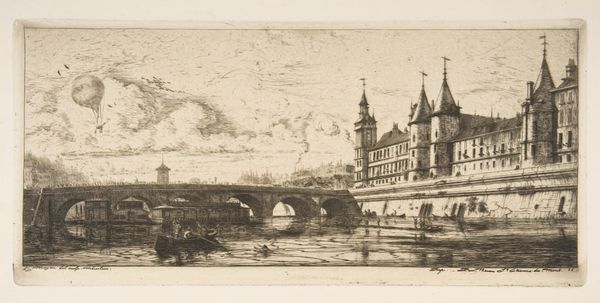
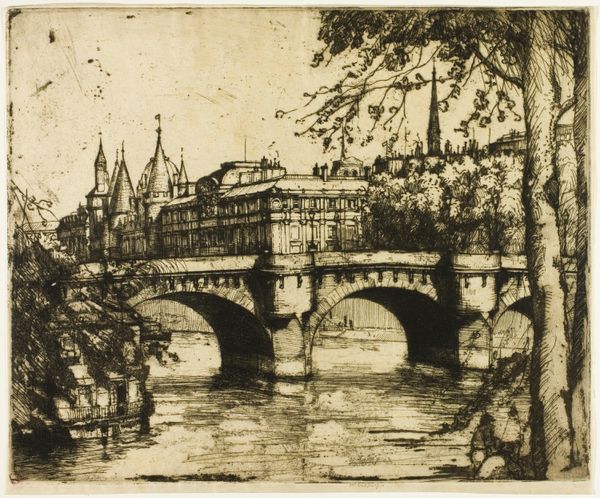
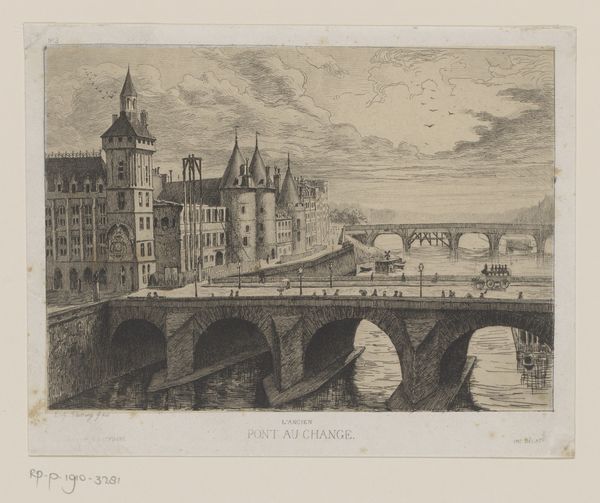
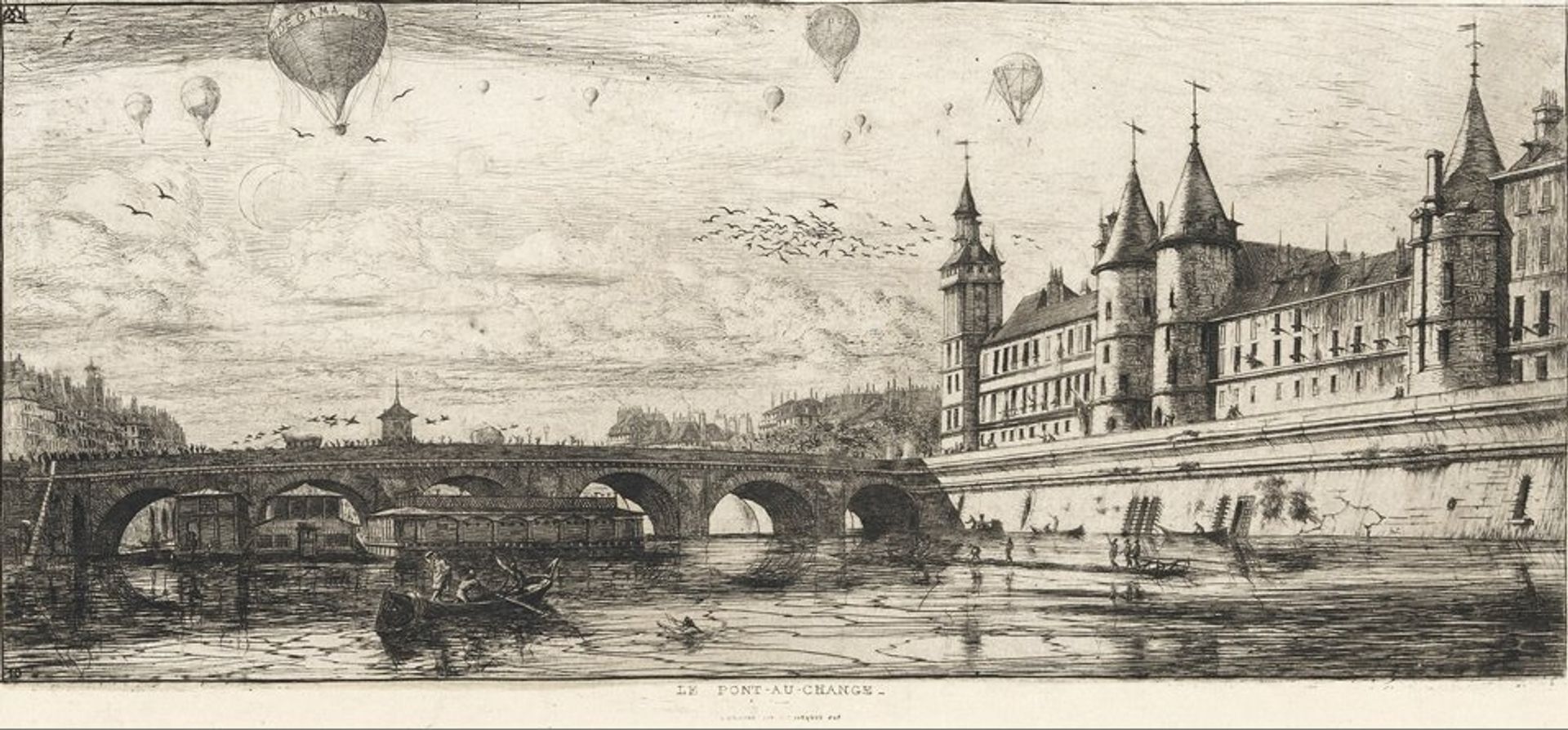
Editor: So, this is Charles Meryon's "Le Pont-au-Change," an etching from 1854. The detail is incredible, but there's also something… almost unsettling about the composition. What strikes you most about this work? Curator: The balloons are pretty prominent in the etching, wouldn't you agree? Their inclusion transforms a rather typical cityscape into a deliberate commentary on the socio-political atmosphere of mid-19th century Paris. What message are these balloons trying to say about Parisian aspirations and anxieties in the midst of urban transformation? Editor: Anxieties? It looks celebratory at first glance. Like a festival in the sky! Curator: True, but consider the historical context. This was a period of immense upheaval in Paris, with Haussmann's renovations radically reshaping the city. Meryon wasn’t simply documenting the changes; he was offering a critical perspective. Perhaps the balloons, symbols of progress and modernity, are also fleeting and transient, a critique of the rapid modernization that displaced many Parisians and erased familiar landmarks. What do you know about the history of photography during the renovation of Paris? Editor: Photography emerged around the same period... Would this type of etching represent a type of documentational and artistic expression that would soon be changed? Curator: Absolutely! So, is this depiction of architectural splendor a lament for a lost Paris, or an embrace of a new one? Is the sky filled with balloons, or perhaps with harbingers of change? The answers, as with all great art, remain ambiguous and open to interpretation. Editor: That’s a really fascinating way to look at it. I initially saw the balloons as purely decorative, but the context you’ve provided makes them seem so much more complex. It goes beyond just recording a scene. Curator: Precisely. Meryon uses a seemingly simple cityscape to engage in a wider conversation about progress, memory, and the changing face of Paris. This deeper awareness now makes us question whose city we're actually viewing through art.