1897
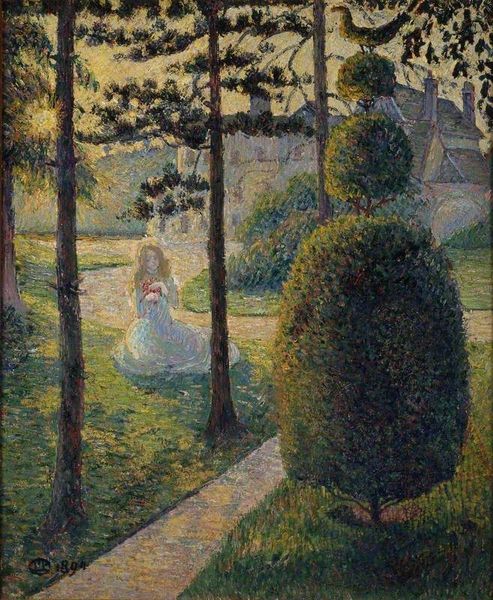
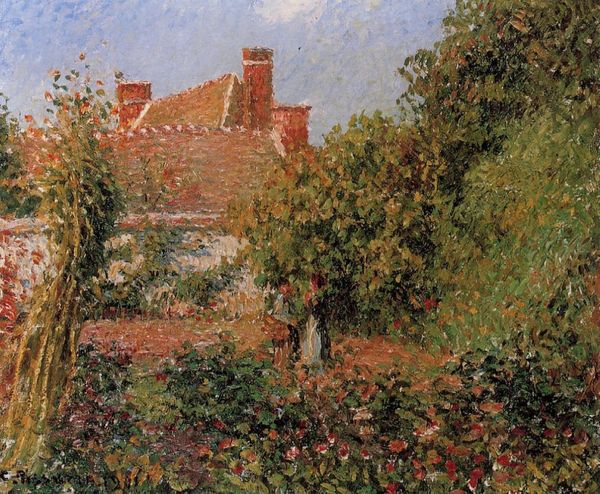
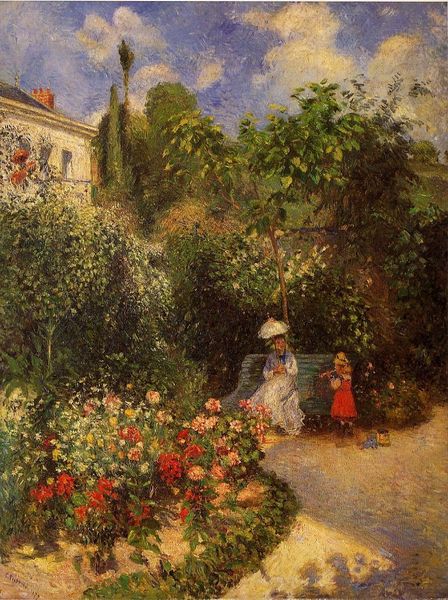
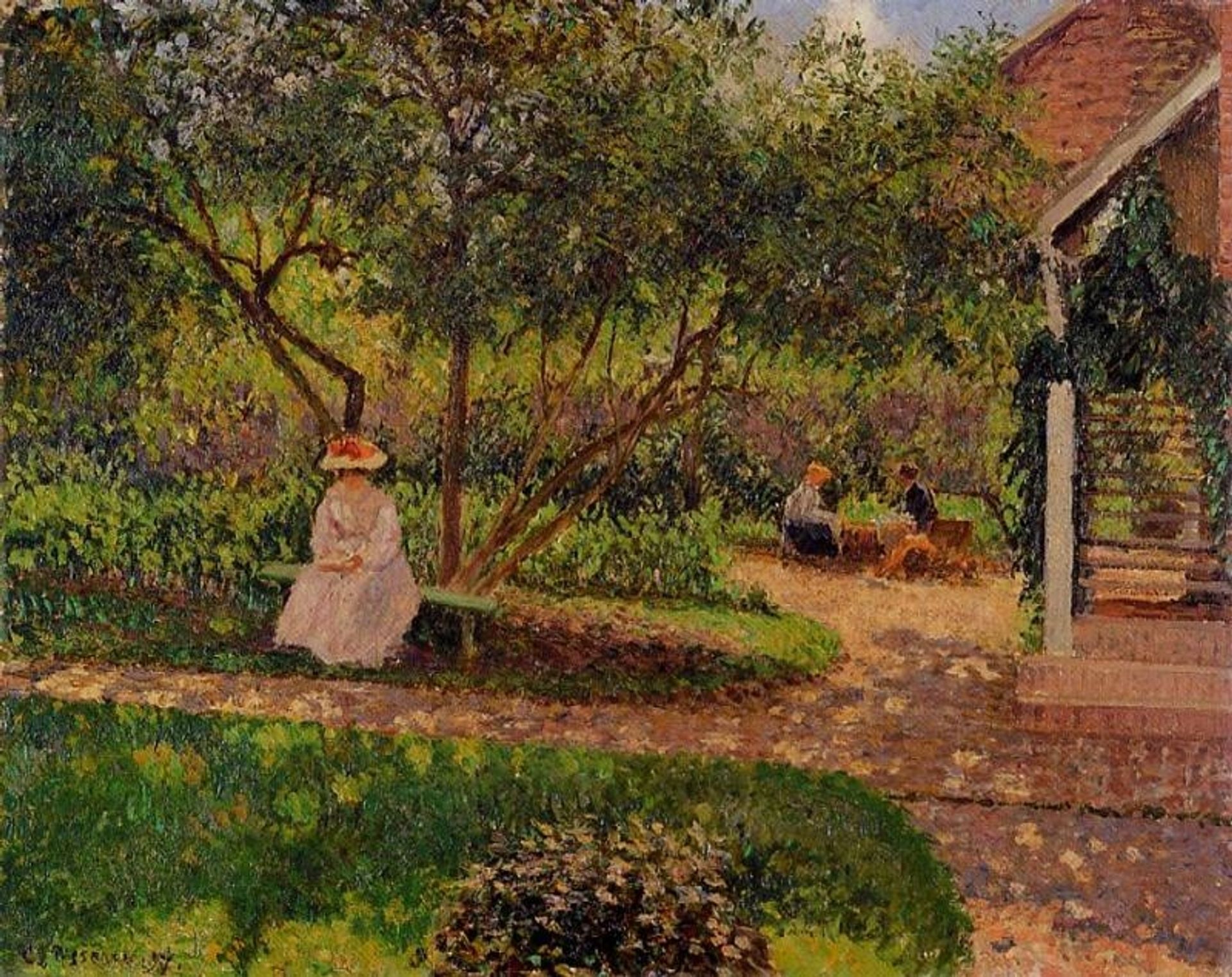
Corner of the Garden in Eragny

Camille Pissarro
1830 - 1903Location
Ordrupgaard, Copenhagen, DenmarkListen to curator's interpretation
Curatorial notes
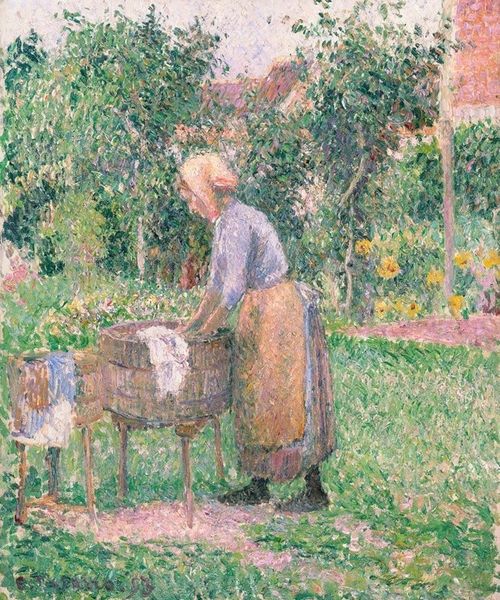
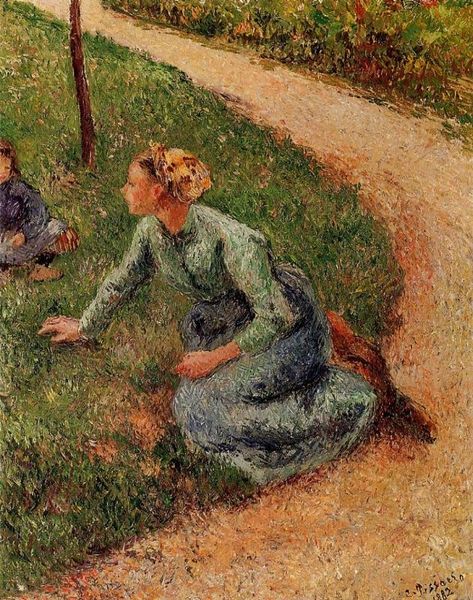
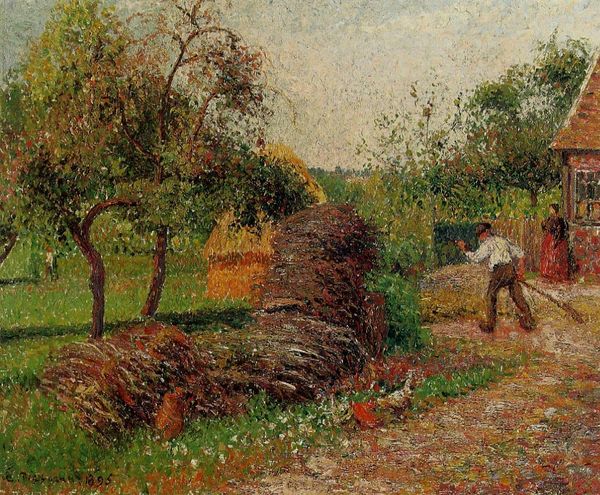
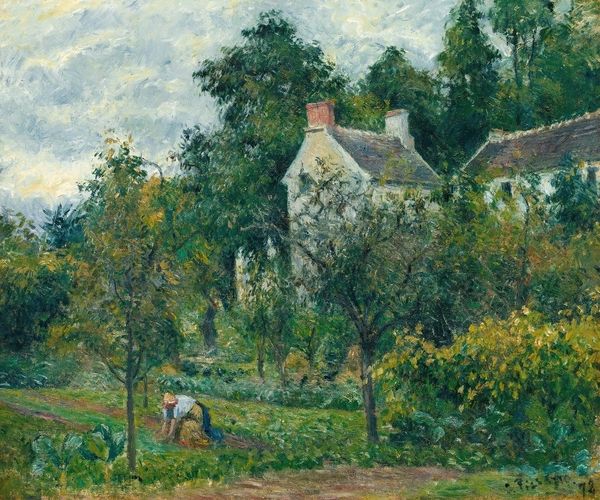
Camille Pissarro painted this garden scene in Eragny using oil on canvas, materials that have been commercially available since the early 19th century. The beauty of this painting lies in Pissarro’s application of the paint. Look closely, and you will see he has dabbed the surface with a multitude of short, separate strokes. This Pointillist technique, learned from his younger contemporary Georges Seurat, gives the composition a vibrant energy, as if the whole garden is in motion. It’s an optical effect, produced by countless hours of painstaking labor, each touch building the scene. Although we might think of painting as an individual pursuit, Pissarro relied on the industrial manufacture of his pigments, brushes, and canvas. This highlights a tension: the scene seems timeless, yet it is entirely dependent on the modern commercialization of art supplies. Considering the painting in this way, we can appreciate the artistry of Pissarro’s labor, and the quiet revolution that Impressionism brought to the tradition of landscape painting.