About this artwork
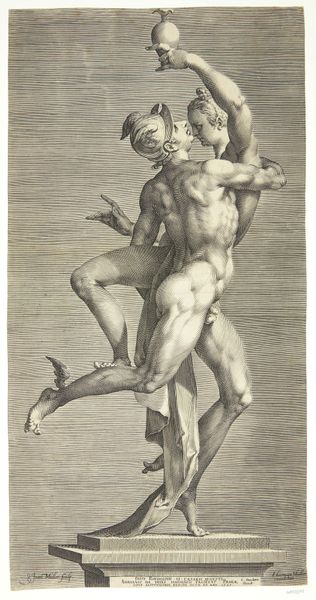
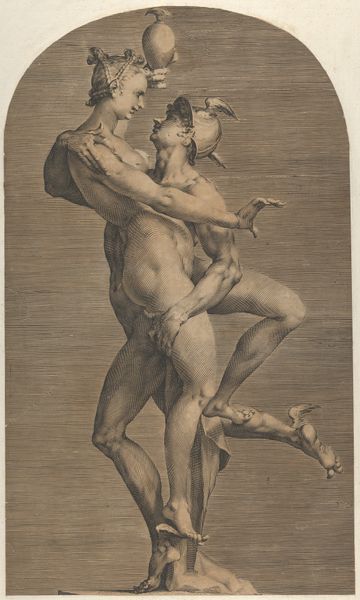
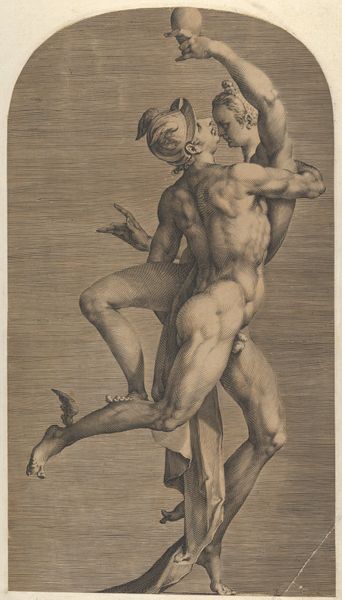
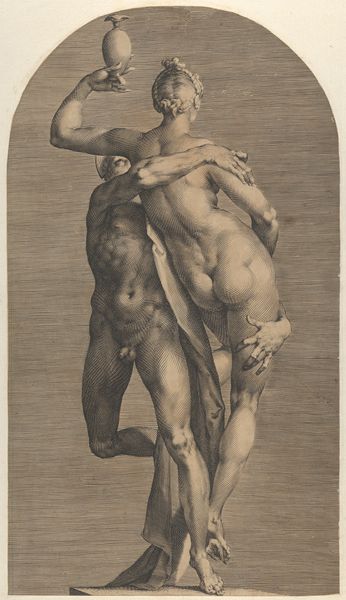
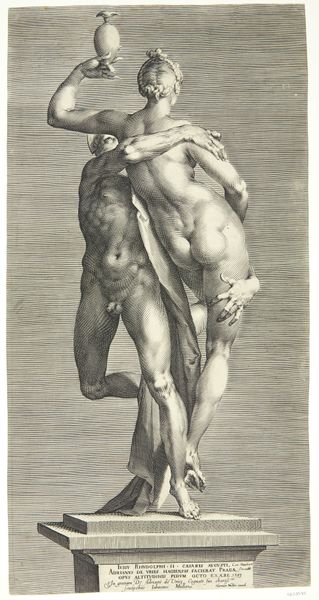
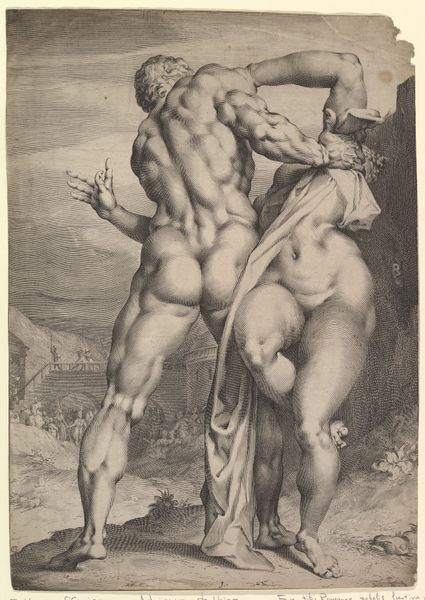
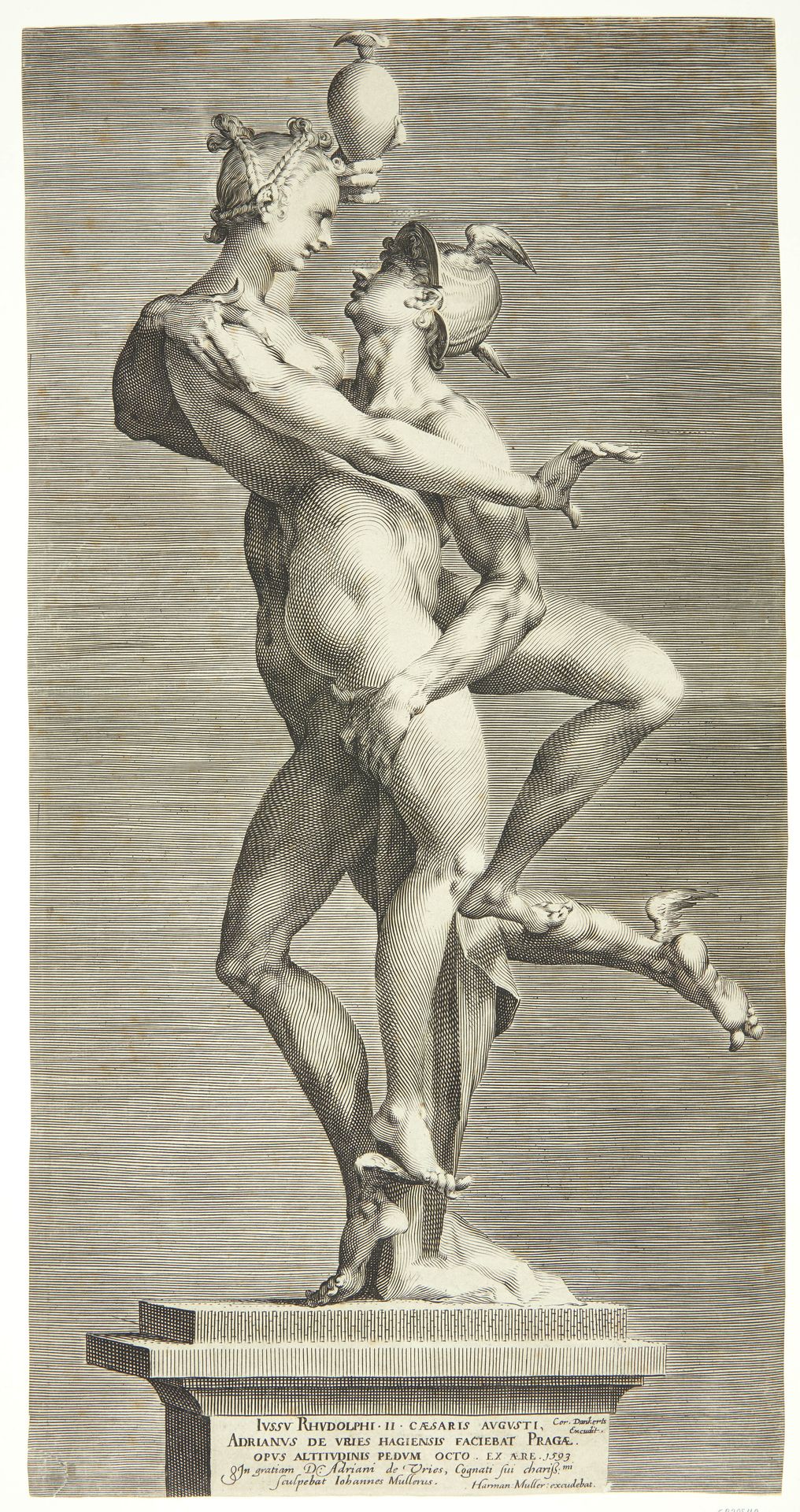
Jan Harmensz. Muller created this engraving, "Merkur bortfører Psyche. Psyche set fra siden", or Mercury abducting Psyche seen from the side, in the late 16th or early 17th century. The print presents us with the mythological tale of Mercury’s abduction of Psyche. During this time, mythological and allegorical subjects were vehicles through which artists explored human passions and moral concepts. Muller’s print engages with the complex gender dynamics inherent in such narratives. Here, Mercury's forceful embrace and upward motion contrast with Psyche's seemingly passive pose. This artwork also opens up conversations about power, desire, and agency, inviting us to consider the narratives embedded in classical stories and their continued relevance. The dramatic composition and idealized forms evoke a sense of awe, while simultaneously prompting questions about the representation of women and the complexities of interpersonal relationships.
Merkur bortfører Psyche. Psyche set fra siden
1595 - 1598


Artwork details
- Medium
- print, engraving
- Dimensions
- 504 mm (height) x 258 mm (width) (bladmaal)
- Location
- SMK - Statens Museum for Kunst
Tags
Comments
Share your thoughts
About this artwork
Jan Harmensz. Muller created this engraving, "Merkur bortfører Psyche. Psyche set fra siden", or Mercury abducting Psyche seen from the side, in the late 16th or early 17th century. The print presents us with the mythological tale of Mercury’s abduction of Psyche. During this time, mythological and allegorical subjects were vehicles through which artists explored human passions and moral concepts. Muller’s print engages with the complex gender dynamics inherent in such narratives. Here, Mercury's forceful embrace and upward motion contrast with Psyche's seemingly passive pose. This artwork also opens up conversations about power, desire, and agency, inviting us to consider the narratives embedded in classical stories and their continued relevance. The dramatic composition and idealized forms evoke a sense of awe, while simultaneously prompting questions about the representation of women and the complexities of interpersonal relationships.
Comments
Share your thoughts