About this artwork
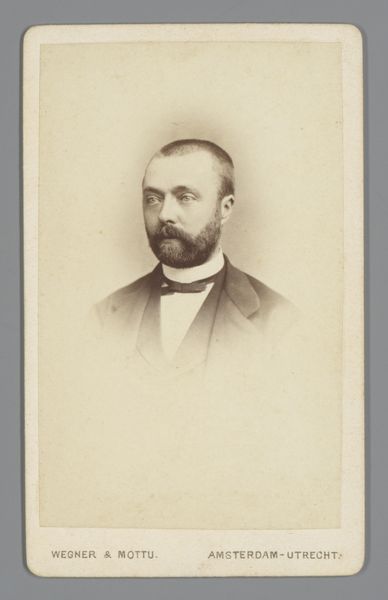
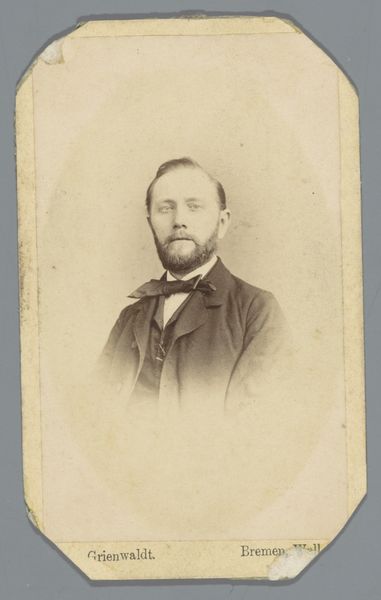
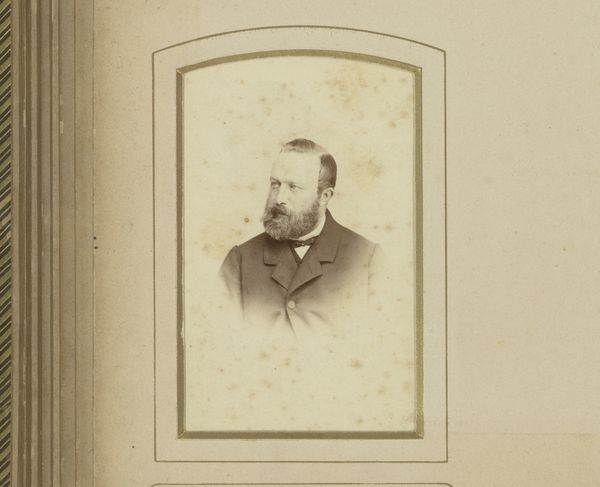
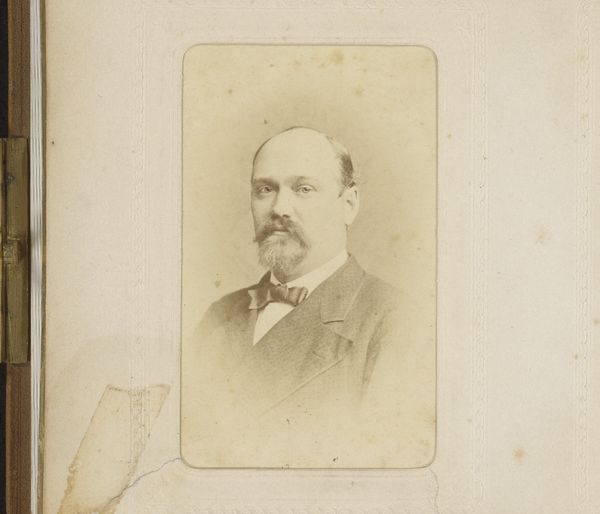
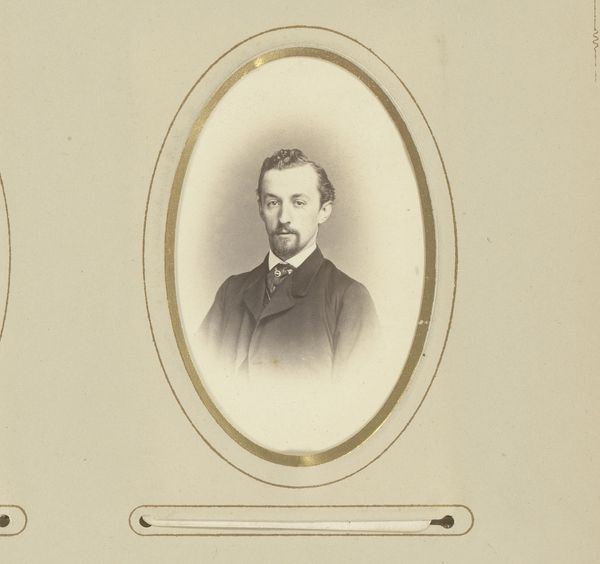
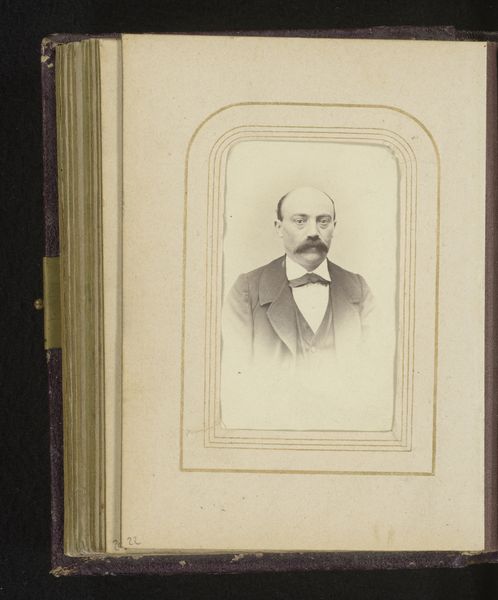
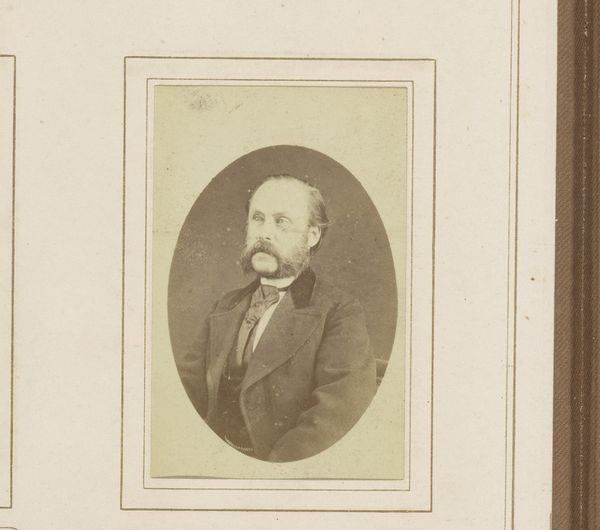
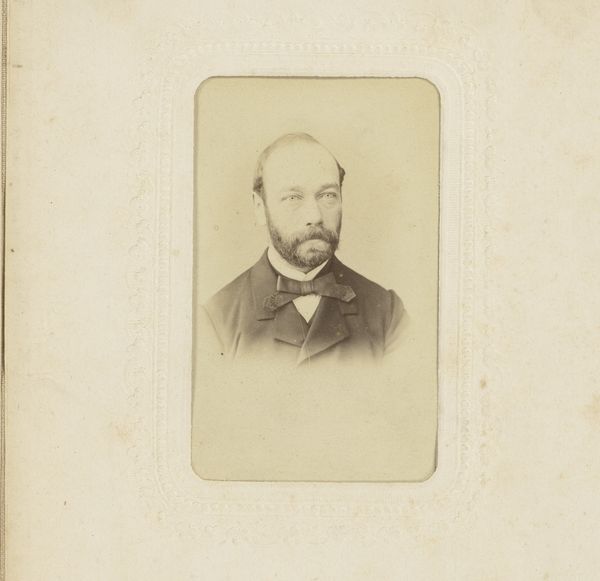
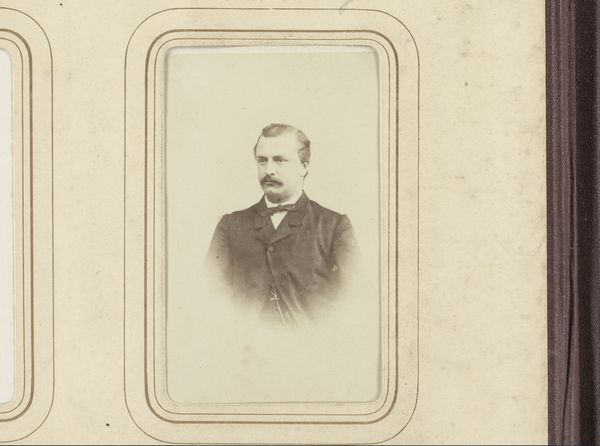
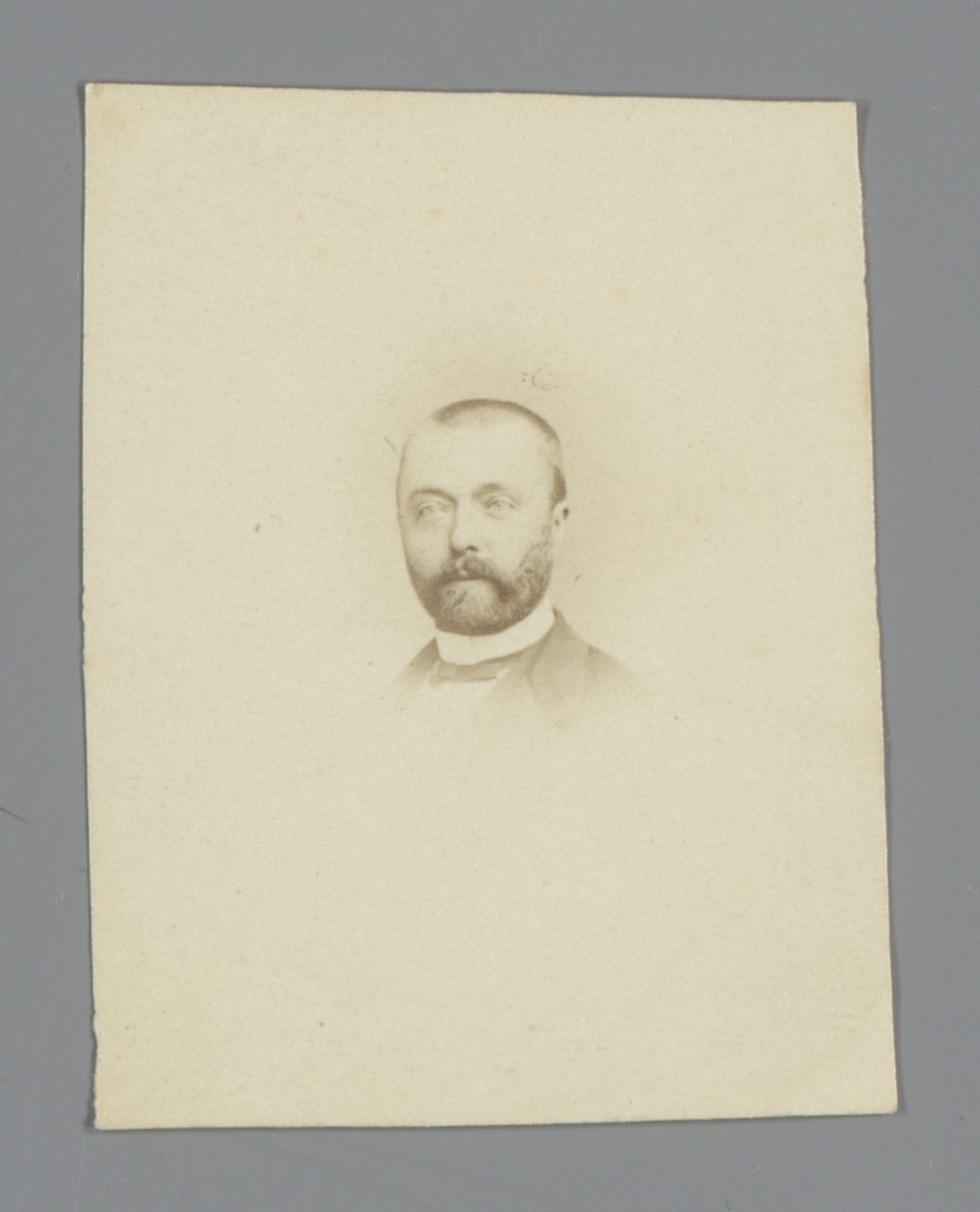
Editor: So this is "Portret van Lucas Jonker," a photograph probably taken sometime between 1865 and 1908 by Wegner & Mottu. It’s striking how… faint it is, almost like a ghost. What can we read from an image like this, Curator? Curator: The faded quality of the photograph does evoke a sense of memory, doesn’t it? Consider the portrait itself: the sitter, formally posed, beard neatly trimmed, eyes holding a steady gaze. In its time, the photographic portrait offered a new way of preserving likeness and status. Do you see the careful balance between asserting identity and conforming to the era's expectations of respectability? Editor: I do. It feels like a carefully constructed persona. Almost a performance for the camera. But given that photographs were somewhat novel, did that influence the presentation? Curator: Precisely! Early photography inherited portraiture's symbolic weight. Every detail – clothing, posture, expression – became a deliberate marker of identity, profession, and social standing. Look closely at his neutral expression. Does it betray any clues to his personality, or is it a mask carefully constructed for posterity? The absence of a direct narrative allows layers of interpretations to form. The photograph can thus speak about more than Lucas Jonker, can't it? Editor: Absolutely. It reflects broader societal values, anxieties even, around identity in a rapidly changing world. Thank you! Curator: And thank you, it is in considering the ephemeral, how identity, portraiture and photography meet that we can appreciate an aesthetic artifact such as this.

Artwork details
- Medium
- photography
- Dimensions
- height 51 mm, width 41 mm
- Copyright
- Rijks Museum: Open Domain
Tags
photography
realism
Comments
No comments
About this artwork
Editor: So this is "Portret van Lucas Jonker," a photograph probably taken sometime between 1865 and 1908 by Wegner & Mottu. It’s striking how… faint it is, almost like a ghost. What can we read from an image like this, Curator? Curator: The faded quality of the photograph does evoke a sense of memory, doesn’t it? Consider the portrait itself: the sitter, formally posed, beard neatly trimmed, eyes holding a steady gaze. In its time, the photographic portrait offered a new way of preserving likeness and status. Do you see the careful balance between asserting identity and conforming to the era's expectations of respectability? Editor: I do. It feels like a carefully constructed persona. Almost a performance for the camera. But given that photographs were somewhat novel, did that influence the presentation? Curator: Precisely! Early photography inherited portraiture's symbolic weight. Every detail – clothing, posture, expression – became a deliberate marker of identity, profession, and social standing. Look closely at his neutral expression. Does it betray any clues to his personality, or is it a mask carefully constructed for posterity? The absence of a direct narrative allows layers of interpretations to form. The photograph can thus speak about more than Lucas Jonker, can't it? Editor: Absolutely. It reflects broader societal values, anxieties even, around identity in a rapidly changing world. Thank you! Curator: And thank you, it is in considering the ephemeral, how identity, portraiture and photography meet that we can appreciate an aesthetic artifact such as this.
Comments
No comments