17th century
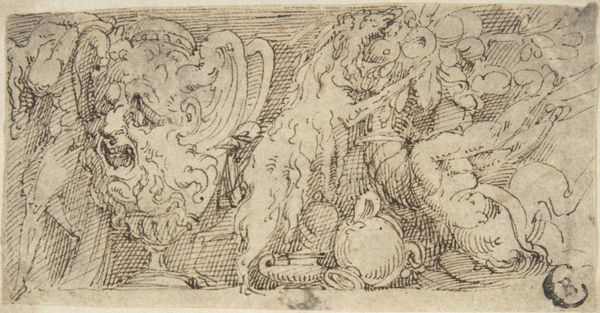
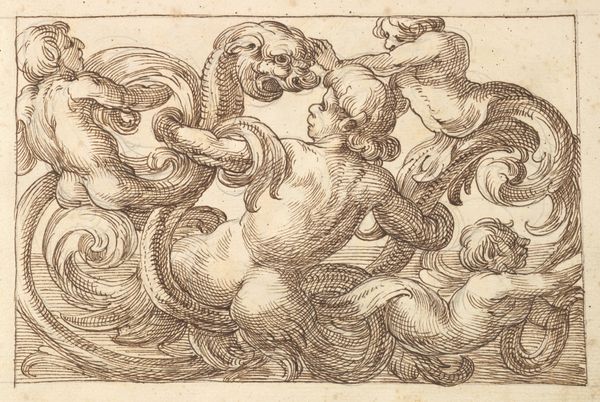
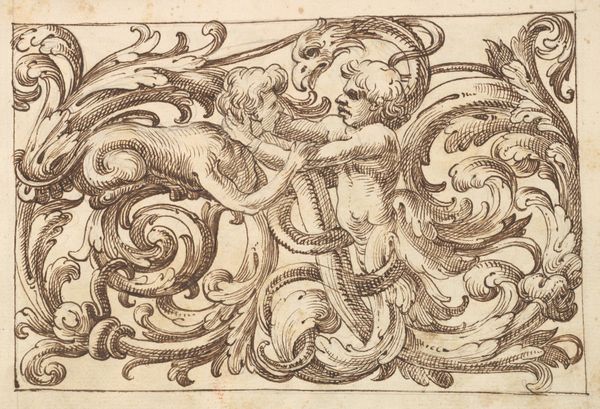
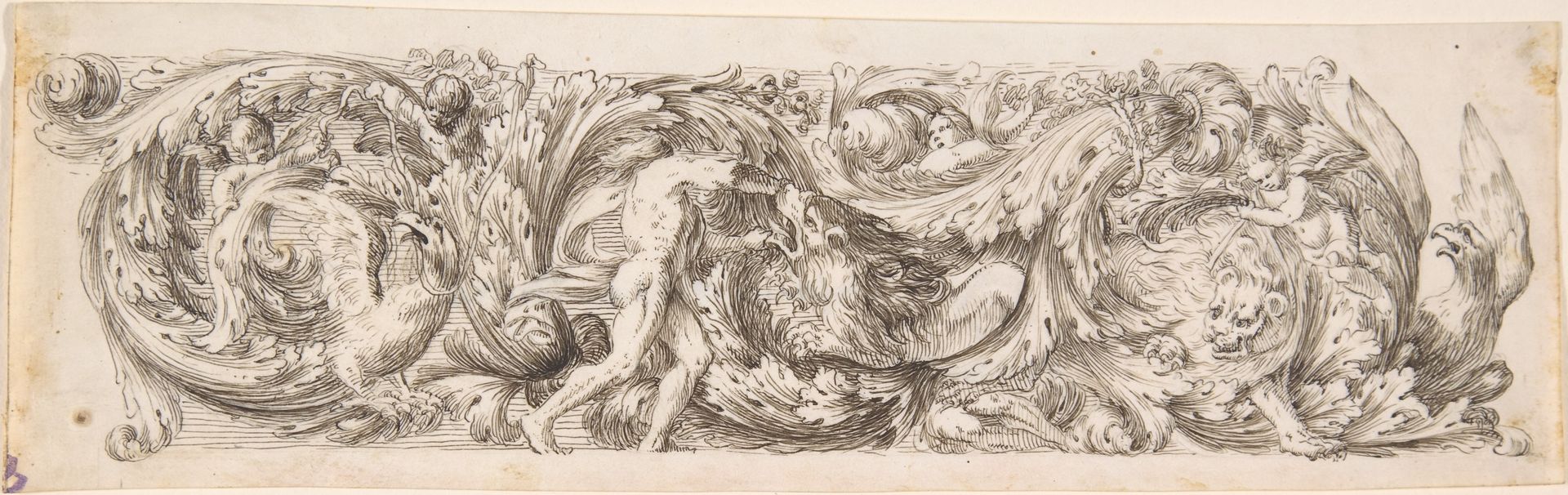
Frieze with Acanthus Scrolls and a Man (Hercules?) fighting a Lion


Listen to curator's interpretation
Curatorial notes
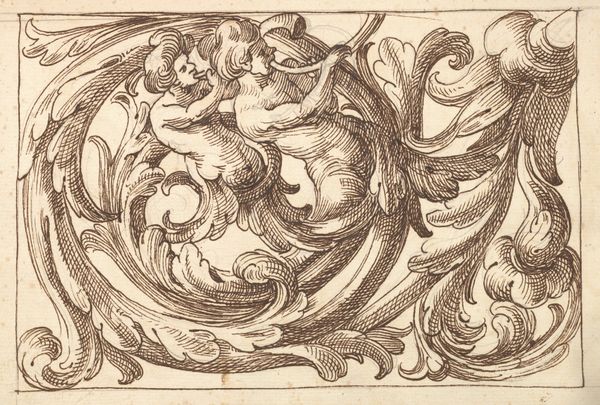
Curator: Here we have Jean Le Pautre's 17th-century drawing, "Frieze with Acanthus Scrolls and a Man (Hercules?) fighting a Lion," currently housed at the Metropolitan Museum of Art. It's an ink drawing, teeming with detail. Editor: My first impression is how wild and theatrical this feels! The figures are almost swallowed by the ornamentation. Curator: Exactly. Le Pautre’s technical skill is evident in the intricate lines defining the acanthus leaves and the dramatic musculature of the figures. Observe how he uses hatching and cross-hatching to create depth and shadow. Editor: And consider the social context in which Le Pautre created this piece. Baroque art often served as a form of propaganda, glorifying power and authority. Could this struggle between man and beast symbolize the triumph over perceived threats? Curator: Certainly, that’s a valid reading. From a formalist perspective, however, the frieze’s power lies in its rhythmic composition. The swirling acanthus leaves create a sense of movement and energy, drawing the eye across the entire surface. Editor: I can’t help but interpret the piece through a more critical lens. Is this celebration of strength also a justification for oppressive power structures? The vulnerable figures, the exaggerated display of force, invites interrogation. Curator: But isn’t the artistry itself worth celebrating? The line, the form, the sheer skill displayed? Editor: Art isn't created in a vacuum. Examining the ideological underpinnings of this aesthetic choice provides a vital pathway to understand the history of representation. Curator: I suppose when considering these elaborate Baroque pieces, it is very useful to be attentive to social functions along with their beautiful ornamentation. Editor: And the ability to consider them together to truly dissect the power of this allegory and its impact is extremely necessary.