drawing, pencil, architecture
#
drawing
#
art-nouveau
#
pencil
#
architecture
Copyright: Rijks Museum: Open Domain
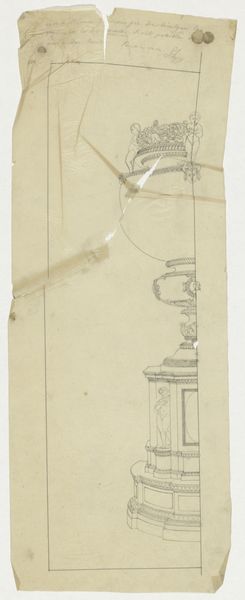
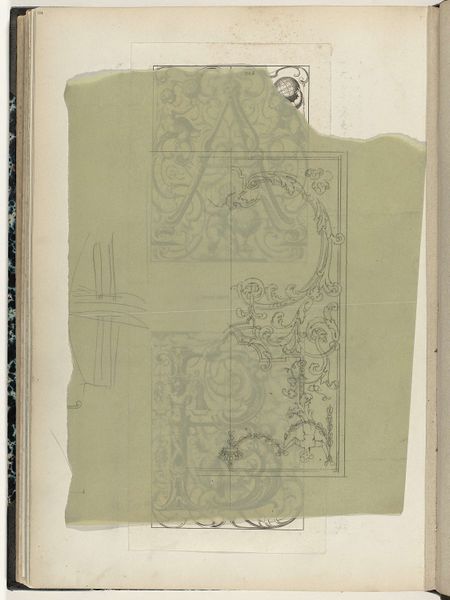
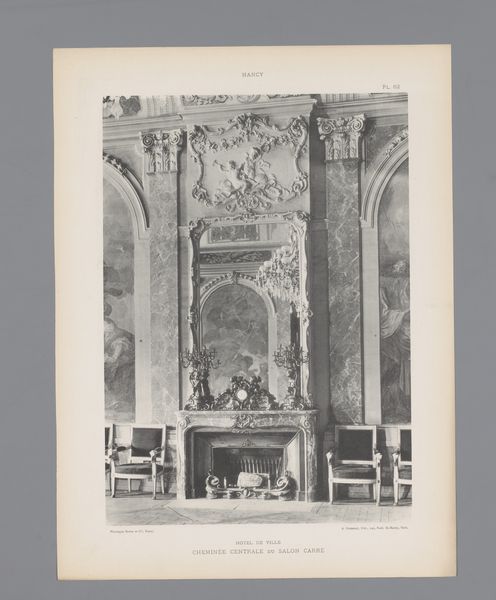
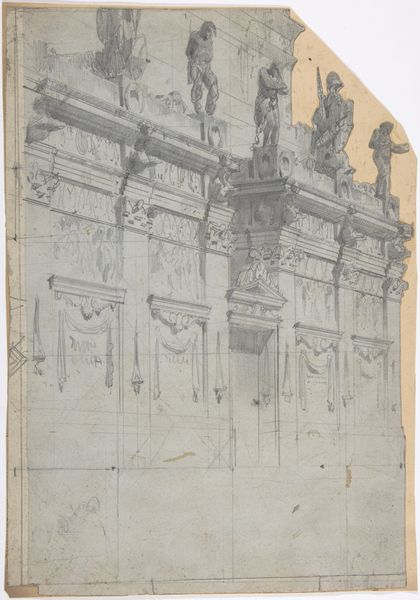
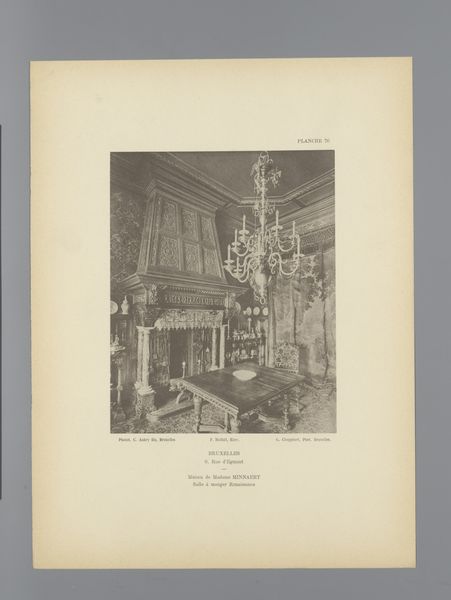
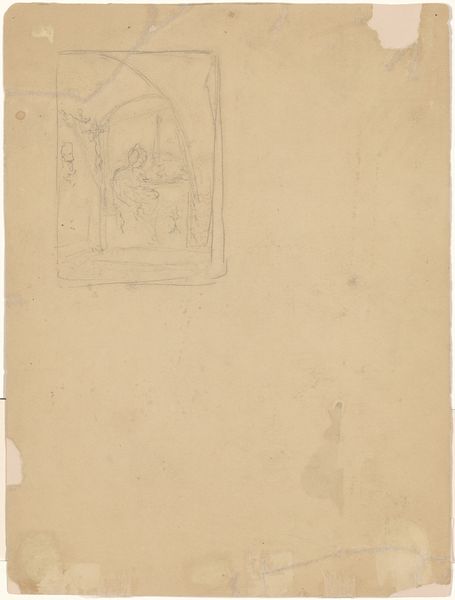
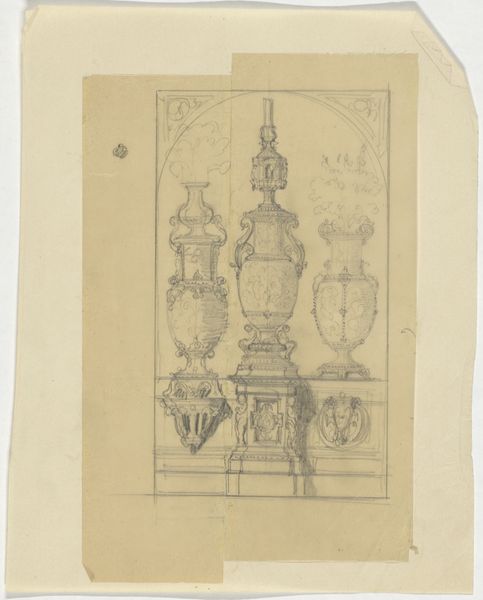
Curator: Here we have Carel Adolph Lion Cachet’s drawing, "Kroonluchters en lampen," made around 1903 or 1904. Editor: It has a fragmented, almost dreamlike quality. I'm immediately struck by the contrast between the hard edges of the architectural elements and the soft pencil sketches. Curator: Exactly. Lion Cachet was deeply immersed in the Art Nouveau movement, a style often associated with progressive politics. His designs embraced organic motifs to question traditional hierarchies in decorative arts and blur the lines between crafts and fine arts. Editor: The means of production for these lighting fixtures are important, as the image shows stages of planning. The inclusion of the architecture alongside various design ideas tells me that he was thinking very critically about space and labor here, not merely creating decoration. Were they ever realized? Curator: That's a crucial question. The drawing is a study, and not necessarily the final manifestation of Lion Cachet’s intentions. As these were most likely designs for wealthier clients, understanding the context of economic disparity is relevant. The work represents an idealized synthesis of art and living, though available to a select group, revealing inequalities within society during the time. Editor: I’m also thinking about the artisans involved in producing these items. Did they have creative input, or were they simply executing the artist’s vision? Their labor is obscured by the aesthetic result, but it’s essential to acknowledge their contribution to the material culture represented here. Curator: I appreciate that point. Lion Cachet's designs often challenged the concept of individual authorship and elevated collaborative efforts. His artistic philosophy positioned beauty as a vehicle for social and ethical progress, even within commercial art. Editor: Indeed. While admiring the visual harmony and craft, we can't detach the piece from its socio-economic framework. What began as a decorative project reflects back on structures of both production and reception. Curator: Seeing these chandeliers, I wonder who the people are and were whose activities that these objects illuminated: from the makers in the shop, to the servants who had to keep it sparkling and lit, to the owners celebrating in light and splendour. Editor: Absolutely, there are multiple stories within, reminding us that design and making do not exist in a vacuum, even within the world of Art Nouveau's most progressive ideas.
Comments
No comments
Be the first to comment and join the conversation on the ultimate creative platform.
 Collect
 React
React Comment
More like this