About this artwork
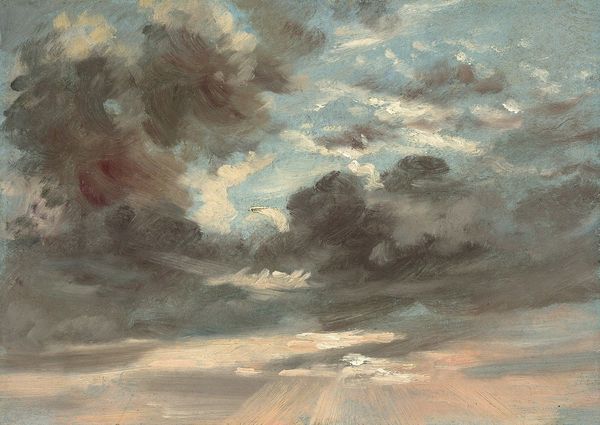
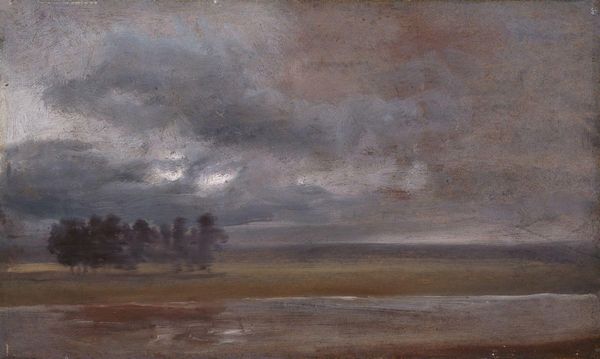
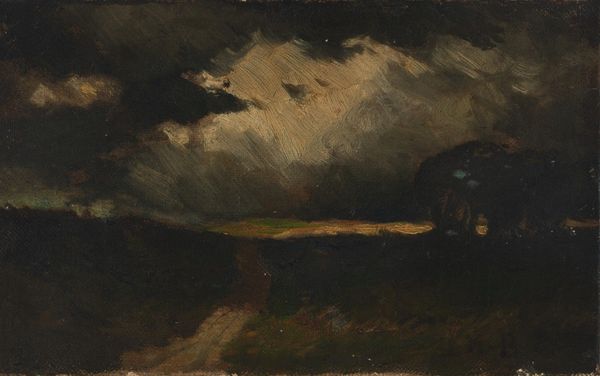
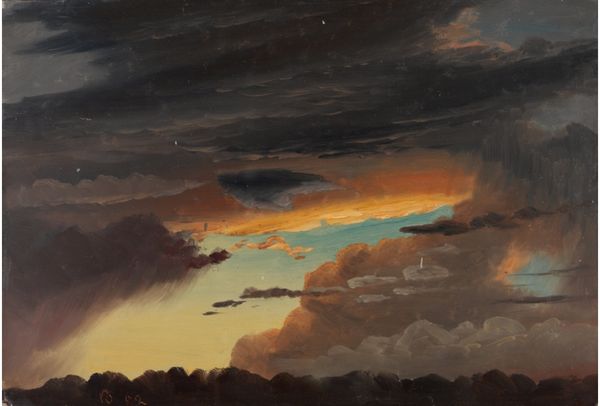
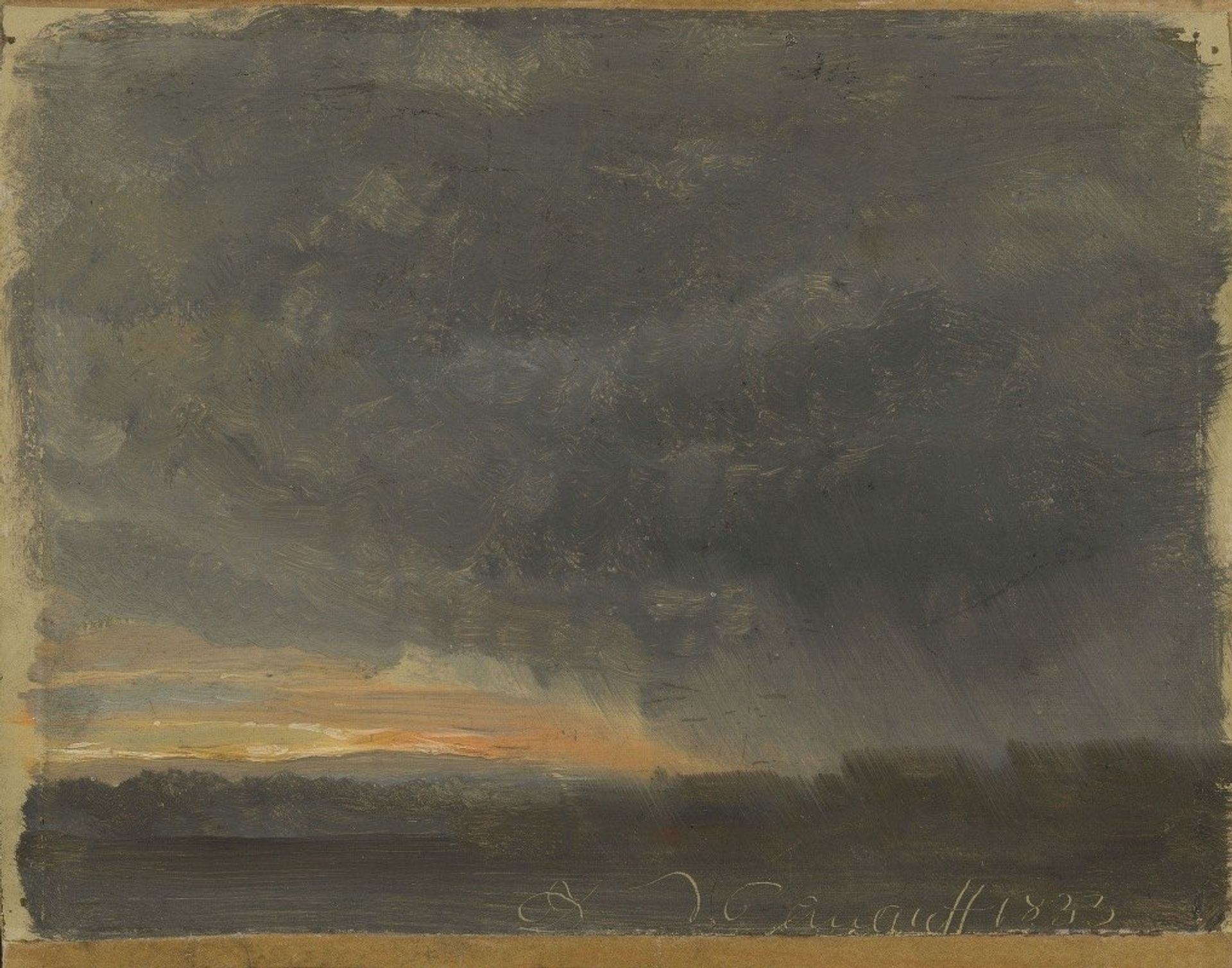
Johan Christian Dahl captured this evocative oil on paper painting, titled "Storm Clouds with Rain," in 1833. As a leading figure of the Romantic era, Dahl was deeply invested in portraying nature not merely as scenery, but as a powerful emotional force. Born in Norway, a region marked by dramatic landscapes and long winters, Dahl carried this influence throughout his life, even after moving to Dresden, Germany. In this work, the brewing storm becomes a mirror reflecting human feelings of unrest, uncertainty, and the sublime. The grey palette and the contrast with the small stripe of orange light speak to the transient nature of life, and perhaps the personal storms Dahl himself weathered. His focus isn't just on the visual drama of the sky; it's about evoking a mood, an emotional space that resonates with our own experiences of nature's impact on our inner states. Dahl invites us to consider our relationship with the natural world and how it shapes our understanding of ourselves.

Artwork details
- Medium
- painting, plein-air, watercolor
- Copyright
- Public Domain: Artvee
Tags
Comments
Share your thoughts
About this artwork
Johan Christian Dahl captured this evocative oil on paper painting, titled "Storm Clouds with Rain," in 1833. As a leading figure of the Romantic era, Dahl was deeply invested in portraying nature not merely as scenery, but as a powerful emotional force. Born in Norway, a region marked by dramatic landscapes and long winters, Dahl carried this influence throughout his life, even after moving to Dresden, Germany. In this work, the brewing storm becomes a mirror reflecting human feelings of unrest, uncertainty, and the sublime. The grey palette and the contrast with the small stripe of orange light speak to the transient nature of life, and perhaps the personal storms Dahl himself weathered. His focus isn't just on the visual drama of the sky; it's about evoking a mood, an emotional space that resonates with our own experiences of nature's impact on our inner states. Dahl invites us to consider our relationship with the natural world and how it shapes our understanding of ourselves.
Comments
Share your thoughts