1737
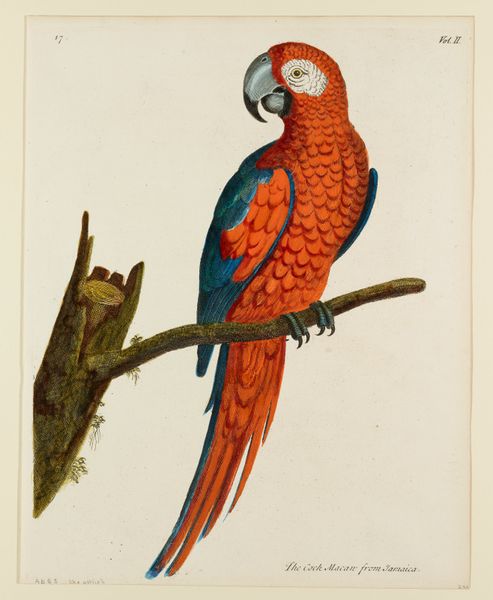
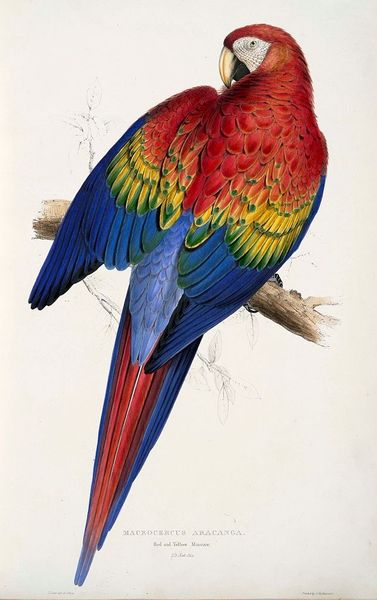
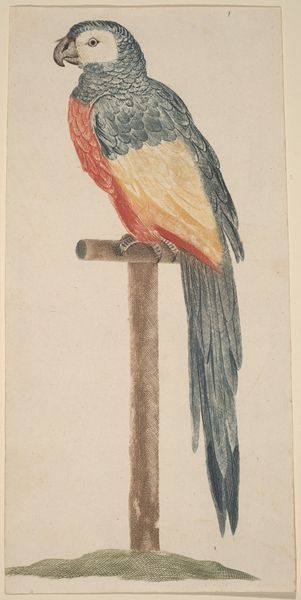
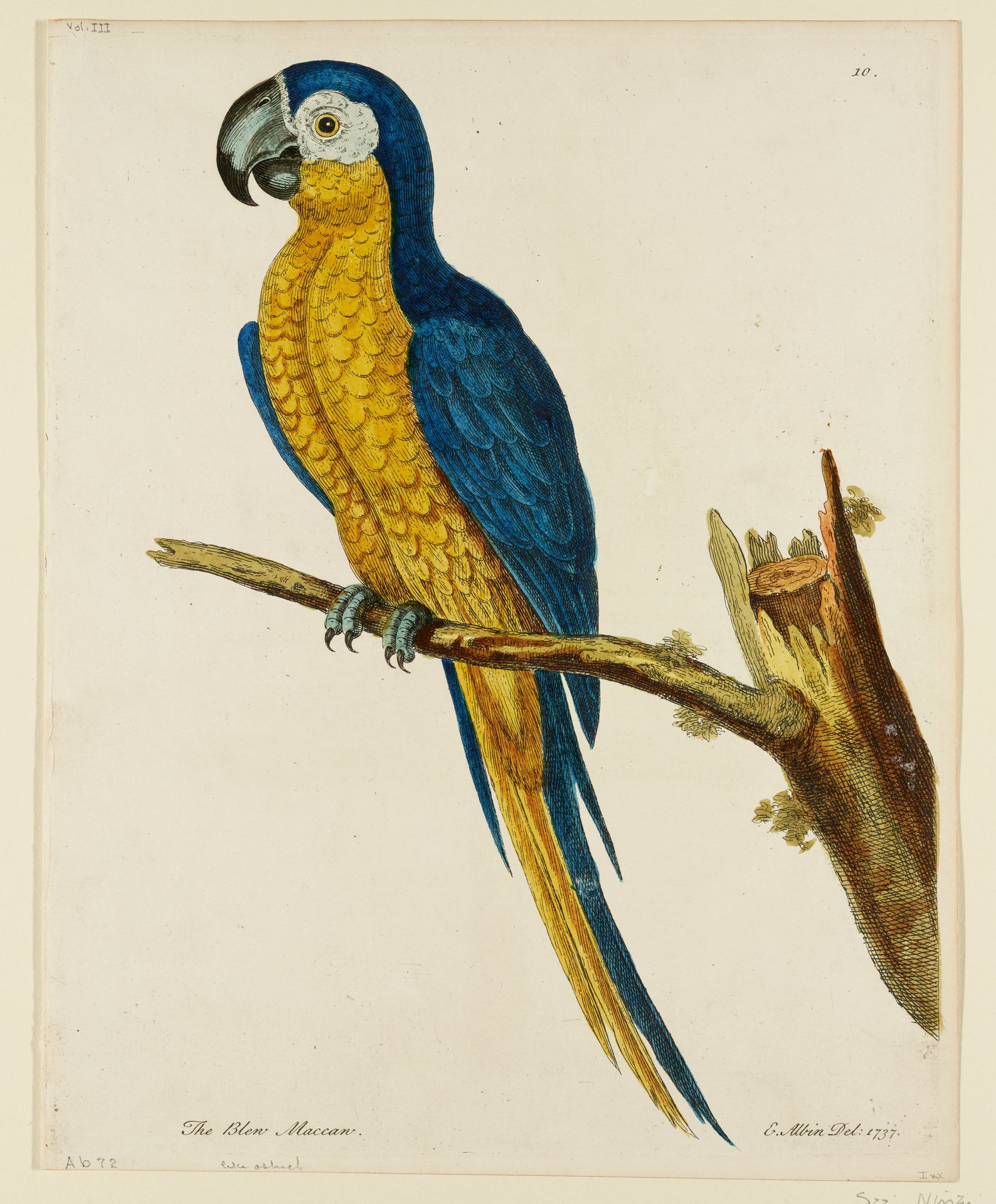
The Bleu Maccaw


Listen to curator's interpretation
Curatorial notes
Eleazer Albin rendered 'The Bleu Maccaw' as an engraving likely sometime in the mid-18th century. Albin was working at a time of increased European exploration and colonization, and his meticulous depictions of exotic birds reflect a growing fascination with the natural world. The image presents us with a vibrant macaw perched delicately on a branch, a symbol of the 'New World' meticulously cataloged for European audiences. But what does it mean to capture and classify a living being? Consider how the act of depicting this vibrant creature flattens its existence into a specimen, stripping away its agency and reducing it to an object of scientific curiosity. These images were often commissioned by wealthy patrons, embodying a sense of ownership and control over nature. Albin's work sits at the intersection of art, science, and colonialism, inviting us to reflect on the power dynamics inherent in how we perceive and represent the world around us.