print, etching
#
allegory
#
baroque
#
dutch-golden-age
# print
#
etching
#
figuration
#
history-painting
Dimensions: height 67 mm, width 100 mm
Copyright: Rijks Museum: Open Domain
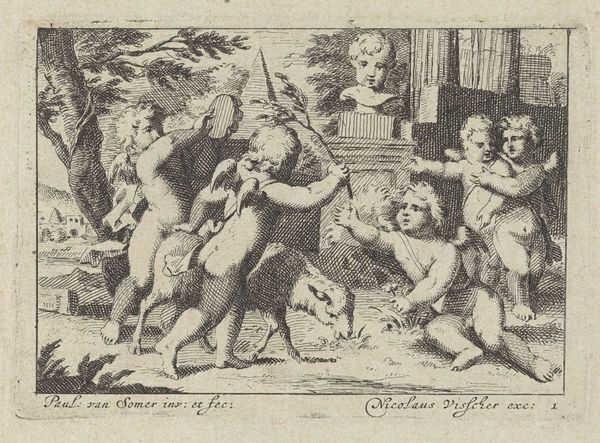
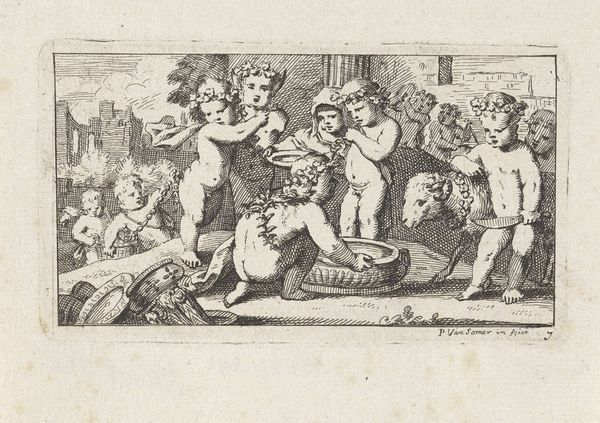
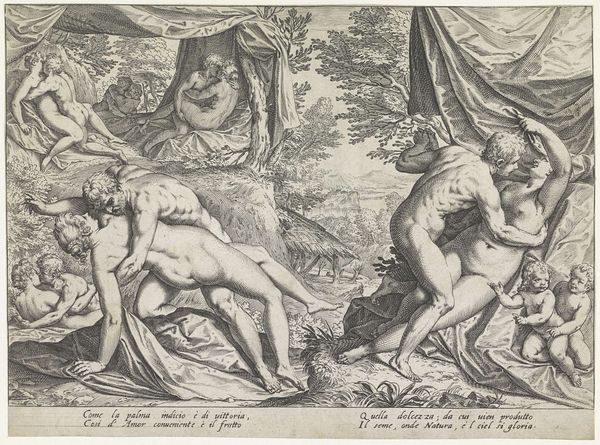
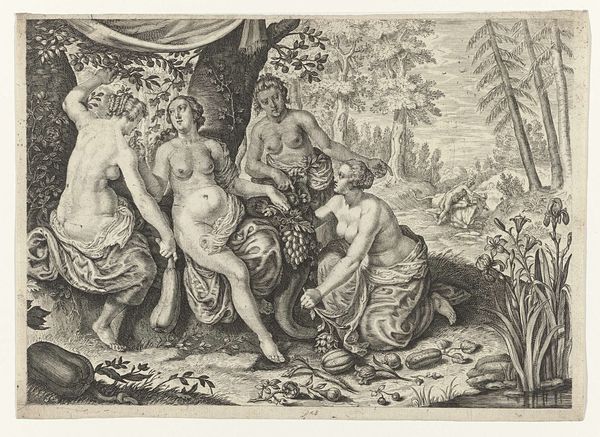
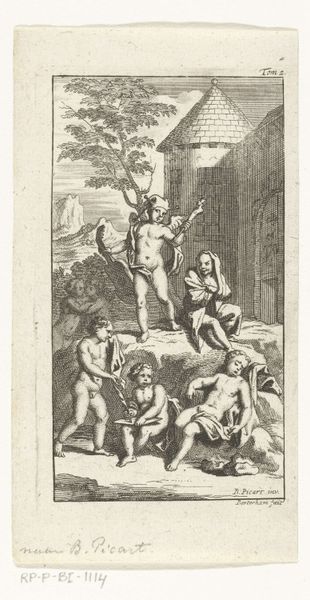
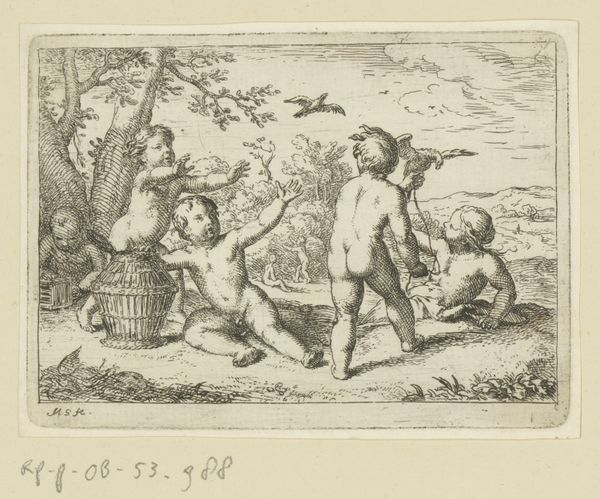
Curator: This etching, titled "Treurende putti bij een sokkel" – or "Mourning Putti by a plinth" – was created in 1668 by Gerard de Lairesse. I am immediately drawn to its miniature scale and intense feeling of grief. What strikes you first? Editor: I find the rendering of the human form rather compelling; specifically, the lines utilized by De Lairesse. I want to consider his technique, particularly how the labor of the etching process translates to an image conveying loss. Curator: Look closer. Each putto seems overwhelmed, hiding their faces, slumped against what appears to be a memorial plinth. The gestures read like archetypes of mourning, echoing through art history. The choice to portray them as putti – symbols of innocence and love – amplifies the sadness. It begs the question, what is being mourned? Editor: The tools employed by De Lairesse—the acid, the metal plate—those are the tangible means that transformed an idea into this print we see today. What meanings were embedded in printmaking during this time period, considering the labor that enabled distribution to the masses? Were these putti produced to evoke a consumer experience around grief? Curator: That is quite interesting, but the symbolic context here is so rich! Consider the larger story being referenced, Dido and Aeneas, where Dido dies of heartbreak after being abandoned. This imagery connects with deeper themes of love, loss, and betrayal, potent stuff resonating through cultural memory. Editor: Perhaps, yet consider that copper itself was imported; so the materiality and trade practices of this particular print are central to its reception in the Dutch Golden Age. Curator: And the final work is a compelling reminder that art-making is so often deeply intertwined with emotion. Editor: Agreed. This commingling between commodity, manual process, and sentimental subject matter allows for diverse interpretations.
Comments
No comments
Be the first to comment and join the conversation on the ultimate creative platform.
 Collect
 React
React Comment
More like this