

1893 - 1940
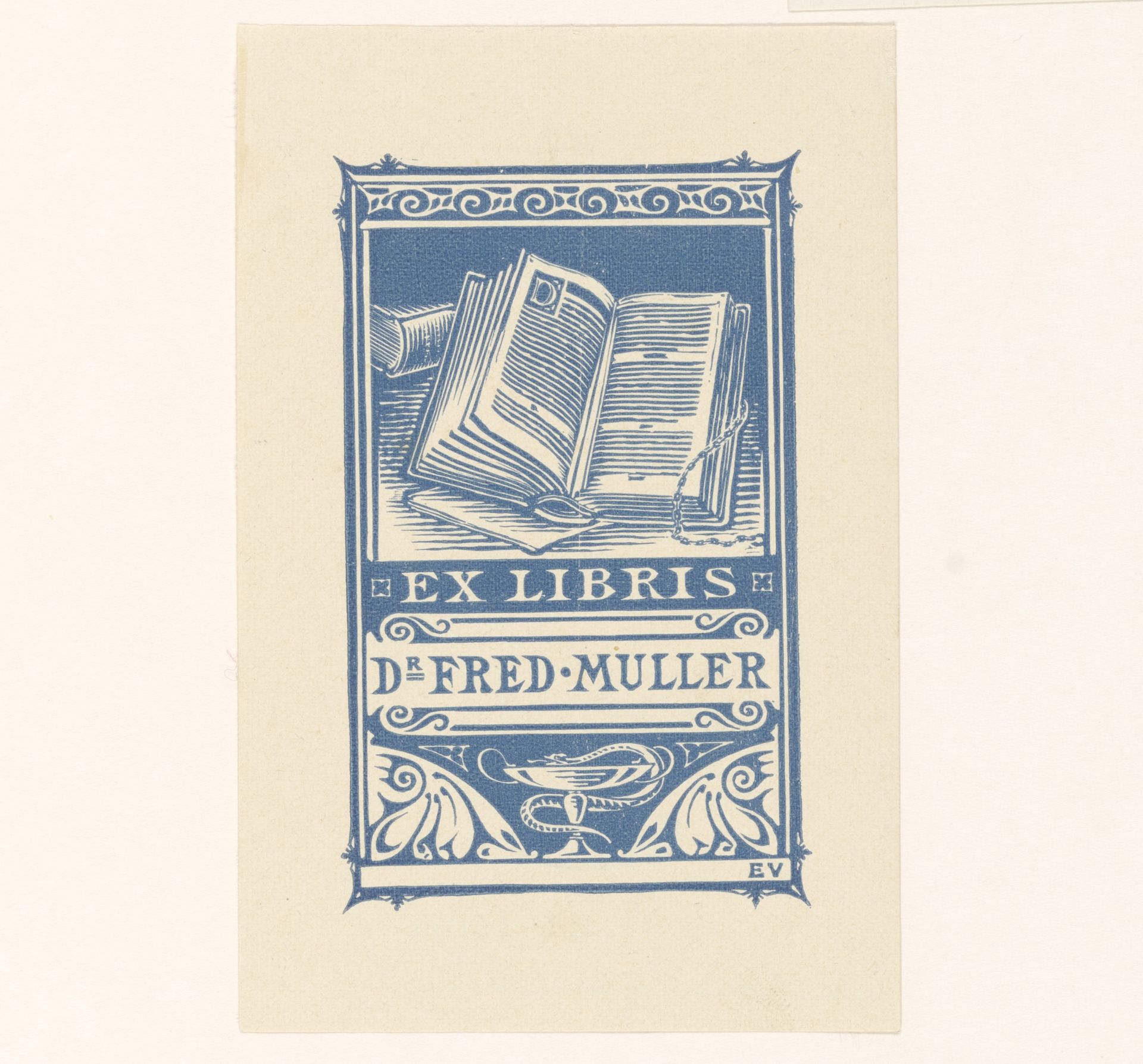
Ex libris van Frederik Muller Jzn

Listen to curator's interpretation
Curatorial notes
Editor: This "Ex libris van Frederik Muller Jzn", likely created between 1893 and 1940 by Elias Voet jr., is a compelling blue ink engraving. I'm really drawn to the textures and detail created with what seems to be a meticulous process of engraving. What can you tell me about this work, looking at it from a materialist perspective? Curator: Well, focusing on its materiality, we see an intricate dance between artist and medium. Consider the labor involved in creating this print. Each line, each detail, meticulously carved into a block of material - perhaps wood or metal. What does the choice of material, the ink, and the printmaking process tell us about its cultural value at the time? Editor: I suppose the use of engraving suggests a value for reproducibility, right? It allows for dissemination, reaching a wider audience than a unique drawing would. Curator: Exactly! The very essence of printmaking speaks to a democratisation of knowledge. And note how this "Ex libris" – a bookplate – becomes a marker of ownership and status, but also hints at Muller's participation in a larger intellectual community, where books are shared. How might the rise of print culture affect traditional notions of artistic creation? Editor: So, we’re looking at not just the aesthetic, but the means of production and its social impact, challenging the notion of the artwork as a purely individual creation. That's fascinating! Curator: Precisely. By shifting our gaze from individual genius to the process of creation, we begin to understand art as a product of material conditions, labor, and social exchange, giving us insight into both its creation and consumption. Does this change how you perceive it now? Editor: Definitely! Thinking about the labor, the material implications and the potential for mass production reshapes the work and makes me want to examine its textures and details more closely. Curator: That’s the beauty of a materialist lens - it re-contextualizes the artwork within its world.