1878
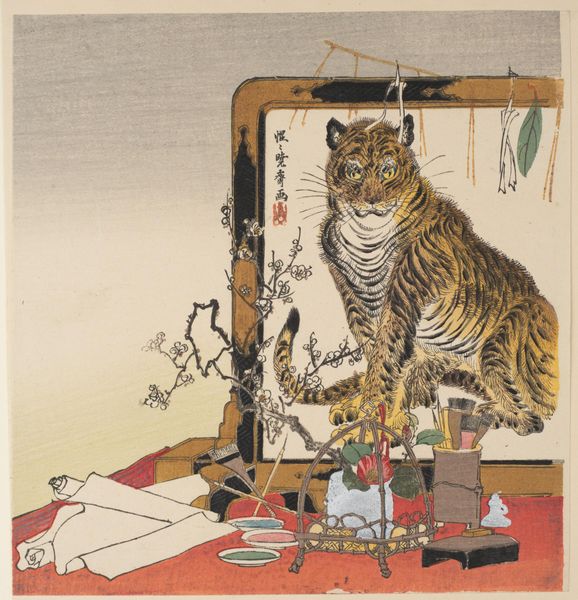
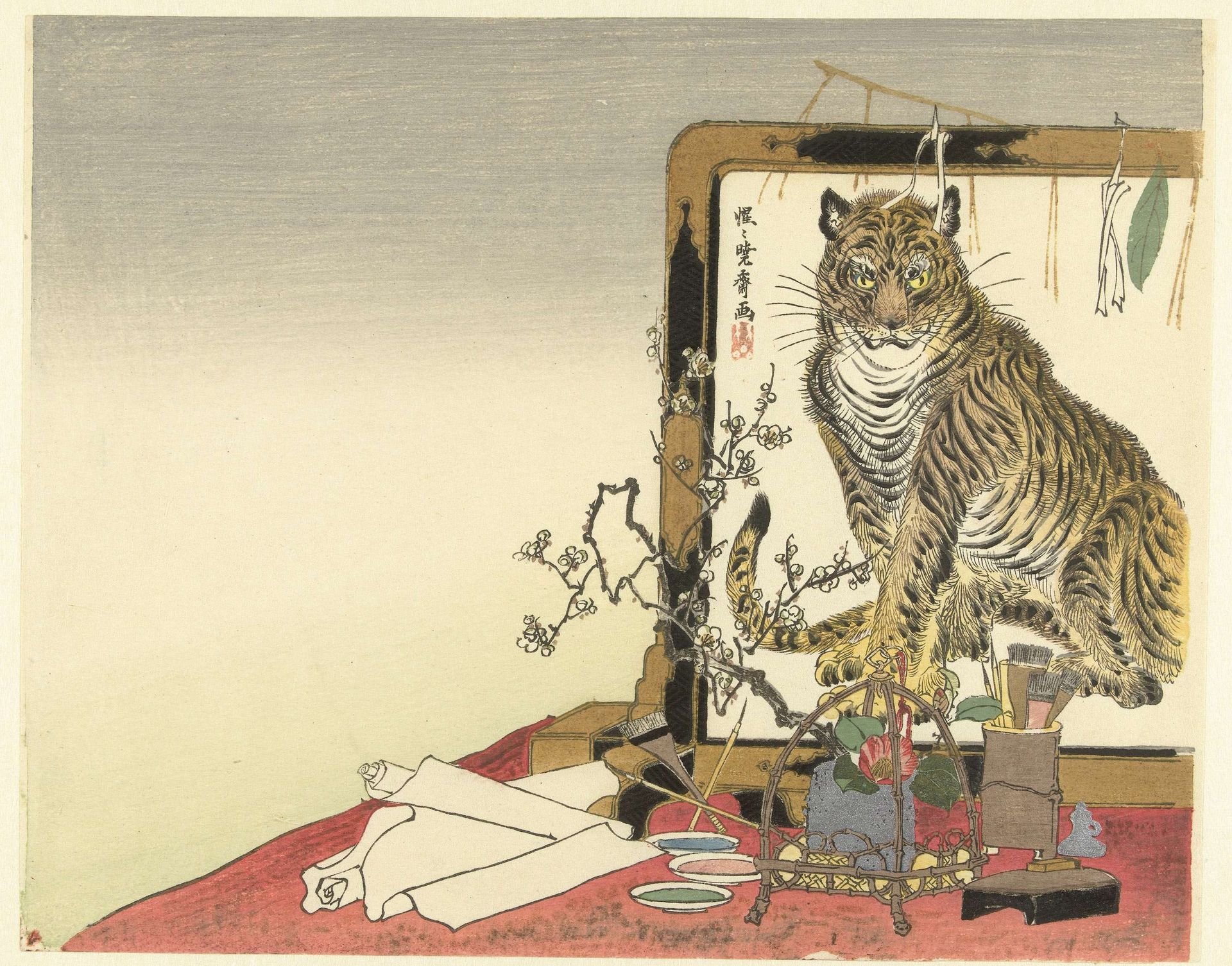
Stilleven met schildersgerei en kamerscherm

Kawanabe Kyōsai 河鍋暁斎
1831 - 1889Location
RijksmuseumListen to curator's interpretation
Curatorial notes
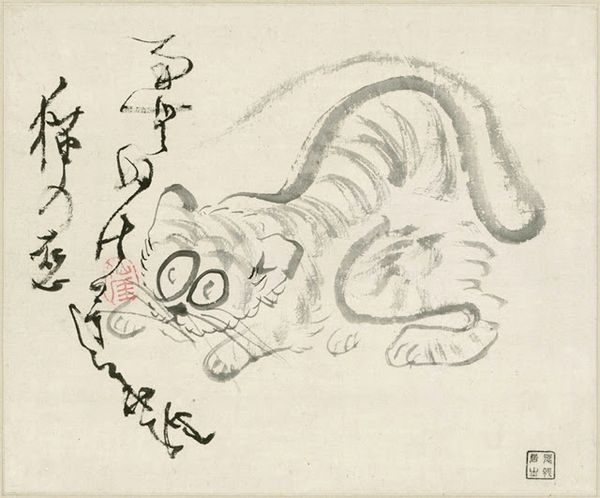
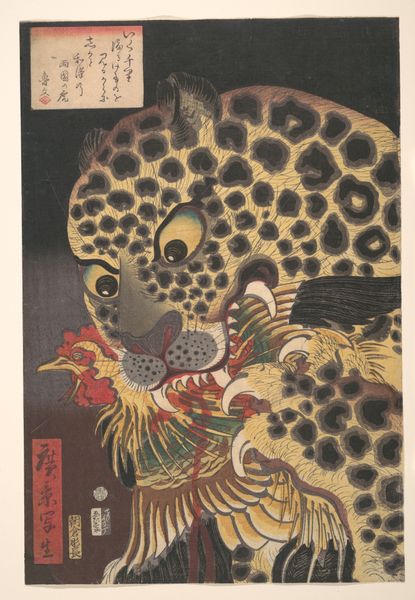
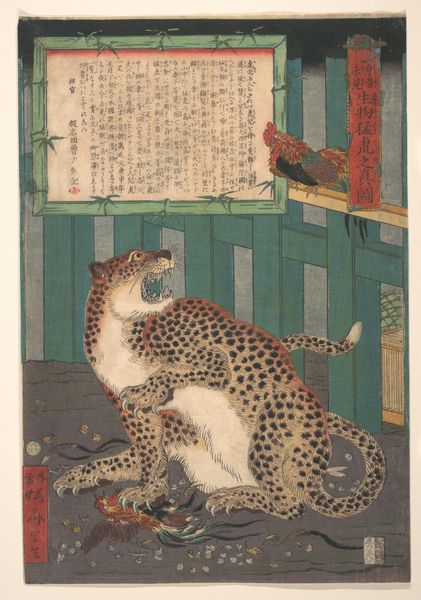
This woodcut print by Kawanabe Kyōsai showcases a still life featuring a tiger, painted around the time of the Meiji Restoration. The tiger, a potent symbol, embodies strength, courage, and protection against evil spirits in East Asian cultures. This motif stretches back millennia; in ancient China, the tiger was one of the four directional animals, ruling the West and autumn. Notice how Kyōsai contrasts the fierce tiger with delicate plum blossoms, emblems of resilience and renewal. This juxtaposition echoes the tiger's duality, a beast of prey that is also a guardian. Consider its recurring appearances through history, from military banners to domestic charms. Each iteration reflects the collective psyche, our primal fears and aspirations projected onto this magnificent creature. Here, the tiger is not merely depicted, but embodies a psychological bridge, connecting our primal instincts with cultural identity, awakening deep-seated emotions and subconscious associations. The persistence of the tiger motif underscores our continuous quest for power and protection throughout the ages.