


Curatorial notes
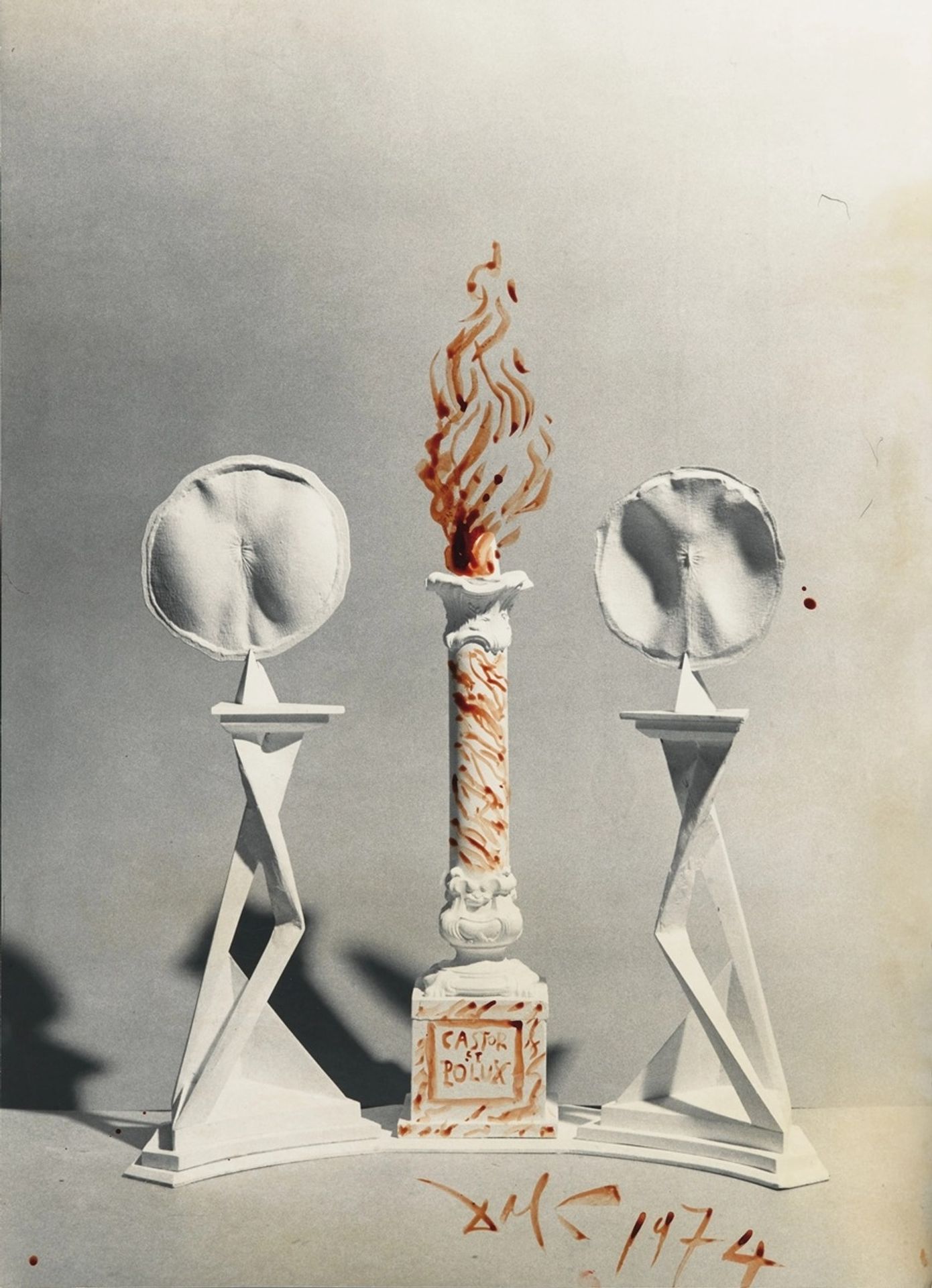
Curator: This is Salvador Dalí's 1974 mixed-media piece, "Castor et Pollux," which blends alabaster and sculpture elements. Quite striking, wouldn't you agree? Editor: Disturbing is more like it. There's an unnerving quality to these oddly pristine, yet strangely corporeal forms. That central flame looks less like a beacon of hope and more like…a symptom. Curator: Ah, but there's a deeper symbolism at play! Castor and Pollux, the twins of Greek myth, represent duality and brotherhood. Dalí frequently explored these themes, often using classical motifs as a framework for his surrealist visions. Notice how the egg-like shapes flanking the central pillar both mirror and oppose each other, signifying the tension within that duality. Editor: The classical reference feels almost sarcastic given the disquieting forms he employs. Those "eggs," if that's what they are, possess an uncomfortable vaginal resemblance, and the presentation almost objectifies and commodifies these supposed ideals. It makes me question the inherent power dynamics at play and who gets excluded or included. Curator: Dalí, ever the provocateur, invites that kind of scrutiny. He plays with the archetypes—the sacred flame, the fraternal bond—juxtaposing them with visceral, corporeal imagery. Consider how flames represent purification and transformation, here rendered with that raw and somewhat unsettling reddish medium; do we read into that any potential wounds, maybe an unwholesome bond? Editor: A bond fueled by a very specific, likely heterosexual, male gaze. We are positioned outside it, and invited into it by its patriarchal authority. The symmetry almost enforces it, boxing any alternative possibilities. Dalí's surrealism often intersects with reactionary politics in problematic ways. Curator: While I concede your interpretation reveals a powerful discourse regarding the artwork's historical and social location, might we also perceive a universality to its themes? The longing for connection, the awareness of mortality... These are things that touch us regardless of context. Editor: True. However, it’s also necessary to confront how such “universal” themes get leveraged in support of very *particular* political interests. These objects reflect the power dynamics of their era and continue to perpetuate and/or allow discourse to undermine social hierarchies. Curator: Well, that leaves us with a wealth of interpretations. The power of symbols lies in their potential for multiple readings. Editor: Yes. We can continue to engage the layers that artworks possess, with a critical lens to ensure these objects challenge injustice in modern settings.