
Curatorial notes
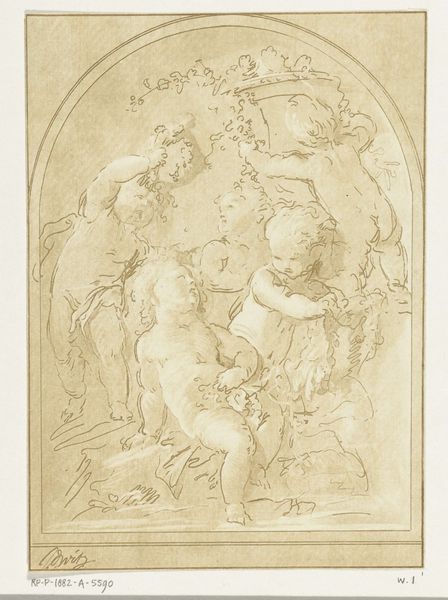
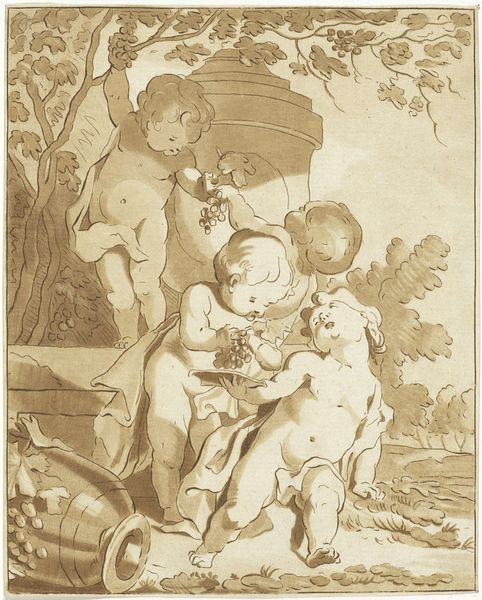
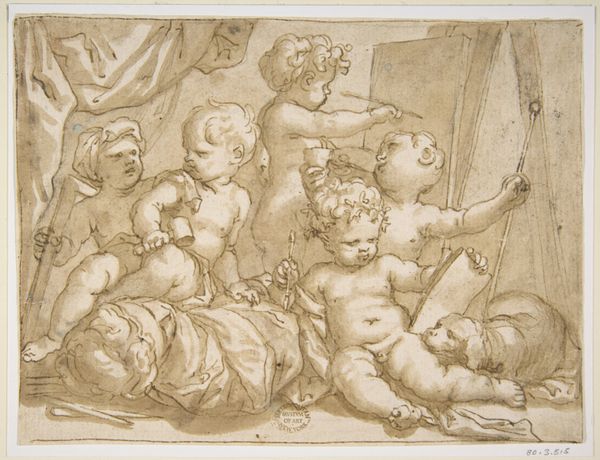
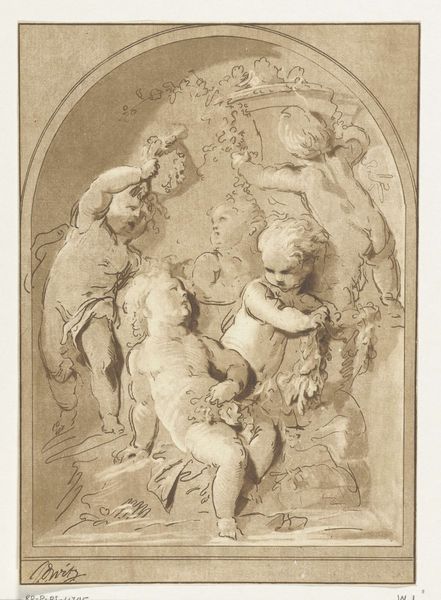
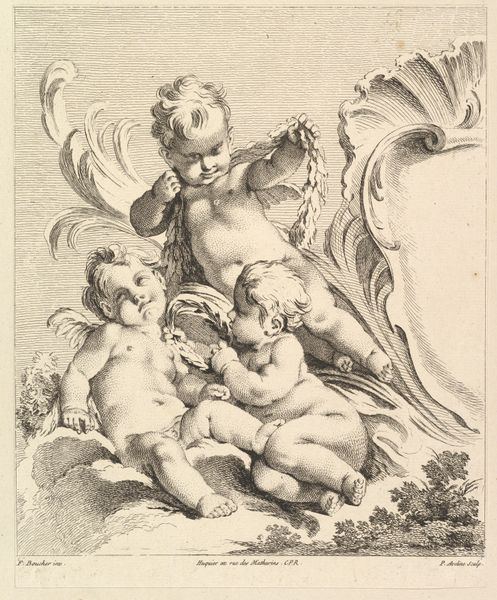
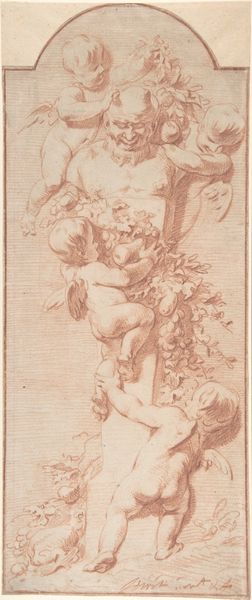
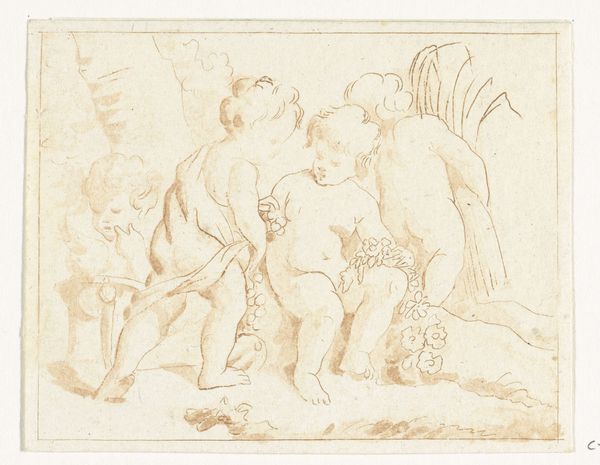
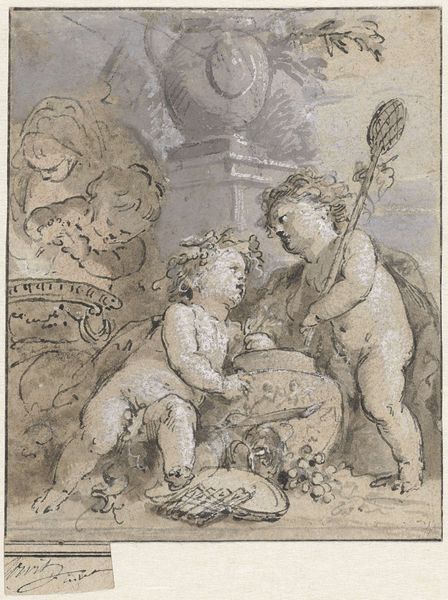
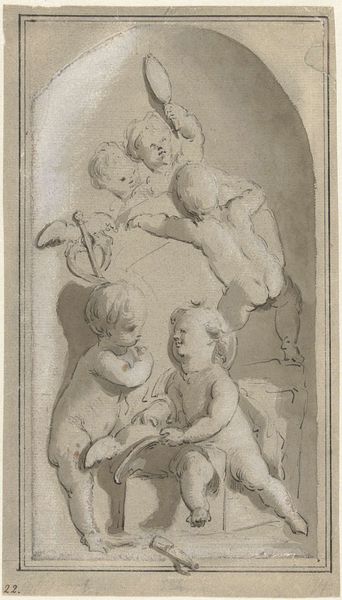
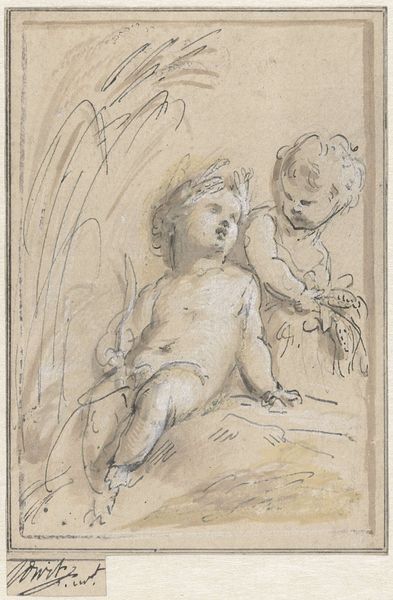
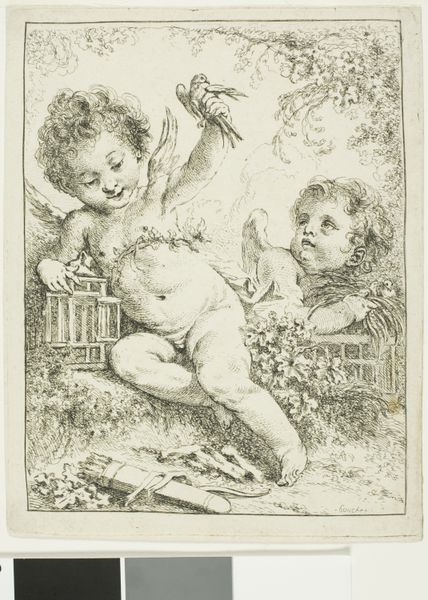
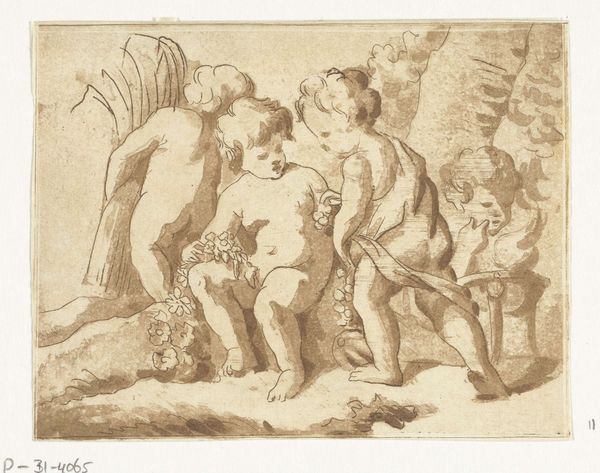
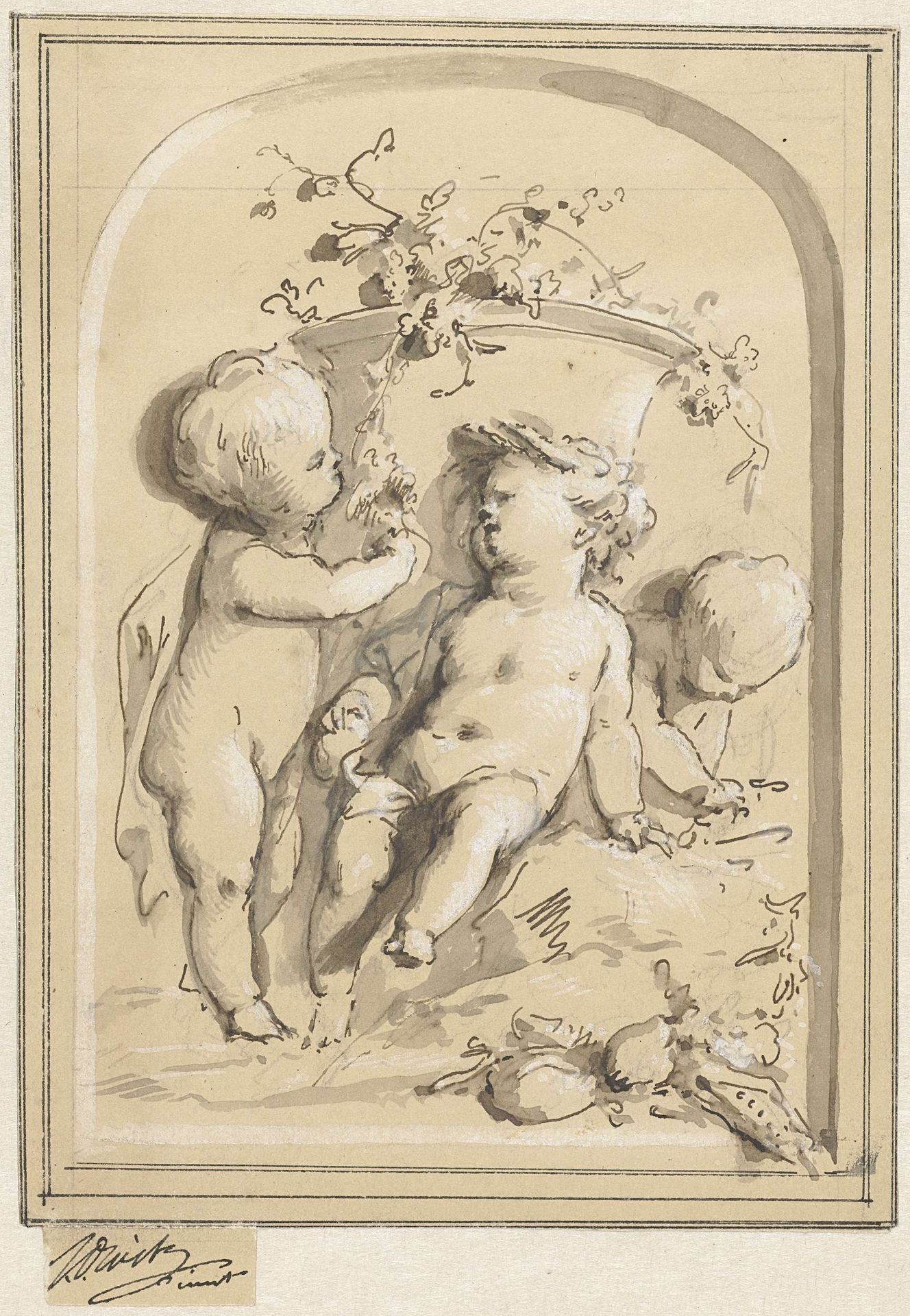
Jacob de Wit created this pen and brush drawing, "Spring and Summer," in the 18th century, a period marked by both the opulence of the Baroque and the burgeoning Enlightenment. De Wit, a devout Catholic in the Protestant Netherlands, specialized in decorative painting, particularly the trompe-l'oeil style known as "bedriegertjes." Here, cherubic figures, symbols of innocence and divine love, frolic amidst seasonal foliage. Yet, these seemingly innocuous images were often commissioned by wealthy patrons to adorn their homes, reflecting a societal hierarchy where access to beauty and leisure was a privilege. The cherubs, with their idealized bodies, exist within a complex interplay of desire, religion, and power. De Wit's work, while celebrating beauty, also reflects the social and economic structures of his time. The drawing reminds us that even the most ethereal images are rooted in the material conditions of their creation.