1935 - 1942
Cigar Store Indian


Listen to curator's interpretation
Curatorial notes
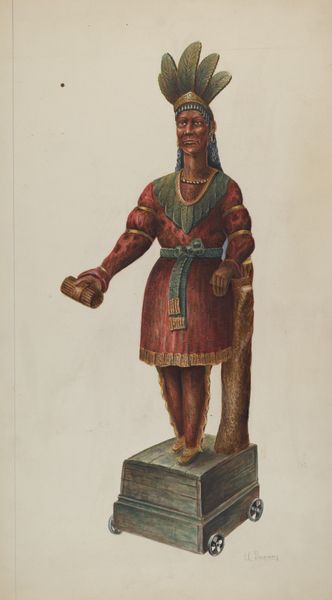
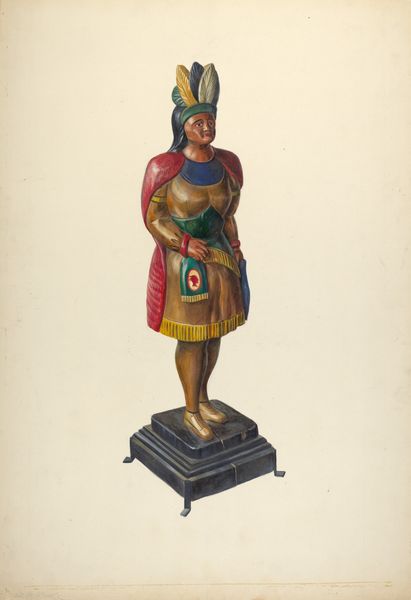
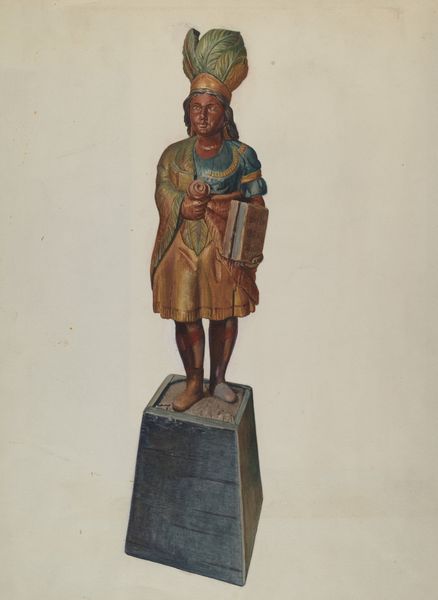
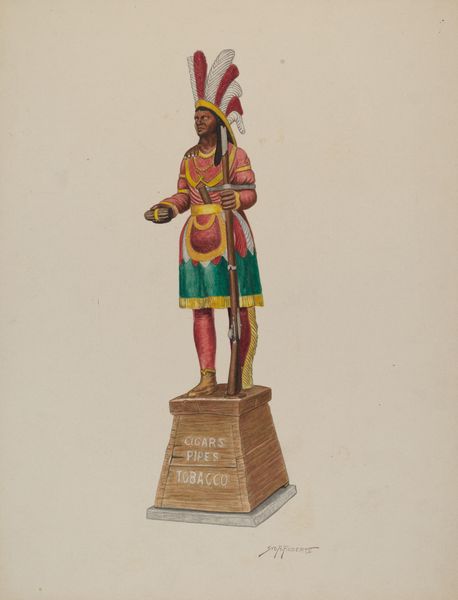
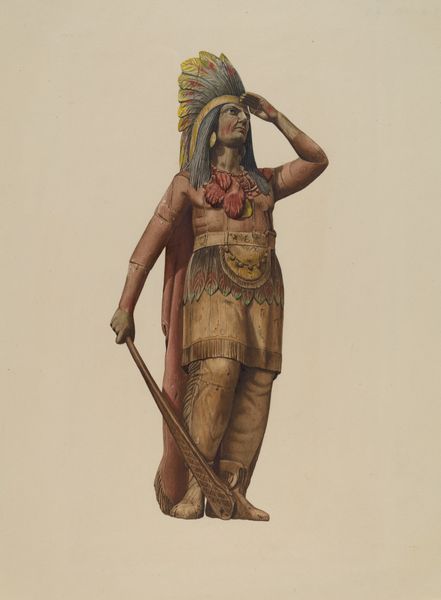
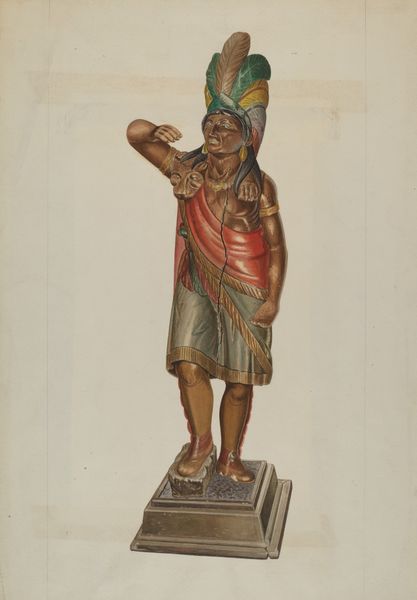
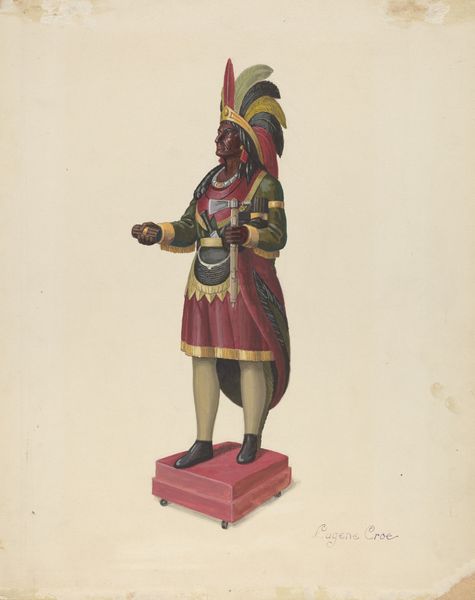
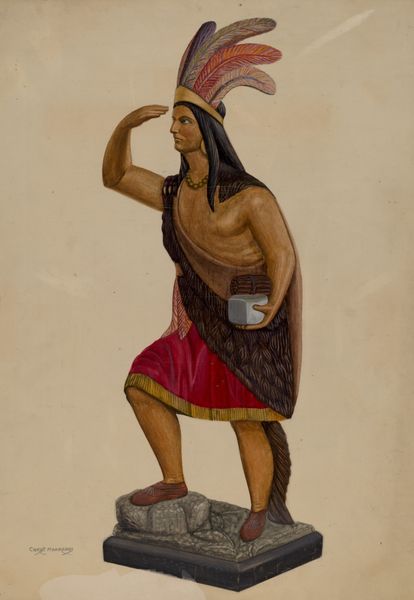
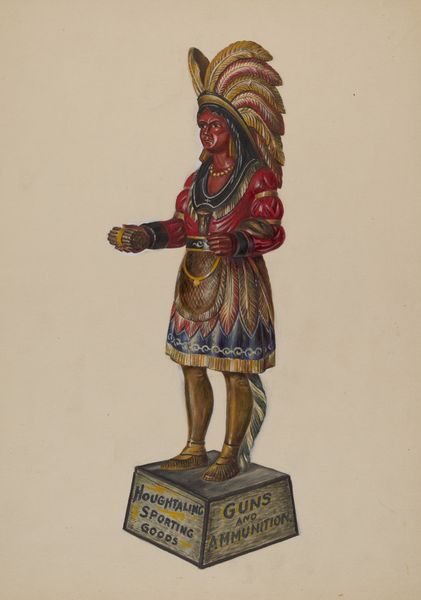
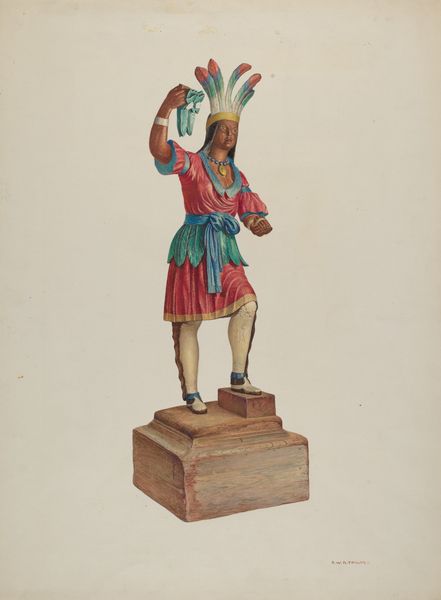
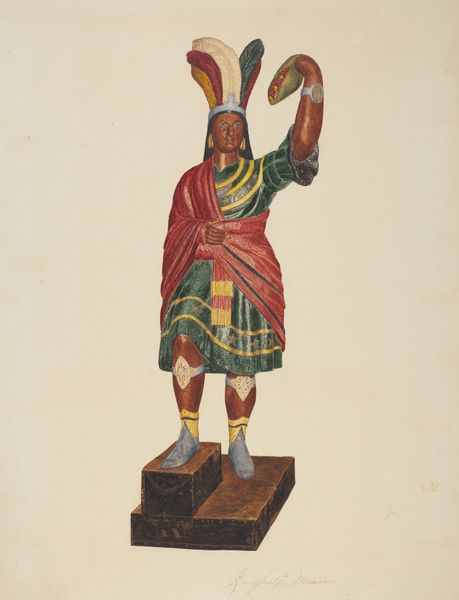
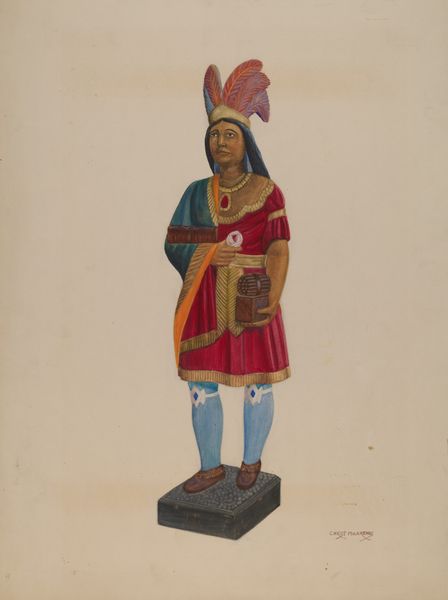
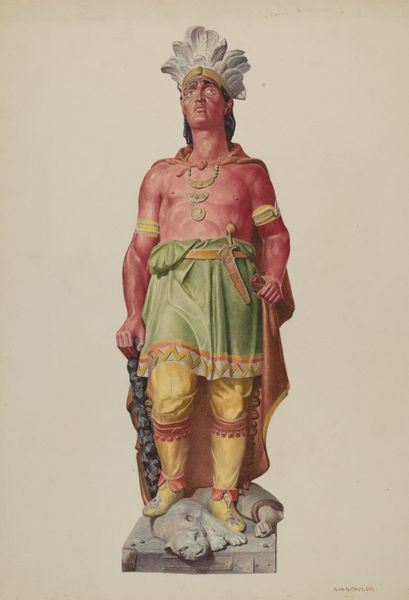
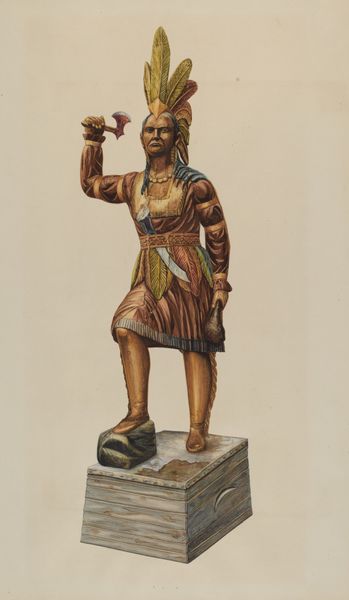
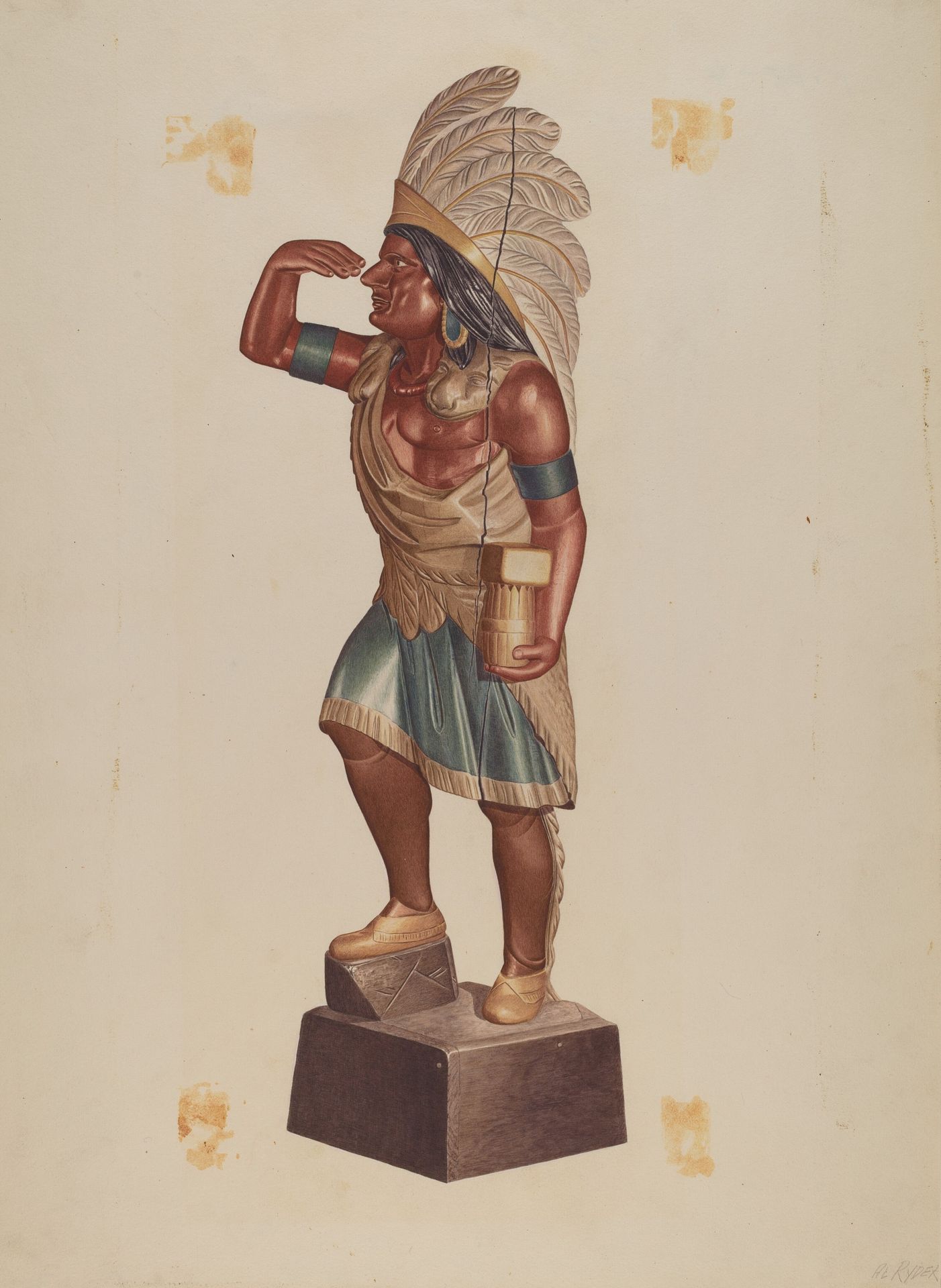
Editor: This is Albert Ryder's "Cigar Store Indian," made between 1935 and 1942, using watercolor and colored pencil. It feels like a pretty straightforward portrait, but there’s also something a little…off about it. What do you see in this piece? Curator: I see a complex layering of historical and cultural appropriation. Cigar store Indians, mass-produced as advertising, are themselves a commodification and a caricature of Indigenous people. Ryder’s work then, almost a copy of a copy, highlights the distorted lens through which Indigenous identity was viewed, especially within commercial contexts. Editor: So, it’s not just a portrait; it's a commentary on representation itself? Curator: Precisely. We must ask, who is the intended audience? What preconceived notions are being reinforced, even subconsciously? The romanticized feather headdress, the stoic gaze – these are loaded symbols, contributing to a specific narrative. Are we, even now, complicit in that narrative by simply observing this image? Editor: It’s almost uncomfortable now that I’m thinking about it that way. What was Ryder trying to say? Curator: That's the crucial question, isn’t it? Ryder may have been attempting a sympathetic portrayal, or perhaps he was critiquing the broader culture that popularized these figures. His intentions are less important than the impact of this image, its participation in a visual language steeped in inequality. How does that perspective change your initial reaction? Editor: It’s more complicated now. I’m not just seeing a picture, but all these layers of history and misrepresentation. I realize now it is very important to address that history openly, rather than gloss over it. Curator: Indeed. And that is the power of art, to provoke these necessary conversations, prompting us to look critically not only at the artwork itself but at the world around it.