About this artwork
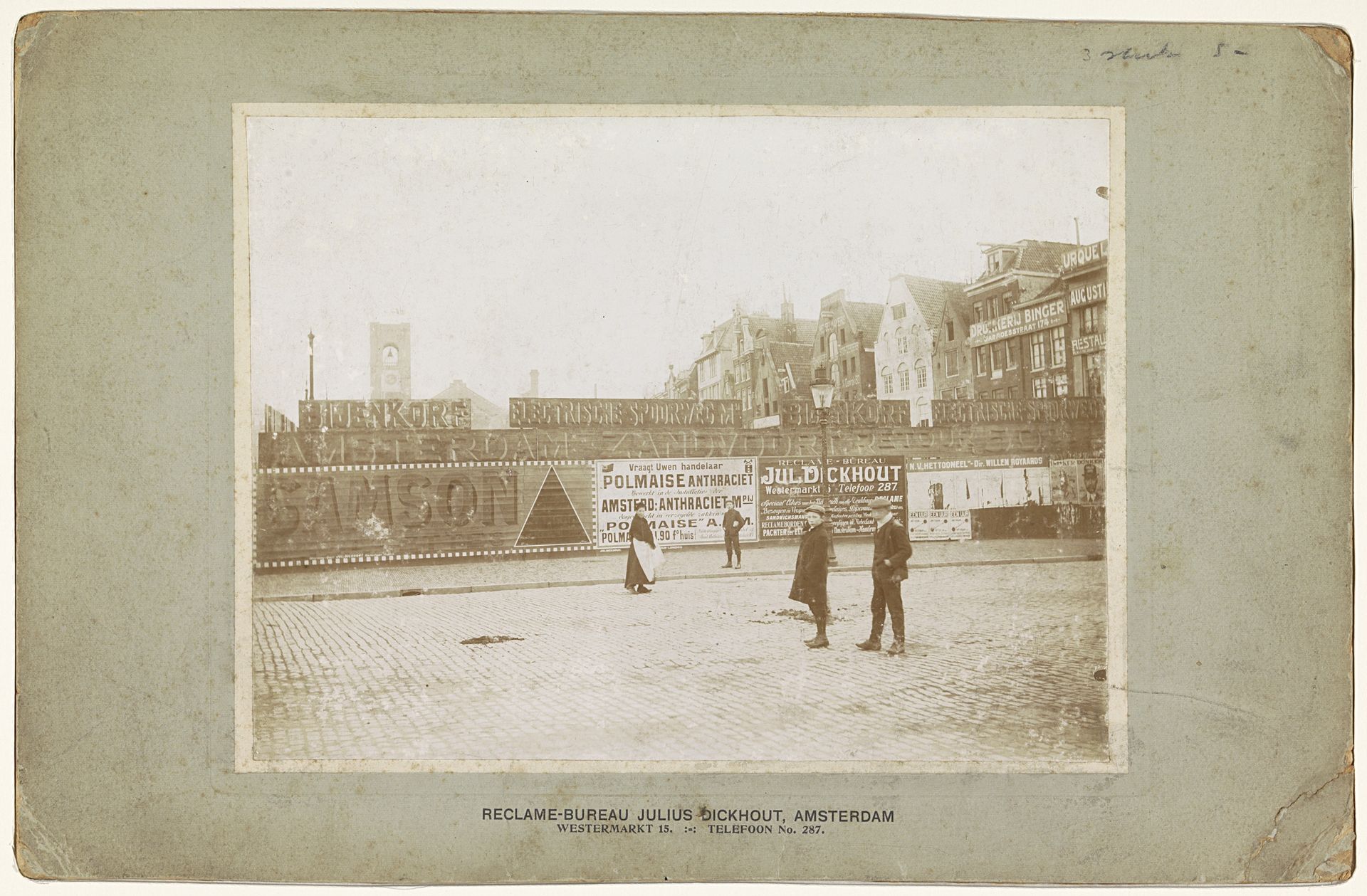
This photograph of a construction site in Amsterdam, taken by J.J. Crouwel, shows us the urban landscape as a canvas for advertising. The sepia tones give the image a nostalgic feel, like looking back at a memory. The image is dominated by the large hoardings, plastered with posters, creating a visual cacophony that vies for attention. I'm drawn to the contrast between the geometric precision of the advertisements and the more organic, irregular texture of the brick buildings in the background. The word 'Davison' on the hoarding is striking, framed by a bold triangle. It's a fragment of information that feels like a found object. Like a collage, the image presents layers of information, inviting us to decipher the signs and symbols of a bygone era. It reminds me of the urban landscapes in Kurt Schwitters collages, where fragments of the everyday are repurposed to create new meanings. Art, like life, is an ongoing process of construction and deconstruction.
Schutting met affiches (bouwput Bijenkorf, Dam) in Amsterdam
1910 - 1914

Artwork details
- Medium
- print, photography, poster
- Dimensions
- height 174 mm, width 232 mm, height 234 mm, width 358 mm
- Copyright
- Rijks Museum: Open Domain
Tags
Comments
Share your thoughts
About this artwork
This photograph of a construction site in Amsterdam, taken by J.J. Crouwel, shows us the urban landscape as a canvas for advertising. The sepia tones give the image a nostalgic feel, like looking back at a memory. The image is dominated by the large hoardings, plastered with posters, creating a visual cacophony that vies for attention. I'm drawn to the contrast between the geometric precision of the advertisements and the more organic, irregular texture of the brick buildings in the background. The word 'Davison' on the hoarding is striking, framed by a bold triangle. It's a fragment of information that feels like a found object. Like a collage, the image presents layers of information, inviting us to decipher the signs and symbols of a bygone era. It reminds me of the urban landscapes in Kurt Schwitters collages, where fragments of the everyday are repurposed to create new meanings. Art, like life, is an ongoing process of construction and deconstruction.
Comments
Share your thoughts