About this artwork
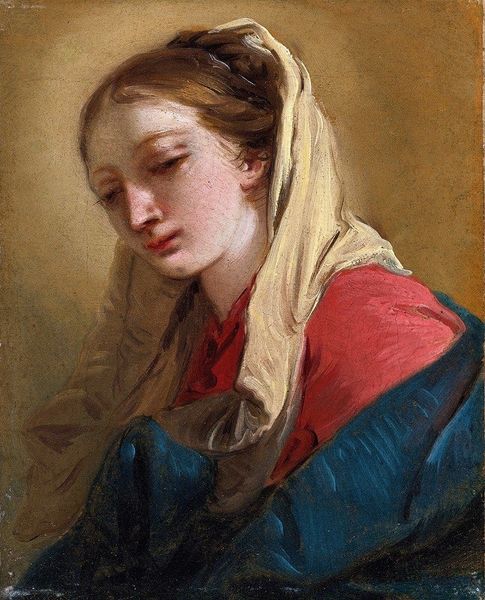
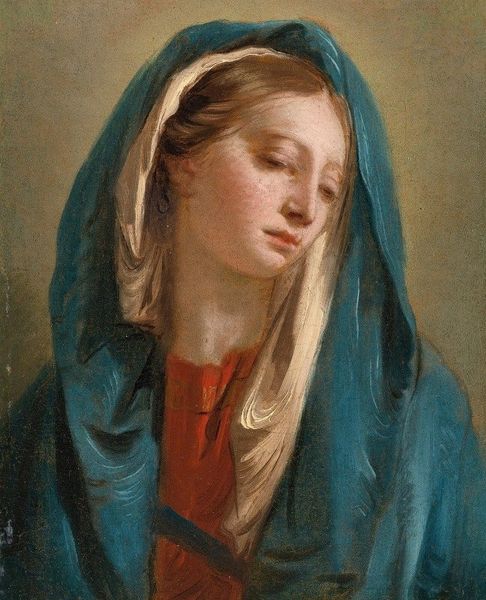
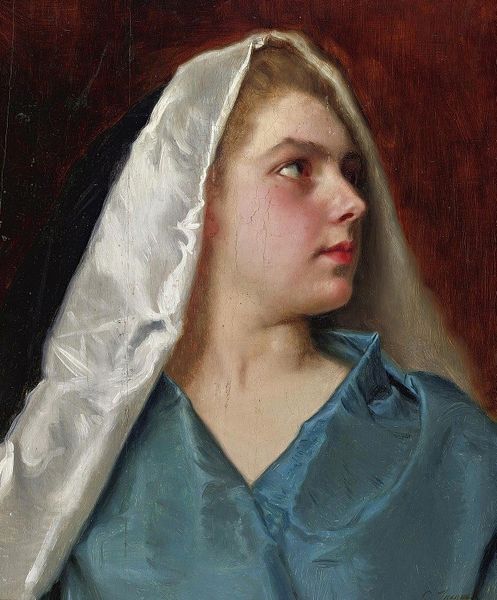
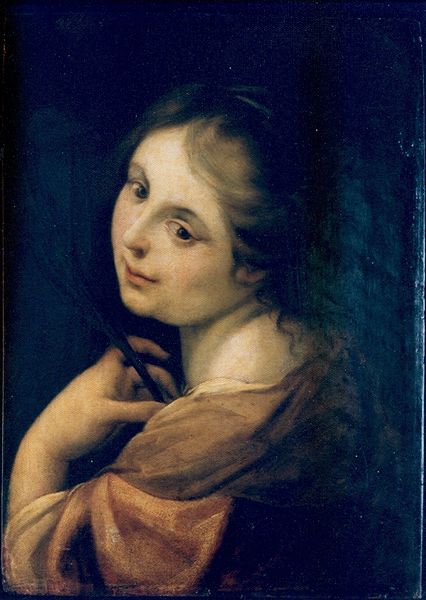
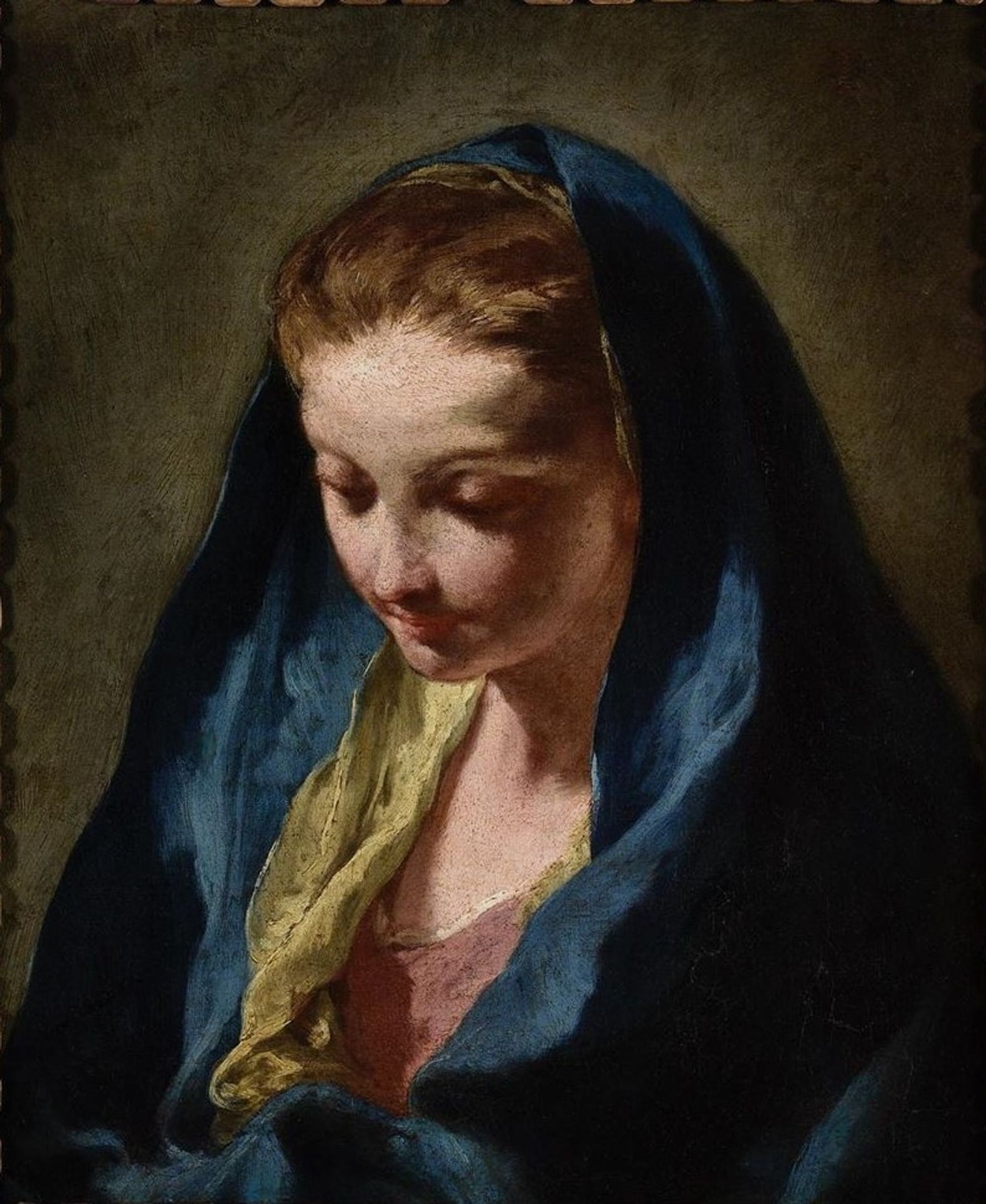
Curator: Looking at Giambattista Pittoni's oil painting, "Head of the Virgin," I'm struck by how the brushwork conveys a feeling of tender melancholy. Editor: Immediately, what jumps out is the sheer weight of the fabric enveloping her. The thick, dark blue oil paint feels substantial, almost oppressive. It speaks to a life of heavy labor and duty. Curator: The blue is, of course, Marian blue, traditionally used to depict the Virgin Mary. The color, derived often from costly lapis lazuli, itself became a symbol of purity and divinity. Her downcast gaze is classic iconography signifying humility and obedience. Editor: But there’s also a raw, unidealized quality in the application of the paint. See the quick strokes, the visible texture? It gives it an almost unfinished feel, suggesting a working-class reality underlying the spiritual subject. Were these materials easy to come by for the painter, and who was supporting this practice? Curator: Perhaps Pittoni wanted to emphasize Mary's humanity, her accessibility as a figure of solace and compassion. It’s worth remembering that baroque art aimed to create emotional connection through drama and dynamism. Editor: It is true. But the way Pittoni layered the paint and the texture it yields evokes tangible effort and speaks to social class—labor becomes a form of meaning itself. Even that yellow piece is barely hanging on, ready to be used. Curator: Ultimately, it is interesting how both humanity and the divine reside in the depiction of one figure, allowing the viewer to contemplate themes of love and suffering. Editor: I agree. The very stuff of the painting and the context of its creation, its accessibility through process, can also spark meaningful reflection on belief and hardship.

Artwork details
- Medium
- painting, oil-paint
- Copyright
- Public domain
Tags
Comments
Share your thoughts
About this artwork
Curator: Looking at Giambattista Pittoni's oil painting, "Head of the Virgin," I'm struck by how the brushwork conveys a feeling of tender melancholy. Editor: Immediately, what jumps out is the sheer weight of the fabric enveloping her. The thick, dark blue oil paint feels substantial, almost oppressive. It speaks to a life of heavy labor and duty. Curator: The blue is, of course, Marian blue, traditionally used to depict the Virgin Mary. The color, derived often from costly lapis lazuli, itself became a symbol of purity and divinity. Her downcast gaze is classic iconography signifying humility and obedience. Editor: But there’s also a raw, unidealized quality in the application of the paint. See the quick strokes, the visible texture? It gives it an almost unfinished feel, suggesting a working-class reality underlying the spiritual subject. Were these materials easy to come by for the painter, and who was supporting this practice? Curator: Perhaps Pittoni wanted to emphasize Mary's humanity, her accessibility as a figure of solace and compassion. It’s worth remembering that baroque art aimed to create emotional connection through drama and dynamism. Editor: It is true. But the way Pittoni layered the paint and the texture it yields evokes tangible effort and speaks to social class—labor becomes a form of meaning itself. Even that yellow piece is barely hanging on, ready to be used. Curator: Ultimately, it is interesting how both humanity and the divine reside in the depiction of one figure, allowing the viewer to contemplate themes of love and suffering. Editor: I agree. The very stuff of the painting and the context of its creation, its accessibility through process, can also spark meaningful reflection on belief and hardship.
Comments
Share your thoughts