1906
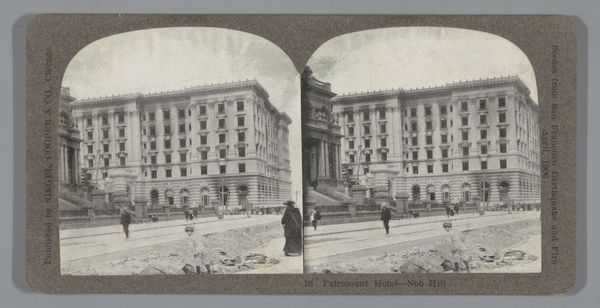
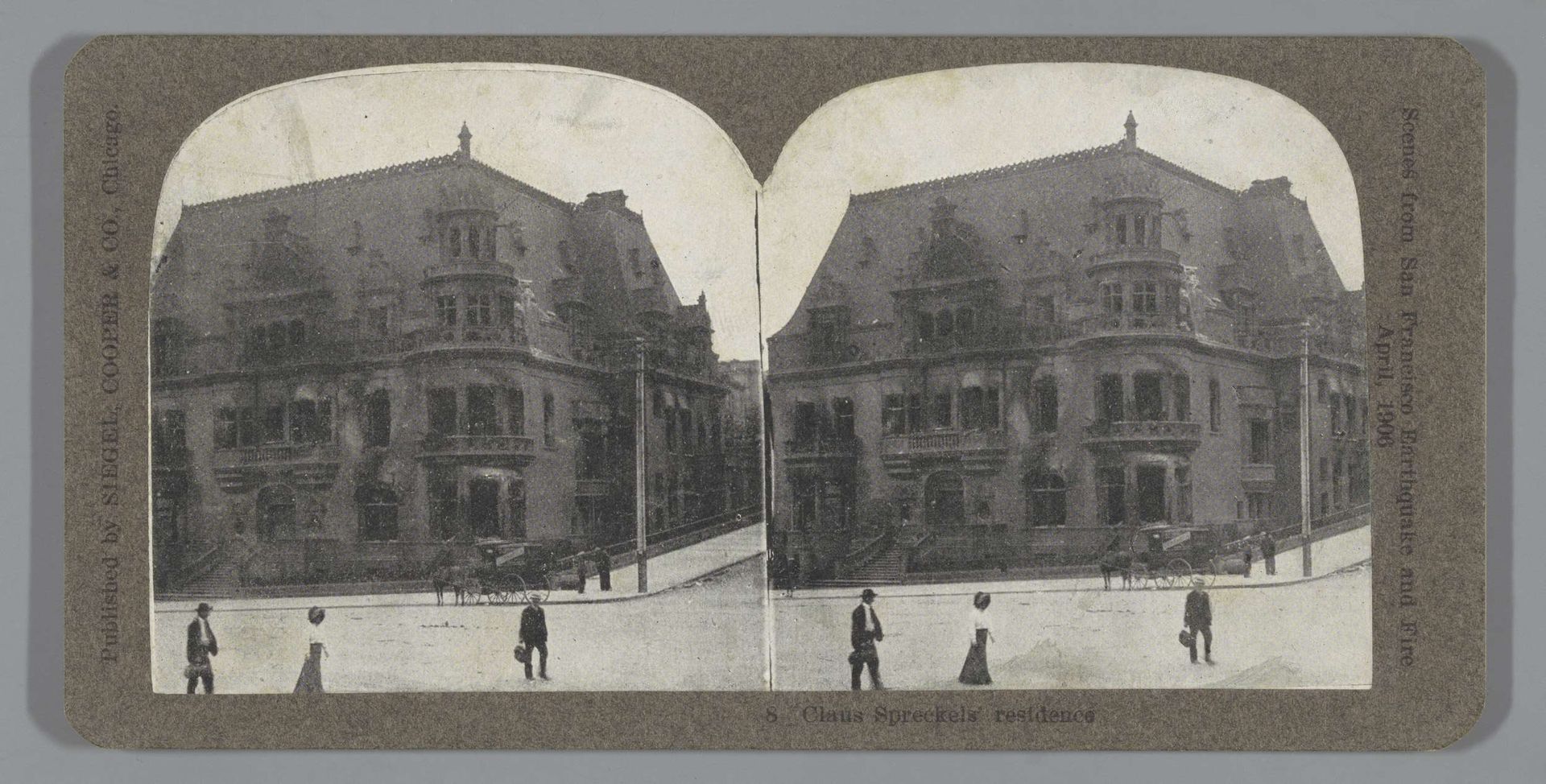
Beschadigd woonhuis van Claus Spreckels na de aardbeving in San Francisco

Listen to curator's interpretation
Curatorial notes
Editor: Here we have a stereograph from 1906 entitled "Beschadigd woonhuis van Claus Spreckels na de aardbeving in San Francisco," showing what I assume is the damaged residence of Claus Spreckels after the San Francisco earthquake. It's albumen print photography, and the somber tones really emphasize the damage. What can you tell us about the context of this image? Curator: Well, immediately it speaks to the role photography played in disseminating information and shaping public perception after disasters. Consider the "pictorialist" style, aiming for art, but also used for reportage. The San Francisco earthquake was a pivotal event, and images like this shaped how the rest of the world perceived it and the city's resilience. This was mass media. Editor: So, the image itself is making a statement beyond just documenting the damage? Curator: Precisely. It is very political. The choice to focus on Spreckels’ home, a symbol of wealth and power, might be subtly critiquing the social inequalities exposed by the disaster. Think about who had the resources to rebuild quickly versus who did not. What’s foregrounded and why? The fact this was packaged as mass media and sold also speaks volumes about disaster response in society. How does this strike you in those terms? Editor: It makes you wonder about the photographer’s intention – were they highlighting the suffering of the wealthy, or using it to exemplify the scale of devastation? I suppose it could be read either way, depending on the viewer’s socio-economic stance. Curator: Exactly. These visual documents open avenues to discussing the social ramifications of natural disasters. How art acts a window into cultural discourse around traumatic events in society is fascinating to observe. Editor: That is such a powerful way to analyze a historical image. Thank you for sharing that perspective.