1910
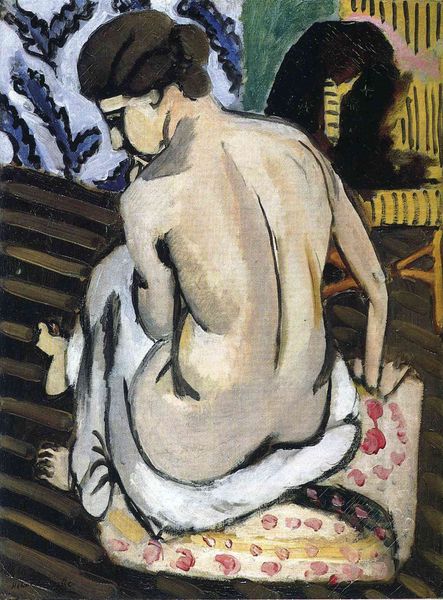
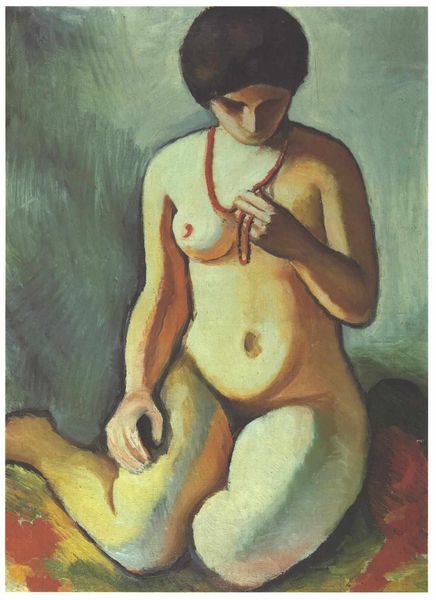
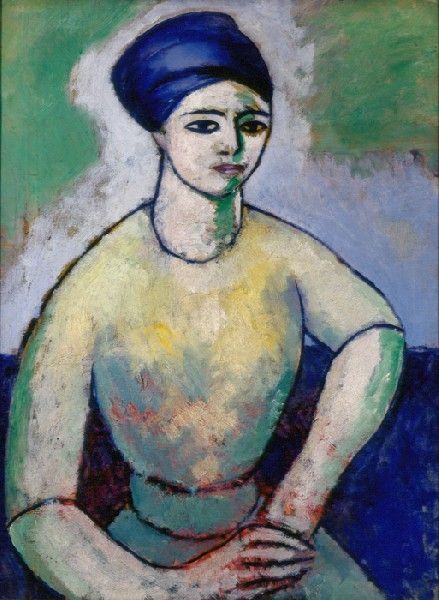
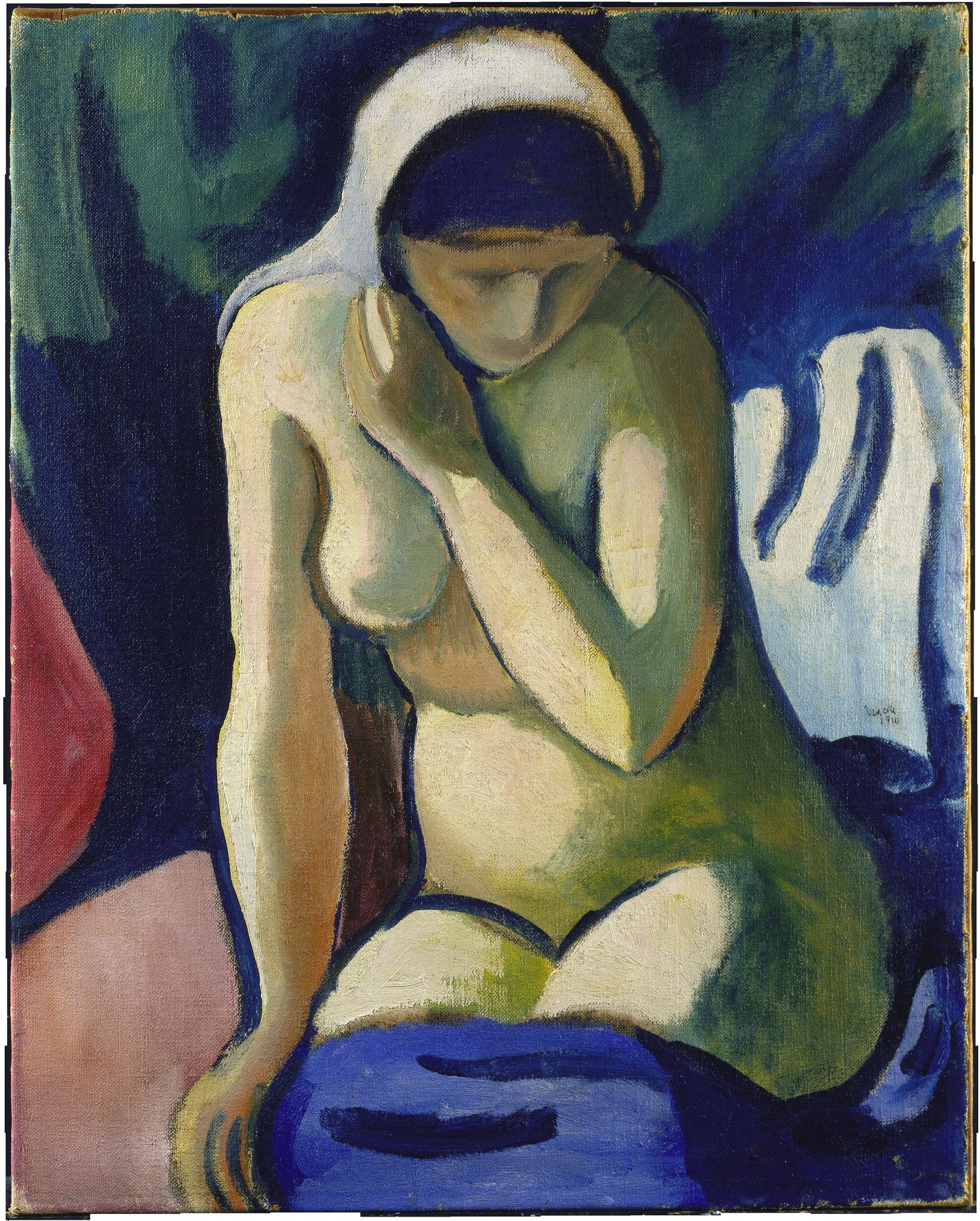
Naked Girl with Headscarf


Listen to curator's interpretation
Curatorial notes
Editor: Here we have August Macke’s “Naked Girl with Headscarf,” painted in 1910, using oil paint. The pose is interesting; she almost seems to be shielding herself. How do you interpret this work? Curator: The texture and brushstrokes of the oil paint are key here. Macke, deeply involved in the materiality of paint and canvas, constructs a figure not through academic realism, but through an active engagement with applying pigment. It's not just about depicting a nude; it's about *making* a nude, thinking about how gender is produced through these processes. How does this challenge the conventional, often male-dominated, tradition of the nude in art? Editor: I guess it does feel different from, say, a classical nude. The emphasis feels less about idealizing the body and more about the sheer physicality of its representation. Curator: Exactly! Consider the social context: early 20th century, shifts in artistic practice, the rise of expressionism. Artists were questioning the traditional roles of art and challenging the prevailing social norms. Think about who had access to art, who controlled its production, and who was represented in it. Where does this image fit in that context? Editor: So it's about how the materials themselves contribute to the meaning, reflecting those social and artistic shifts. That's helpful! Curator: Precisely. By focusing on the material and the process, we reveal not just the "what" but the "how" and "why" of the artwork's existence and how these can be seen in art today. Editor: I see that now. Looking at it again, it feels much more deliberate, less about capturing beauty and more about presenting a commentary. Curator: Absolutely. We've both taken something away from examining this painting's materiality. It gives us a language with which to consider contemporary artwork.