drawing, print, paper, engraving
#
portrait
#
drawing
#
comic strip sketch
#
aged paper
#
light pencil work
# print
#
old engraving style
#
landscape
#
paper
#
personal sketchbook
#
idea generation sketch
#
romanticism
#
pen-ink sketch
#
sketchbook drawing
#
genre-painting
#
storyboard and sketchbook work
#
sketchbook art
#
engraving
Dimensions: height 128 mm, width 93 mm
Copyright: Rijks Museum: Open Domain
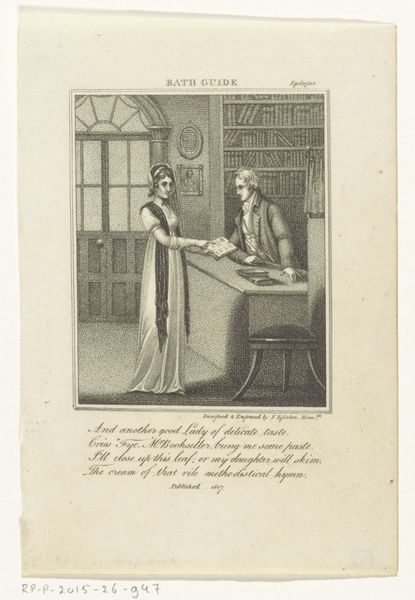
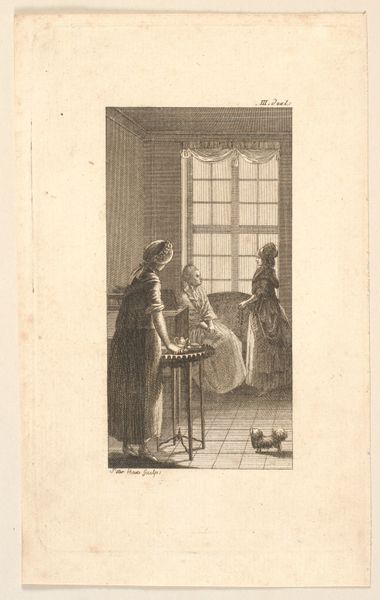
Curator: Let's turn our attention to this engaging print from 1825, titled "Verkoopster van bladmuziek." It depicts a music vendor assisting customers. Editor: It’s charming! I'm struck by the depiction of labor, how it illustrates the everyday commerce of music—a social exchange hinged on the availability of printed scores. Curator: Absolutely, we see the vendor at the counter, likely a central figure in the local music scene, connecting composers to amateur musicians. The availability of music was very different back then. Editor: You're right. Note the careful detail in the hatching of the counter and clothing. It draws attention to the print's own material creation. The engraver's labor itself becomes apparent. Curator: Indeed, engraving was a popular method of reproduction and distribution at this time. The affordability of prints like this opened artistic and musical experiences to wider audiences. The culture of sheet music really boomed with the accessibility of this format. Editor: It’s interesting to see this intersection of artistry, commerce, and craftsmanship. Do we know anything more about the original creator? Curator: Sadly, it’s currently attributed to Anonymous, although this image points to larger themes regarding 19th-century entertainment, as sheet music fueled a popular demand and allowed individuals to engage more intimately with music in their homes. Editor: Thinking about the materiality makes me think about all of those now worn, foxed pieces of paper being lovingly played by amateurs in parlors of the era. The marks of production meet the wear and tear of intimate consumption. Curator: Precisely. And consider the role of printmaking in shaping perceptions of social life. Scenes like these idealized the middle class. Editor: Well, thanks to this engraving's existence, it preserves and reflects an interesting aspect of everyday life through material form and social interaction, which is an aspect I'll think about now. Curator: Agreed, it provides a snapshot of a burgeoning musical culture, and allows us to consider how cultural access changed over the years through reproductive technologies.
Comments
No comments
Be the first to comment and join the conversation on the ultimate creative platform.
 Collect
 React
React Comment
More like this