About this artwork
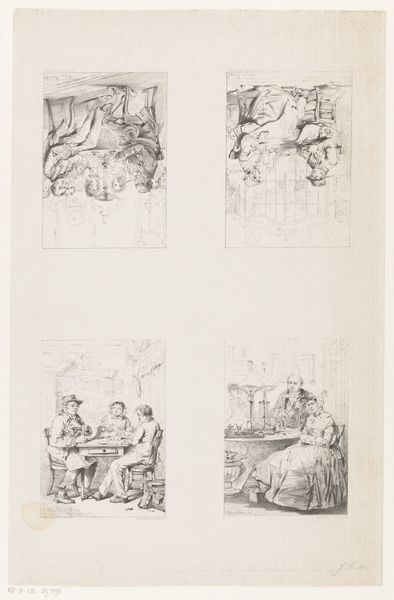
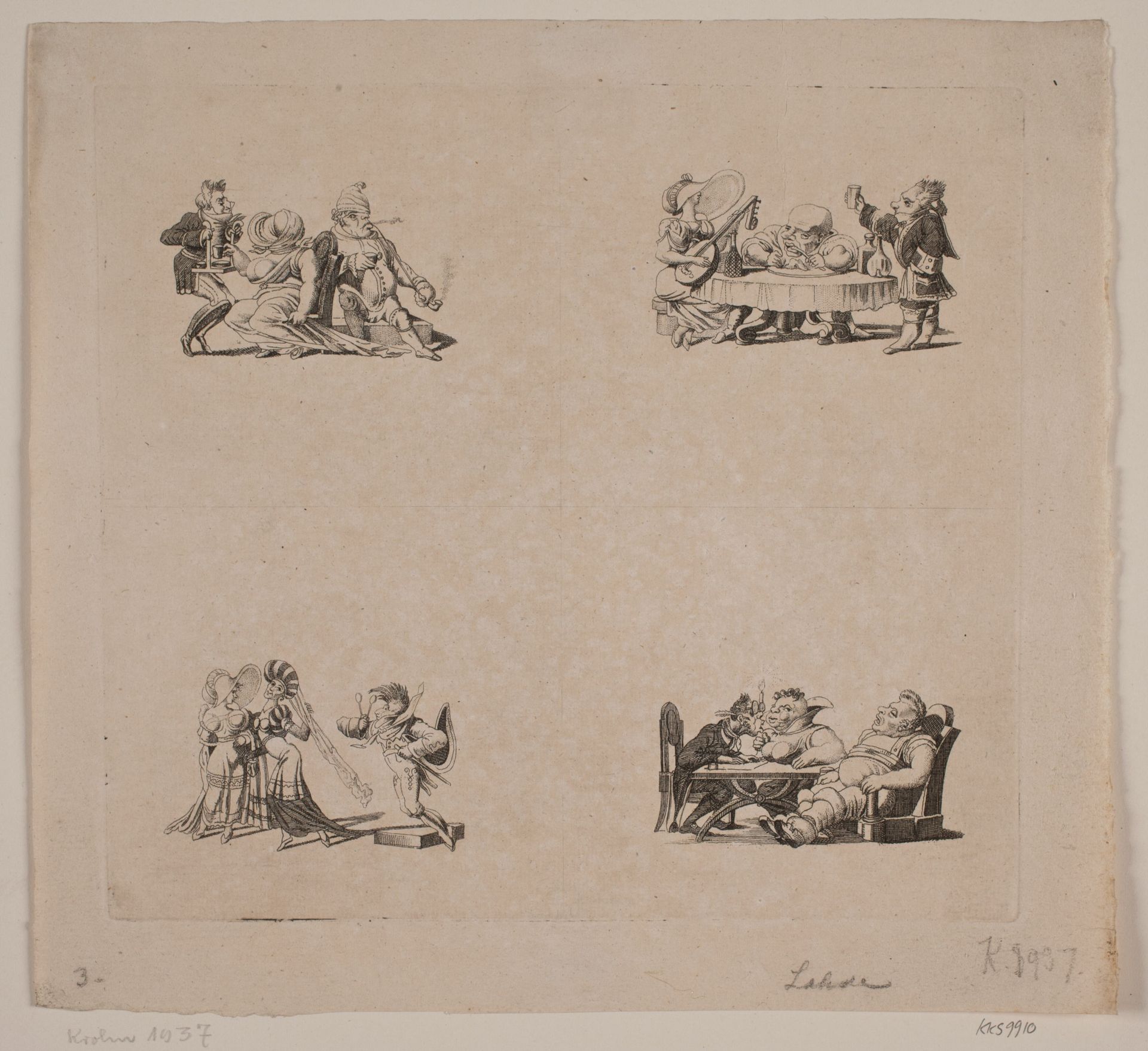
Curator: Today, we're observing "24 timer i hovedstaden", an engraving from 1820 by Gerhard Ludvig Lahde, held at the SMK, Denmark’s National Gallery. What’s your initial impression? Editor: My first reaction is that these grotesque figures and compositions exude social satire. It feels like a sharp commentary on society’s excesses. There is a dark mood even within the style of Romanticism, not exactly optimistic. Curator: Precisely. Lahde uses caricature to great effect, intensifying each scene’s message. Let's unpack one example, the first in the series, perhaps representing morning: A couple appear intoxicated; one almost collapses, propped up by an attentive man. What symbols stand out for you in their interactions, their posture, their state? Editor: Well, the slumped posture signifies the moral and physical decadence following a night of revelry. This critique seems directed towards the bourgeois or aristocratic lifestyle, emphasizing overindulgence as a societal ill, fueled by patriarchal societal rules and a growing disparity among genders and classes. Curator: Yes, there's a strong suggestion of societal imbalance here. Look at the fourth panel. There's a composition involving sleeping figures who are carelessly posed, suggestive of moral slumber as well. It resonates beyond just individual failings; it represents systemic rot. Editor: I think the romantic-era is marked with an intersectional awakening – although imperfect -- regarding morality, social justice, and economic inequalities that can still mirror some of the challenges we deal with today, such as economic crises that threaten society’s foundations. Curator: You make a powerful point. Despite the specificity of 19th-century Copenhagen, Lahde's caricature uses imagery that continues to challenge our perceptions, pushing us to interrogate societal imbalances. Editor: And that lasting sting of social critique encourages conversations beyond art, impacting ethics, history and more, offering many insights even two centuries later.
24 timer i hovedstaden
1820


Artwork details
- Medium
- drawing, print, engraving
- Dimensions
- 181 mm (height) x 200 mm (width) (plademaal)
- Location
- SMK - Statens Museum for Kunst
Tags
Comments
Share your thoughts
About this artwork
Curator: Today, we're observing "24 timer i hovedstaden", an engraving from 1820 by Gerhard Ludvig Lahde, held at the SMK, Denmark’s National Gallery. What’s your initial impression? Editor: My first reaction is that these grotesque figures and compositions exude social satire. It feels like a sharp commentary on society’s excesses. There is a dark mood even within the style of Romanticism, not exactly optimistic. Curator: Precisely. Lahde uses caricature to great effect, intensifying each scene’s message. Let's unpack one example, the first in the series, perhaps representing morning: A couple appear intoxicated; one almost collapses, propped up by an attentive man. What symbols stand out for you in their interactions, their posture, their state? Editor: Well, the slumped posture signifies the moral and physical decadence following a night of revelry. This critique seems directed towards the bourgeois or aristocratic lifestyle, emphasizing overindulgence as a societal ill, fueled by patriarchal societal rules and a growing disparity among genders and classes. Curator: Yes, there's a strong suggestion of societal imbalance here. Look at the fourth panel. There's a composition involving sleeping figures who are carelessly posed, suggestive of moral slumber as well. It resonates beyond just individual failings; it represents systemic rot. Editor: I think the romantic-era is marked with an intersectional awakening – although imperfect -- regarding morality, social justice, and economic inequalities that can still mirror some of the challenges we deal with today, such as economic crises that threaten society’s foundations. Curator: You make a powerful point. Despite the specificity of 19th-century Copenhagen, Lahde's caricature uses imagery that continues to challenge our perceptions, pushing us to interrogate societal imbalances. Editor: And that lasting sting of social critique encourages conversations beyond art, impacting ethics, history and more, offering many insights even two centuries later.
Comments
Share your thoughts