About this artwork
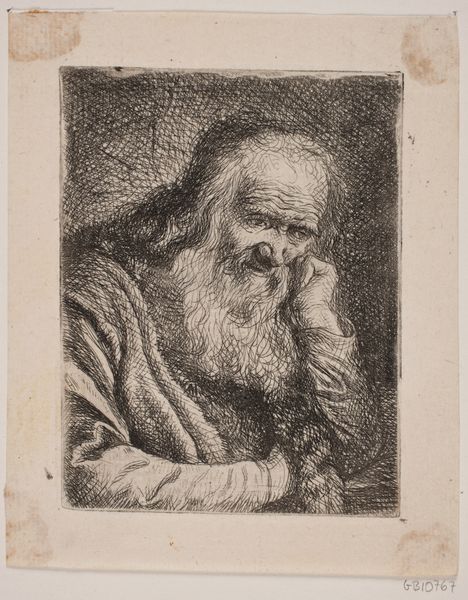
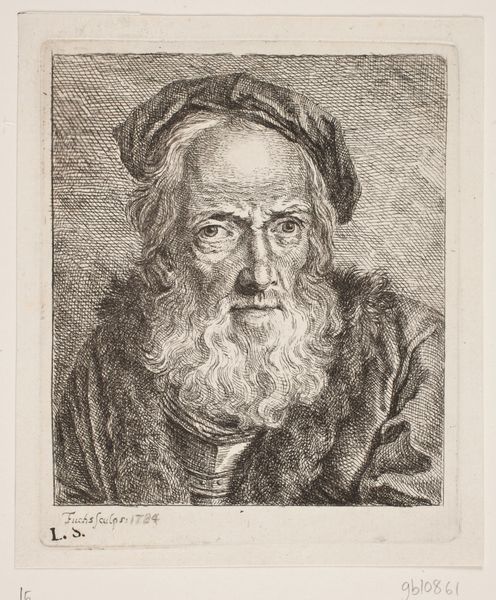
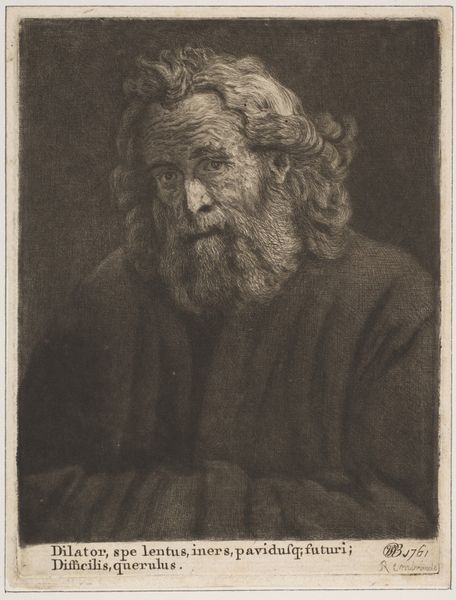
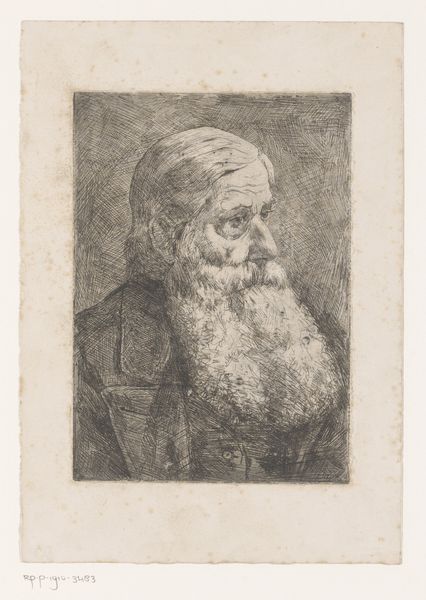
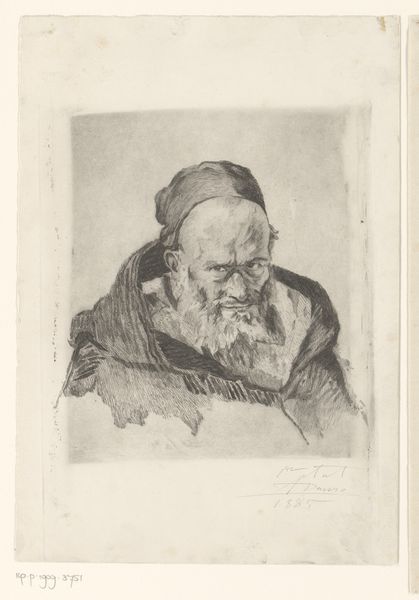
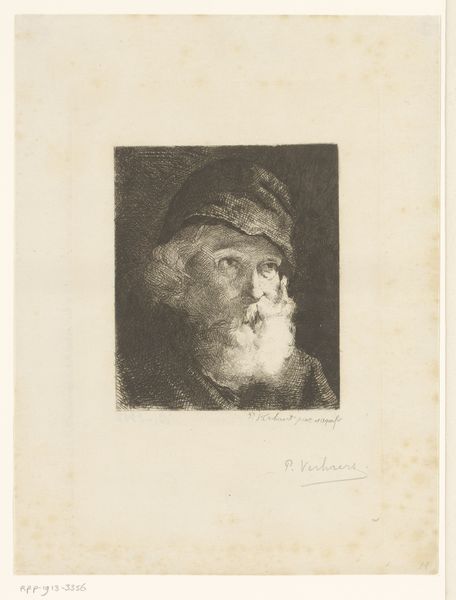
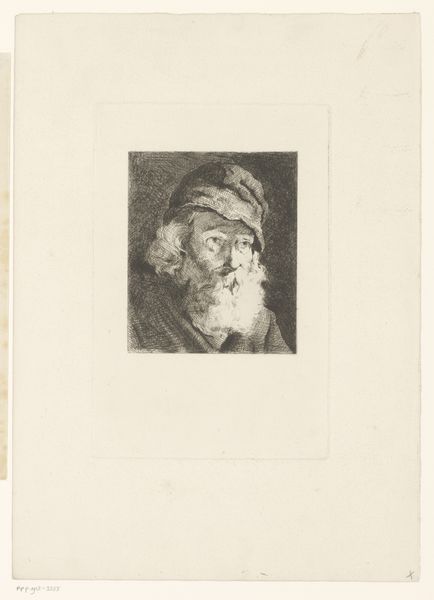
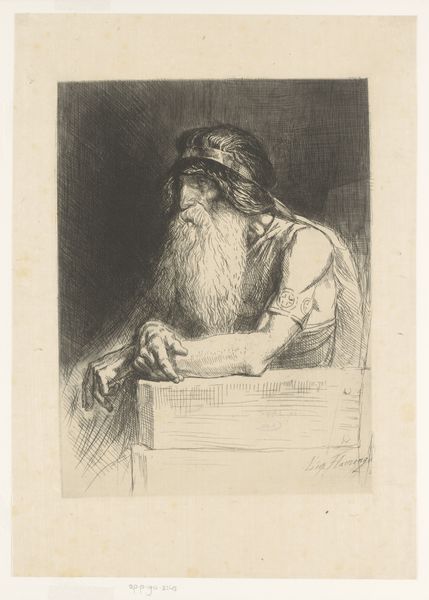
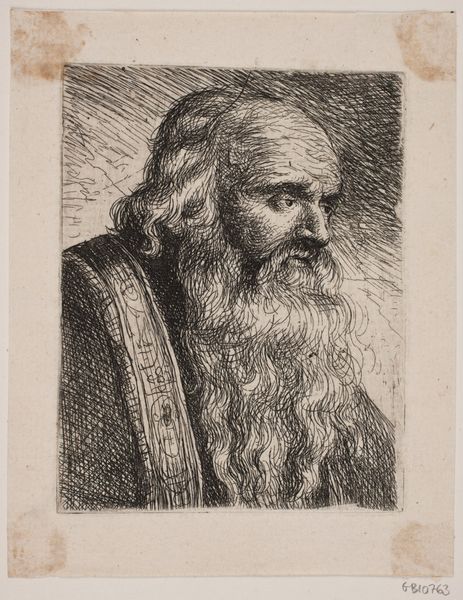
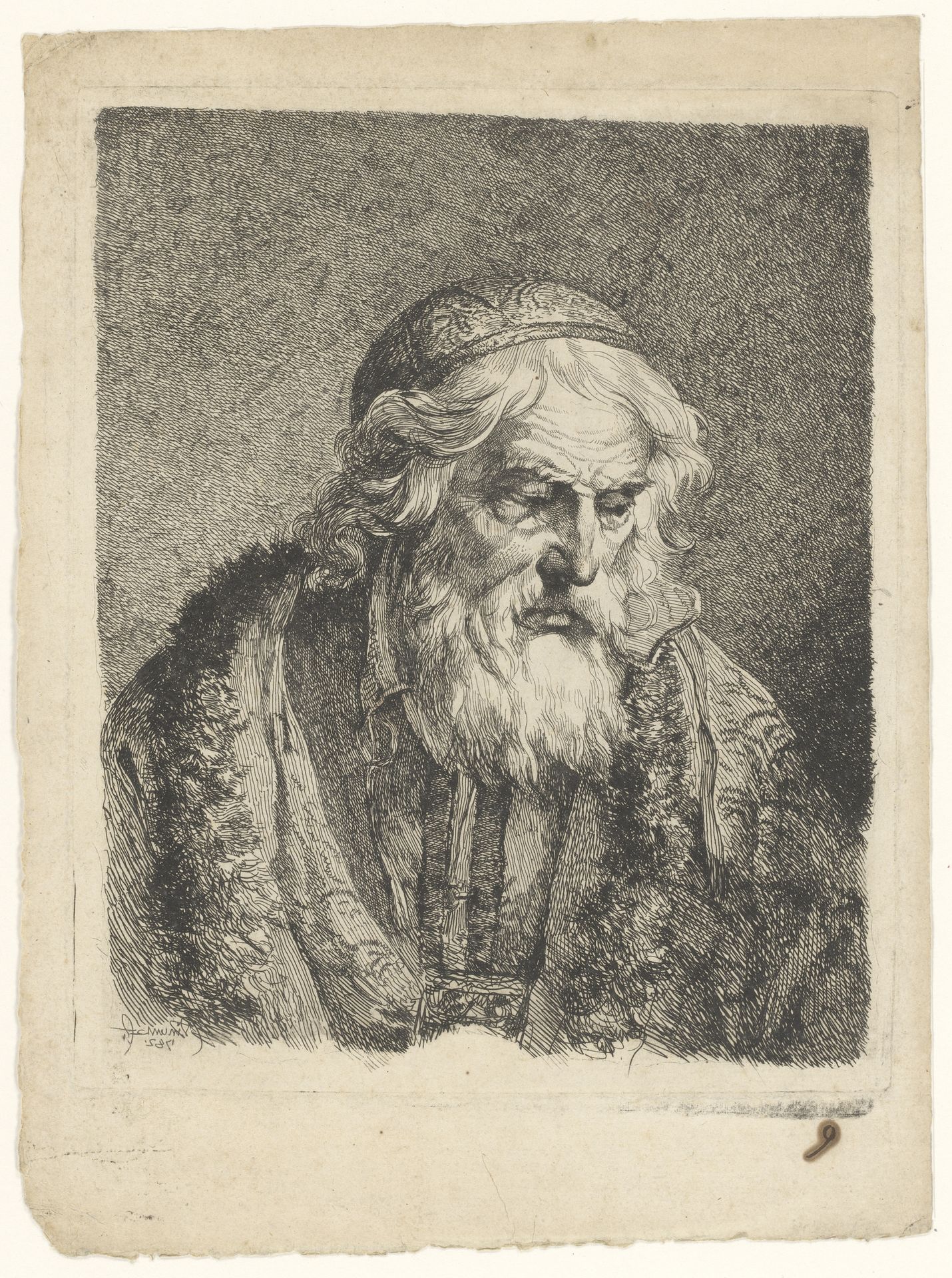
François André Vincent made this etching of an old man, also known as "The Greek Priest," using metal, acid and paper. Etching allowed Vincent to create fine, detailed lines, capturing the man's weathered face and the texture of his garments. Look closely, and you'll notice how the printmaking process informs the work’s impact: the acid biting into the metal plate, leaving grooves that hold the ink, creating the image through pressure. The paper itself, likely handmade, adds to the tactile quality, and also has a direct impact on the final image. Each pull from the etched plate would have been slightly unique, a direct connection to the artist’s hand. Consider, too, the social context of printmaking: it democratized art, making images more accessible to a wider audience. Yet, it also relied on skilled labor to produce both the plates and the prints. So, when you look at this etching, think not only of the image it presents, but also of the materials, the making, and the social dynamics embedded within its production.
Portret van een oude man, ook genaamd "De Griekse Priester"
1782

Artwork details
- Medium
- print, engraving
- Dimensions
- height 237 mm, width 195 mm
- Copyright
- Rijks Museum: Open Domain
Tags
Comments
Share your thoughts
About this artwork
François André Vincent made this etching of an old man, also known as "The Greek Priest," using metal, acid and paper. Etching allowed Vincent to create fine, detailed lines, capturing the man's weathered face and the texture of his garments. Look closely, and you'll notice how the printmaking process informs the work’s impact: the acid biting into the metal plate, leaving grooves that hold the ink, creating the image through pressure. The paper itself, likely handmade, adds to the tactile quality, and also has a direct impact on the final image. Each pull from the etched plate would have been slightly unique, a direct connection to the artist’s hand. Consider, too, the social context of printmaking: it democratized art, making images more accessible to a wider audience. Yet, it also relied on skilled labor to produce both the plates and the prints. So, when you look at this etching, think not only of the image it presents, but also of the materials, the making, and the social dynamics embedded within its production.
Comments
Share your thoughts