About this artwork
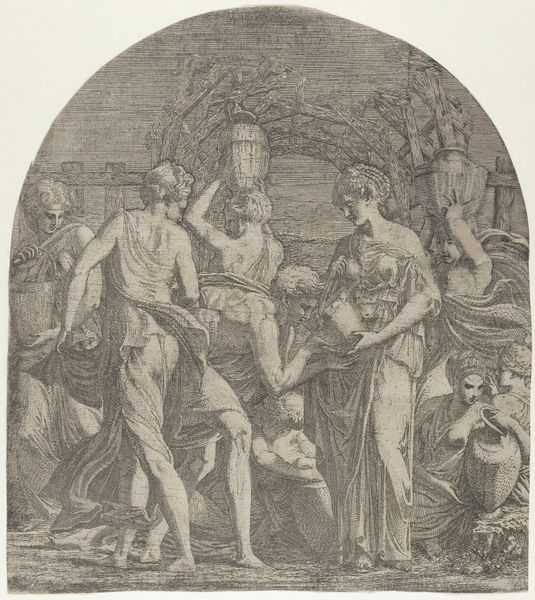
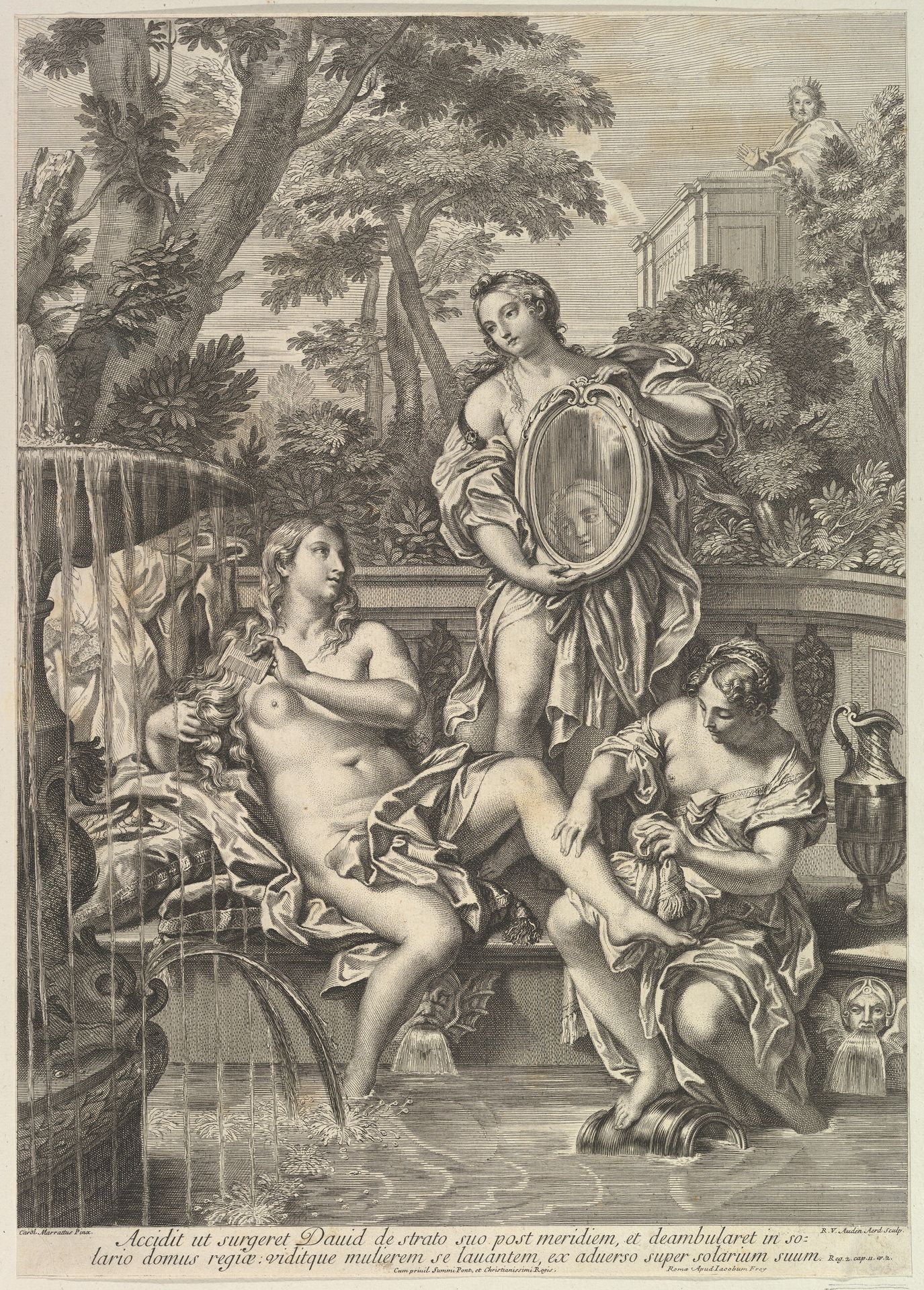
Robert van Audenaerde created this print of David and Bathsheba in the 17th or 18th century. It illustrates a biblical story ripe with power dynamics, desire, and consequence. In the scene, Bathsheba is depicted bathing, observed by King David from a distance. Van Audenaerde situates us within a gaze that has historically objectified women. Here, Bathsheba is not just a figure in a narrative, but a subject of scrutiny. The print invites us to consider the intersections of religious narrative, the male gaze, and female agency. The story of David and Bathsheba is not merely a tale of adultery; it's about the abuse of power and its repercussions. How does Van Audenaerde negotiate these complexities? The print leaves us to consider how the weight of history and representation shapes our understanding of stories, and how artists negotiate these loaded themes.
David and Bathsheba 1680 - 1743

Robert van Audenaerde
1663 - 1743
The Metropolitan Museum of Art
Metropolitan Museum of Art, New York, NYArtwork details
- Medium
- drawing, print, engraving
- Dimensions
- sheet: 21 7/8 x 16 in. (55.6 x 40.7 cm) plate: 18 1/8 x 12 13/16 in. (46 x 32.6 cm)
- Location
- Metropolitan Museum of Art, New York, NY
- Copyright
- Public Domain
Tags
drawing
baroque
female-nude
history-painting
nude
engraving
Comments
No comments
About this artwork
Robert van Audenaerde created this print of David and Bathsheba in the 17th or 18th century. It illustrates a biblical story ripe with power dynamics, desire, and consequence. In the scene, Bathsheba is depicted bathing, observed by King David from a distance. Van Audenaerde situates us within a gaze that has historically objectified women. Here, Bathsheba is not just a figure in a narrative, but a subject of scrutiny. The print invites us to consider the intersections of religious narrative, the male gaze, and female agency. The story of David and Bathsheba is not merely a tale of adultery; it's about the abuse of power and its repercussions. How does Van Audenaerde negotiate these complexities? The print leaves us to consider how the weight of history and representation shapes our understanding of stories, and how artists negotiate these loaded themes.
Comments
No comments