print, engraving
#
allegory
# print
#
pen sketch
#
old engraving style
#
landscape
#
mannerism
#
figuration
#
vanitas
#
line
#
pen work
#
history-painting
#
engraving
Dimensions: height 175 mm, width 115 mm, height 255 mm, width 175 mm
Copyright: Rijks Museum: Open Domain
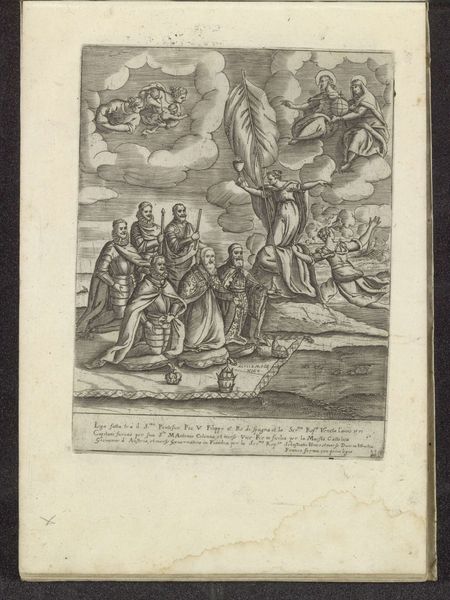
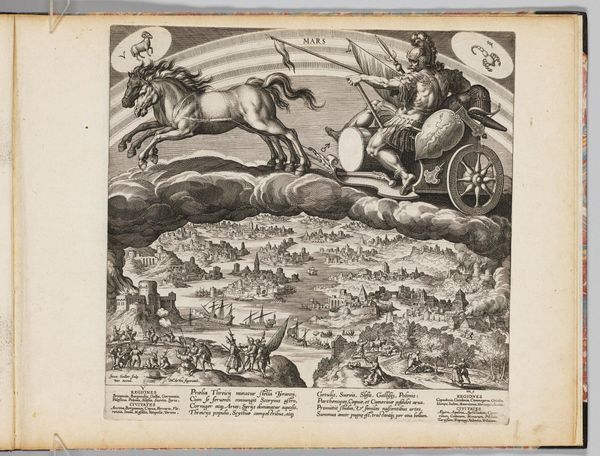
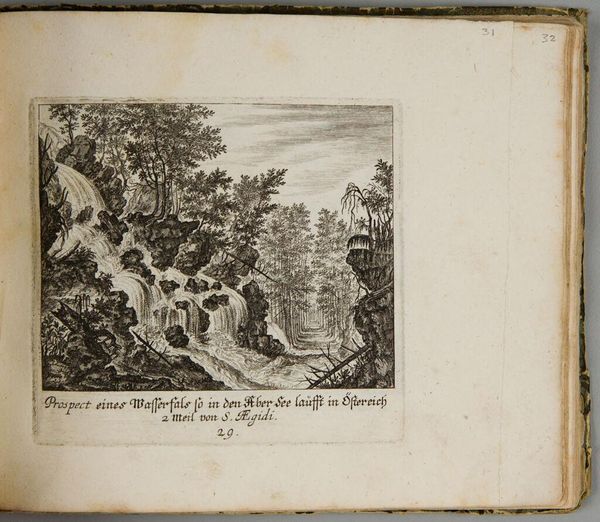
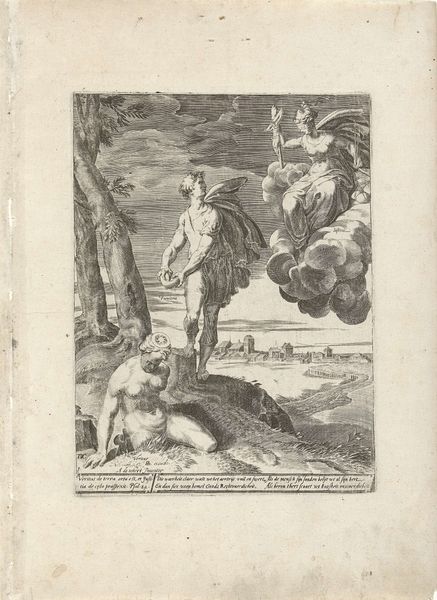
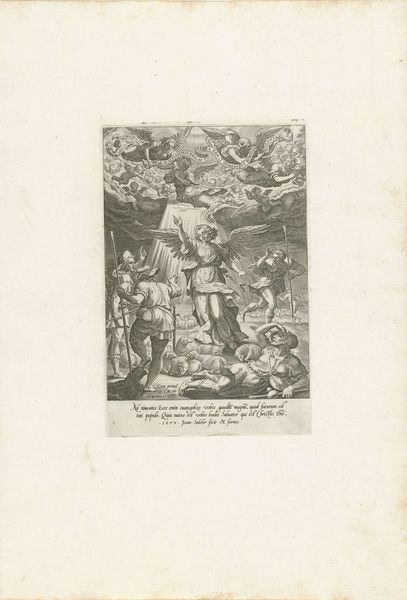
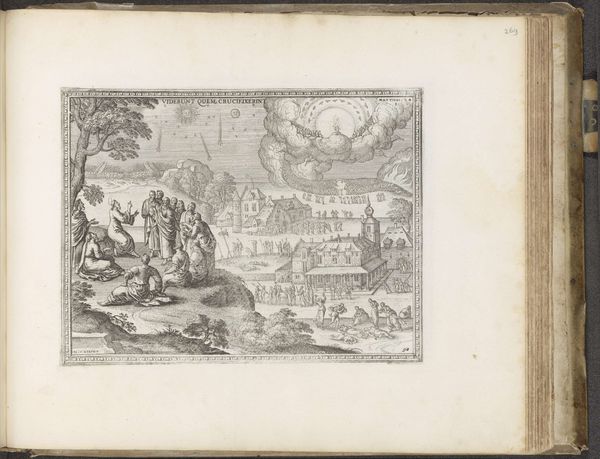
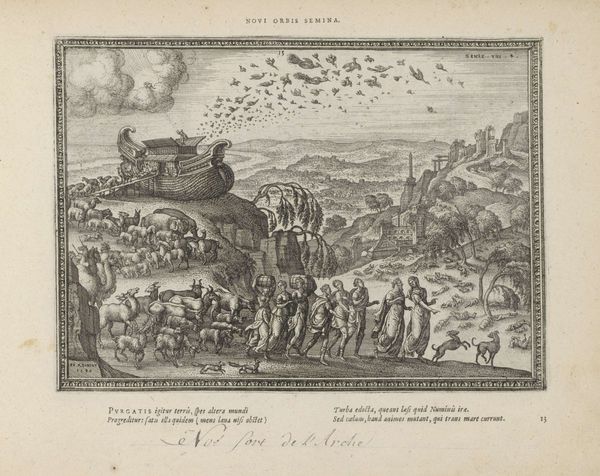
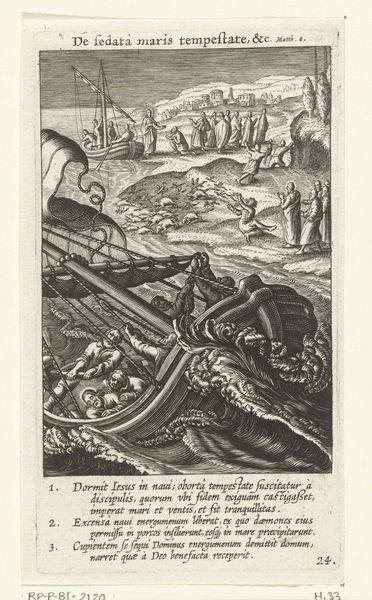
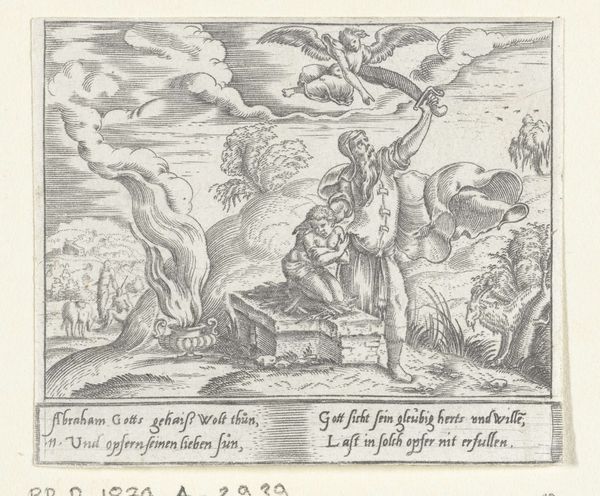
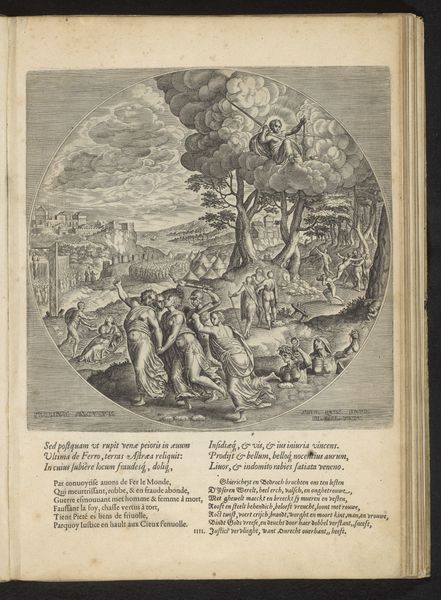
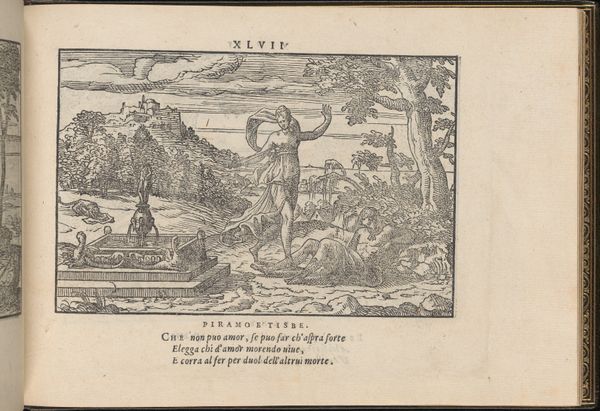
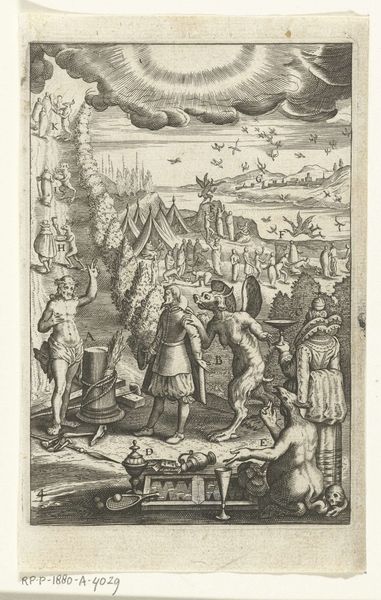
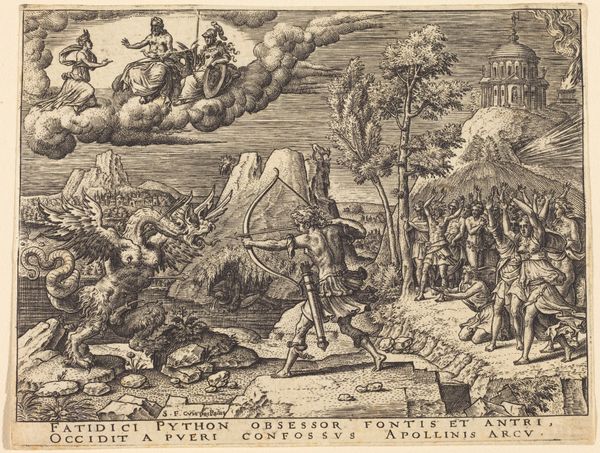
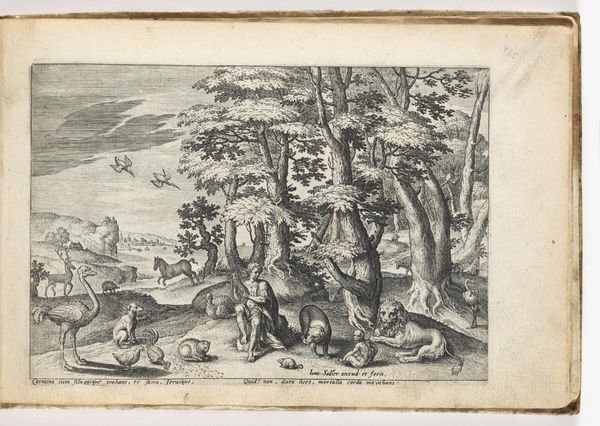
This is an engraving titled "Allegory on the transience of human life," created around the turn of the 17th century by Hieronymus Wierix. The image is a "memento mori," a meditation on death, emblematic of the anxiety and uncertainty which marked the Early Modern period. The engraving is teeming with symbolic figures. At its center, a skeleton—the grim reaper—stands above a scene of earthly delights, signifying the ephemeral nature of worldly pleasures. The surrounding landscape is populated by figures engaged in various activities, from love and leisure to labor, all under the shadow of mortality. Wierix, who was a prolific printmaker in Antwerp, lived during a period marked by religious conflict and social upheaval. His personal life was also tumultuous. Knowing that he was often in trouble with the law, we might consider how those experiences influenced his artistic vision. Ultimately, this work serves as a powerful reminder of our shared mortality, a theme that transcends time and continues to resonate with human experience today.
Comments
No comments
Be the first to comment and join the conversation on the ultimate creative platform.
 Collect
 React
React Comment
More like this