About this artwork
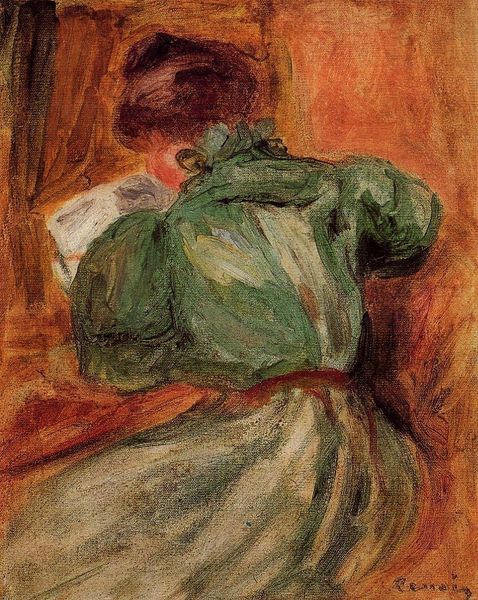
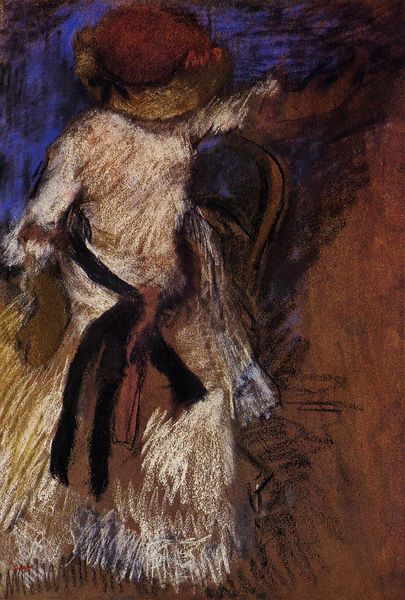
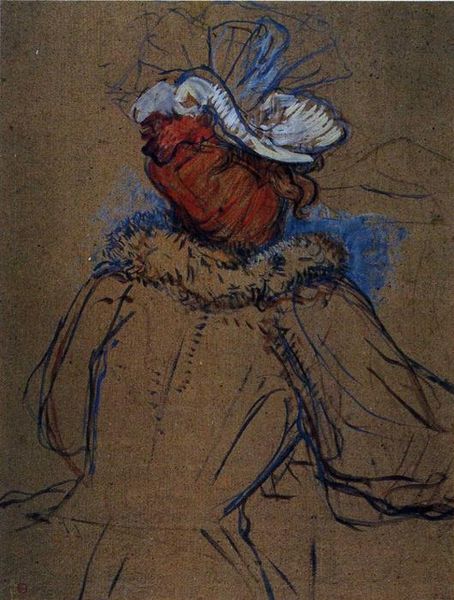
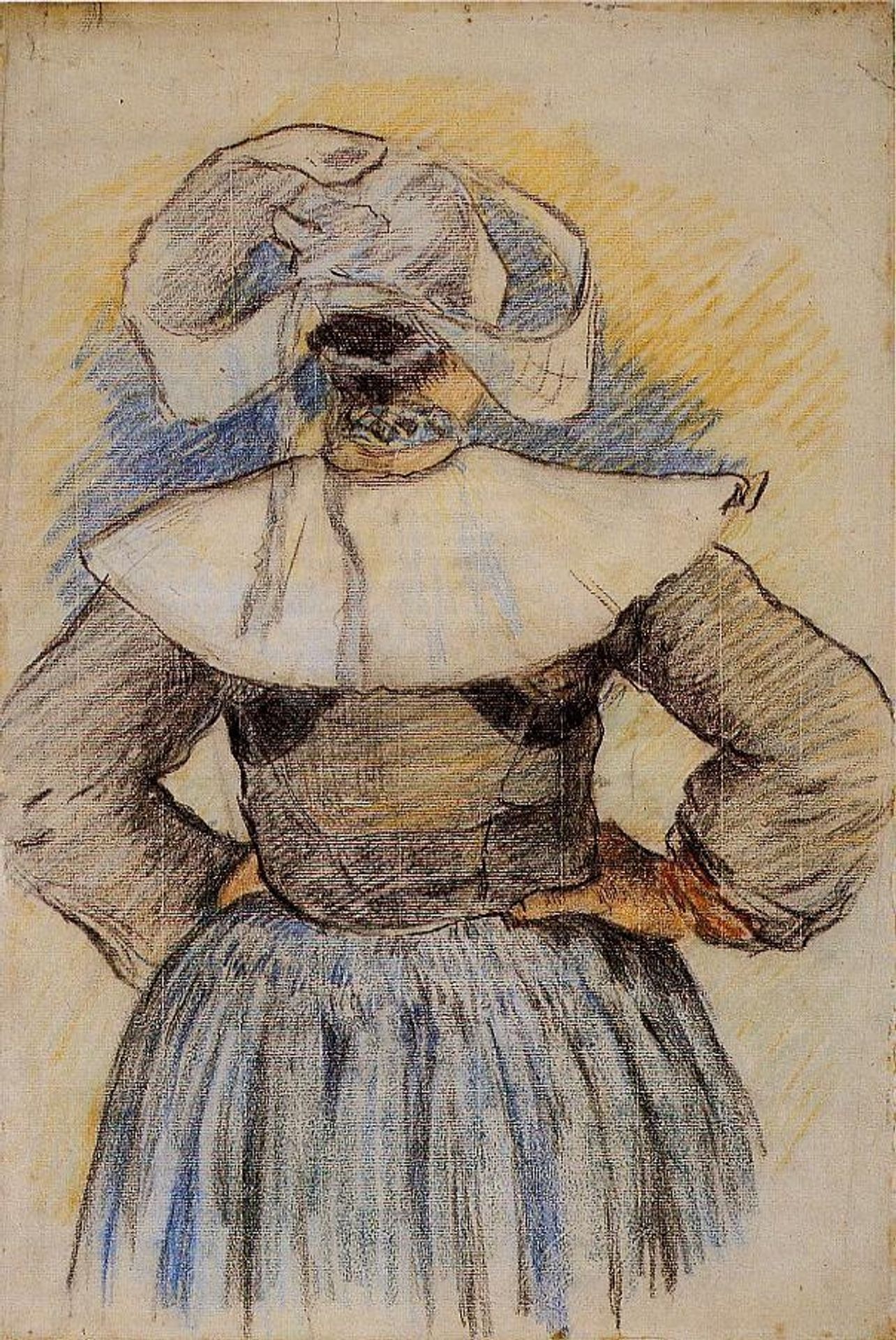
Paul Gauguin made this drawing with pastel on paper, it now resides in the Burrell Collection in Glasgow. At first glance, you see a woman with her back turned, but look closer at how Gauguin composes this image. The woman’s large, circular collar and headdress create an immediate sense of volume, which contrasts with the flatness of the paper. Notice how the rough texture of the pastel doesn't just depict fabric; it adds a tactile quality. Gauguin challenges conventional representation, by emphasizing the material presence of the artwork itself. The woman’s posture, hands on her hips, suggests self-assurance, yet her hidden face complicates a straightforward reading of her character. The seemingly unfinished background and visible strokes assert the artwork as a constructed object. Gauguin invites us to consider not just what is depicted but how it is depicted, reflecting a shift towards modernism. This piece engages in a dialogue about representation, perception, and the very act of seeing.

Artwork details
- Location
- Burrell Collection, Glasgow, UK
- Copyright
- Public domain
Tags
Comments
Share your thoughts
About this artwork
Paul Gauguin made this drawing with pastel on paper, it now resides in the Burrell Collection in Glasgow. At first glance, you see a woman with her back turned, but look closer at how Gauguin composes this image. The woman’s large, circular collar and headdress create an immediate sense of volume, which contrasts with the flatness of the paper. Notice how the rough texture of the pastel doesn't just depict fabric; it adds a tactile quality. Gauguin challenges conventional representation, by emphasizing the material presence of the artwork itself. The woman’s posture, hands on her hips, suggests self-assurance, yet her hidden face complicates a straightforward reading of her character. The seemingly unfinished background and visible strokes assert the artwork as a constructed object. Gauguin invites us to consider not just what is depicted but how it is depicted, reflecting a shift towards modernism. This piece engages in a dialogue about representation, perception, and the very act of seeing.
Comments
Share your thoughts