About this artwork
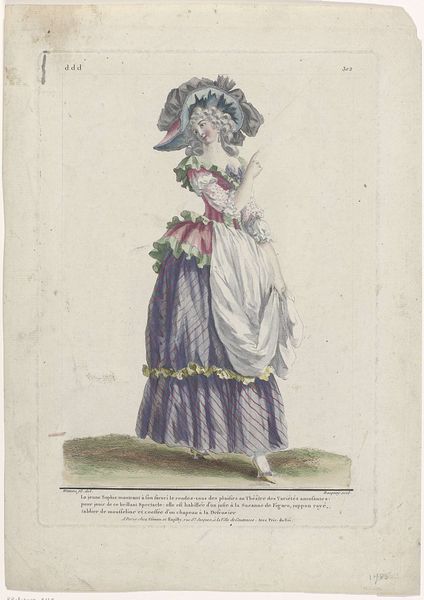
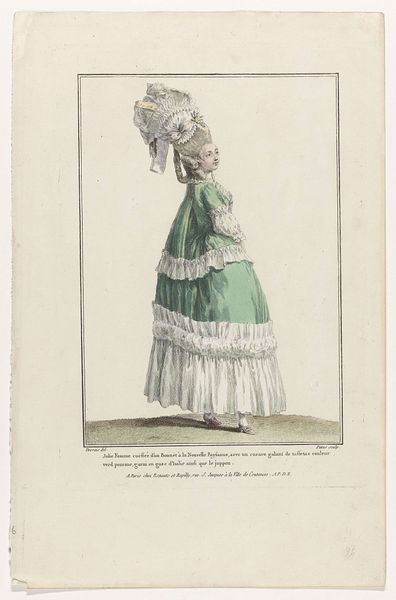
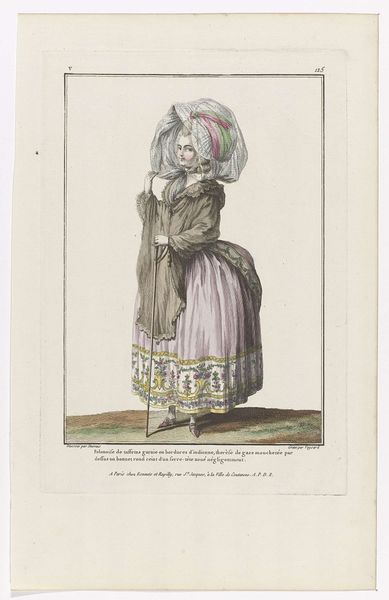
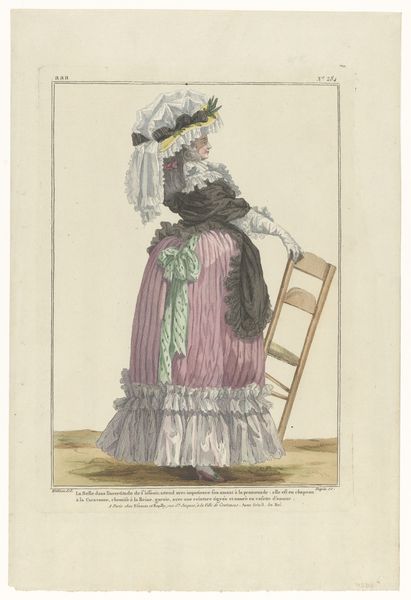
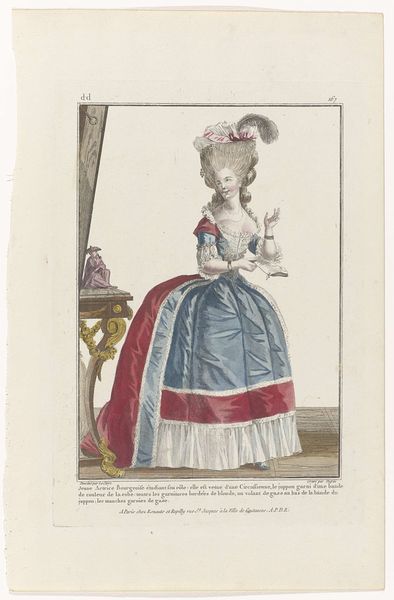
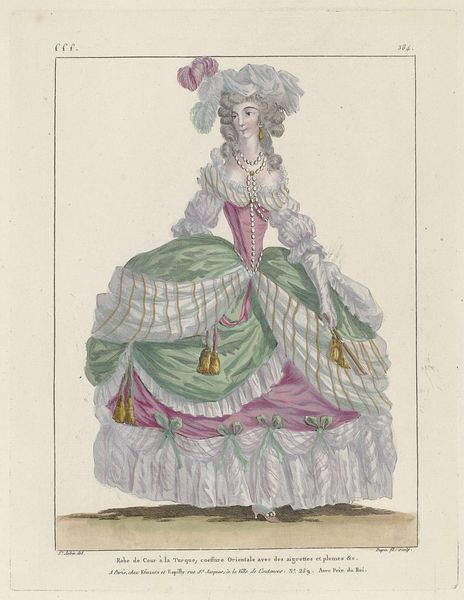
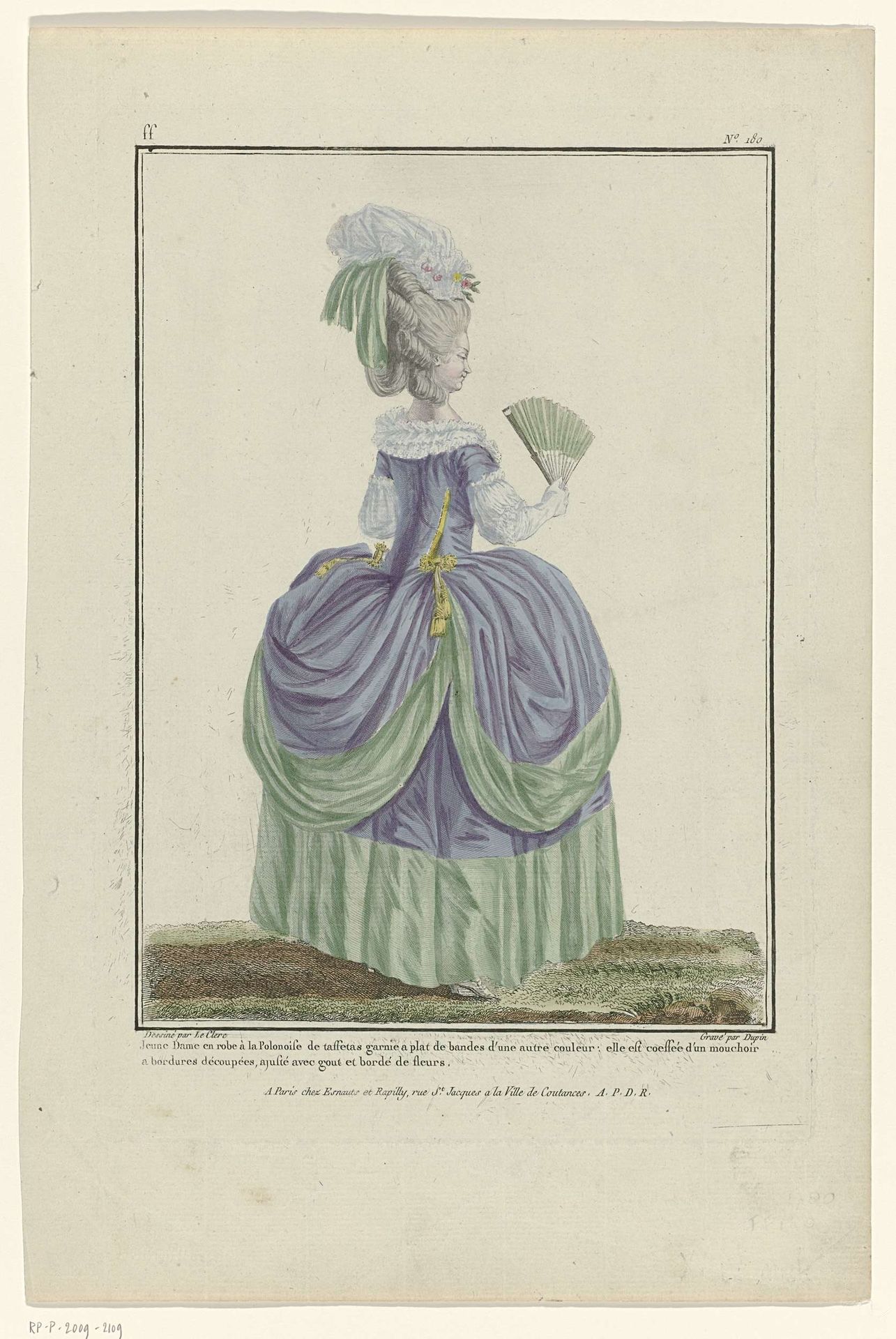
Editor: This is "Marie Antoinette: The Queen of Fashion" from around 1780. It's a print from "Gallerie des Modes et Costumes Français" and it reminds me of a fashion plate. I find it kind of amusing – that towering hairstyle is wild. What jumps out at you? Curator: Ah, yes! More than a fashion plate, this captures a moment, a breath, in the theatre of Marie Antoinette's court. Notice the fan, just so, almost hiding her face? It hints at the performance of royalty, always on display, yet seeking a sliver of privacy. Don’t you think? Editor: A performance, definitely. It’s so…stiff. Everything, from the dress to the hair, looks like it could topple over. Is that intentional? Curator: Indeed! The exaggeration *is* the point. Think of it as visual hyperbole, darling. These clothes weren’t practical, they were statements. Of wealth, of power, of daring. What does that color palette say to you? Editor: Purple and green, pretty unusual. It almost feels a little…off? Curator: Exactly! And "off" was the new "on" at court! Conventional beauty was out the window, individuality and impact were in. Do you think this subverts ideas of "beauty"? Editor: Definitely! The towering hair and the slightly clashing colors feel like a kind of rebellion against the traditional ideas of beauty. Curator: A beautiful, fashionable, sartorial rebellion! That feels like the real beauty hidden within these etched lines and watercolors.
Marie Antoinette: The Queen of Fashion: Gallerie des Modes et Costumes Français
1780

Nicolas Dupin
1753 - 1789Location
RijksmuseumArtwork details
- Dimensions
- height 283 mm, width 195 mm
- Location
- Rijksmuseum
- Copyright
- Rijks Museum: Open Domain
Tags
Comments

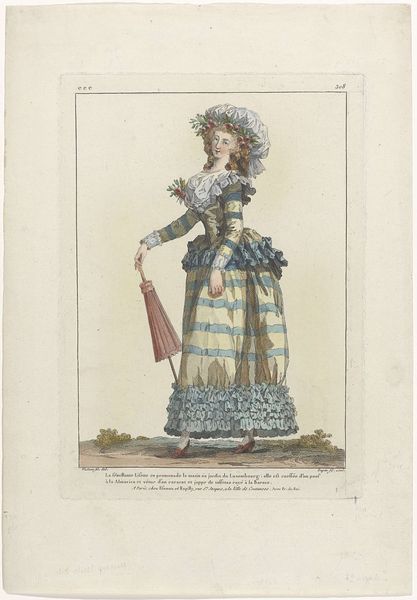
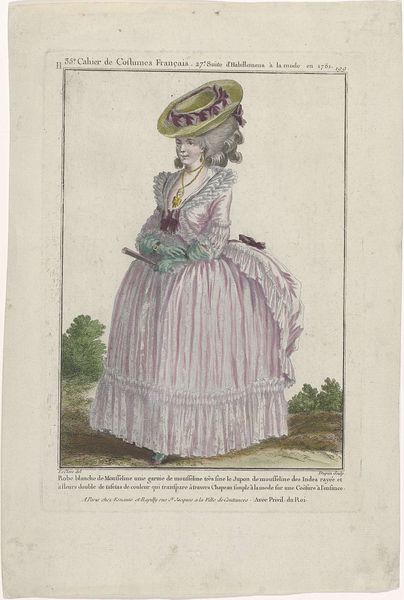
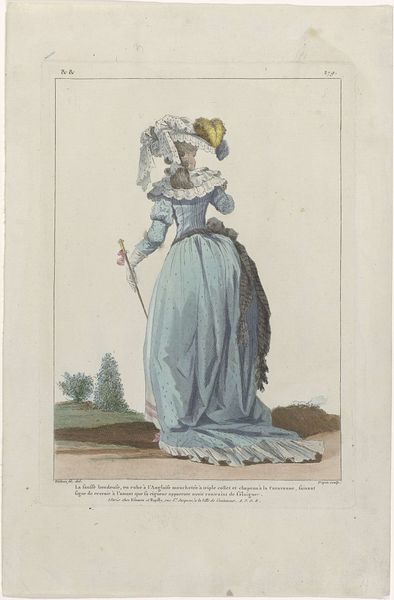
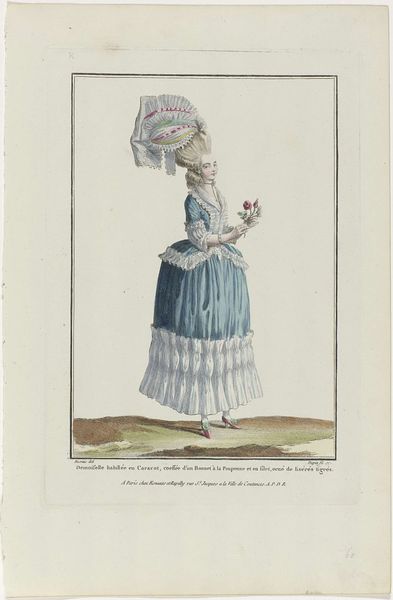
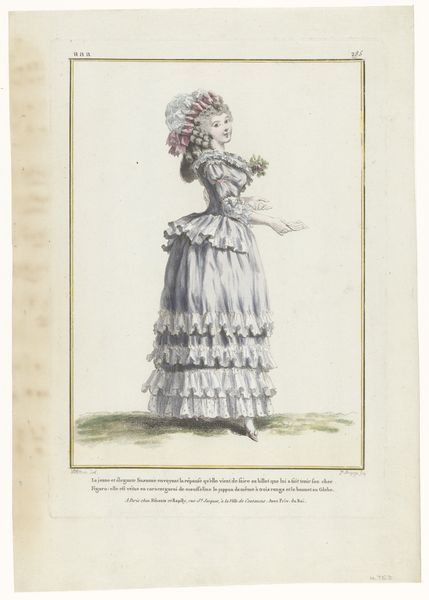
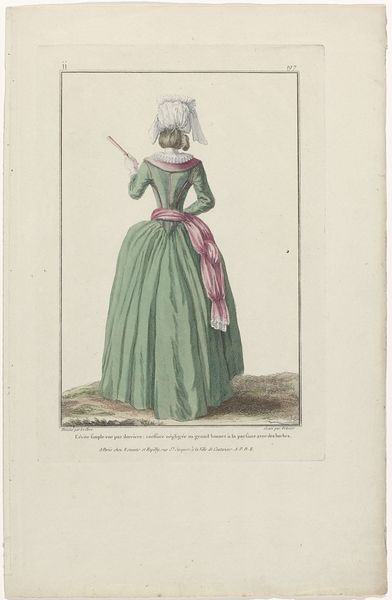
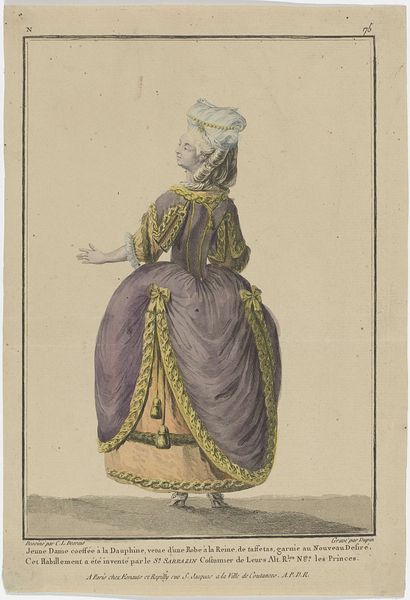
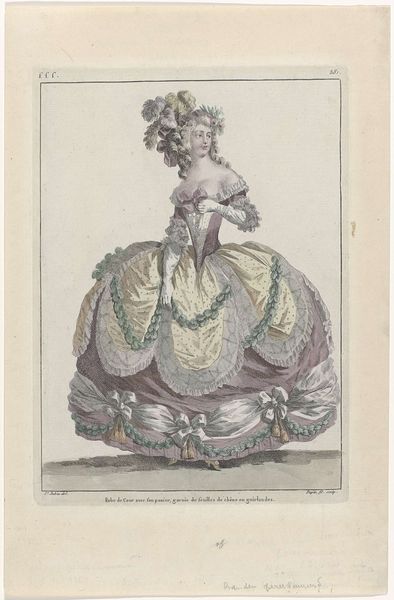
French queens were expected to set an example in the realm of fashion. As the wife of Louis XVI, Marie Antoinette threw herself into this task with enthusiasm. Together with her marchande de modes Rose Bertin and her hairdresser Léonard, she launched many a new fashion. Court etiquette dictated robes de cour – lavishly embellished gowns with wide skirts. When receiving visitors, Marie Antoinette wore a robe à la polonaise 1 2, but preferred an informal, loose-fitting gown when at her own pavilion in Versailles. This chemise de la reine 3 was quickly adopted by other women of the elite.
About this artwork
Editor: This is "Marie Antoinette: The Queen of Fashion" from around 1780. It's a print from "Gallerie des Modes et Costumes Français" and it reminds me of a fashion plate. I find it kind of amusing – that towering hairstyle is wild. What jumps out at you? Curator: Ah, yes! More than a fashion plate, this captures a moment, a breath, in the theatre of Marie Antoinette's court. Notice the fan, just so, almost hiding her face? It hints at the performance of royalty, always on display, yet seeking a sliver of privacy. Don’t you think? Editor: A performance, definitely. It’s so…stiff. Everything, from the dress to the hair, looks like it could topple over. Is that intentional? Curator: Indeed! The exaggeration *is* the point. Think of it as visual hyperbole, darling. These clothes weren’t practical, they were statements. Of wealth, of power, of daring. What does that color palette say to you? Editor: Purple and green, pretty unusual. It almost feels a little…off? Curator: Exactly! And "off" was the new "on" at court! Conventional beauty was out the window, individuality and impact were in. Do you think this subverts ideas of "beauty"? Editor: Definitely! The towering hair and the slightly clashing colors feel like a kind of rebellion against the traditional ideas of beauty. Curator: A beautiful, fashionable, sartorial rebellion! That feels like the real beauty hidden within these etched lines and watercolors.
Comments
French queens were expected to set an example in the realm of fashion. As the wife of Louis XVI, Marie Antoinette threw herself into this task with enthusiasm. Together with her marchande de modes Rose Bertin and her hairdresser Léonard, she launched many a new fashion. Court etiquette dictated robes de cour – lavishly embellished gowns with wide skirts. When receiving visitors, Marie Antoinette wore a robe à la polonaise 1 2, but preferred an informal, loose-fitting gown when at her own pavilion in Versailles. This chemise de la reine 3 was quickly adopted by other women of the elite.