mural
#
organic
#
baroque
#
decorative-art
#
mural
Copyright: Rijks Museum: Open Domain
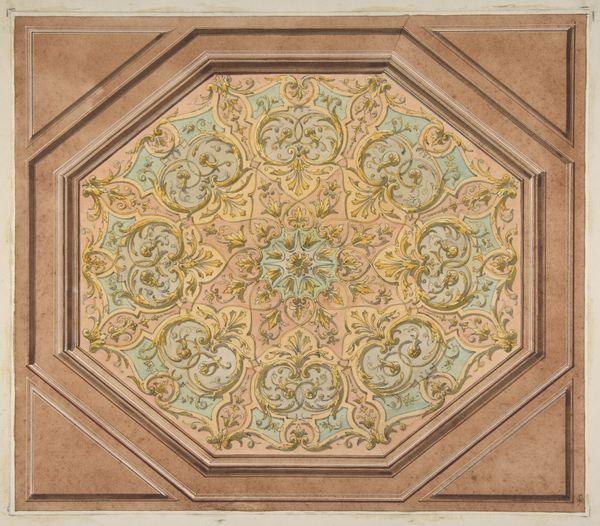
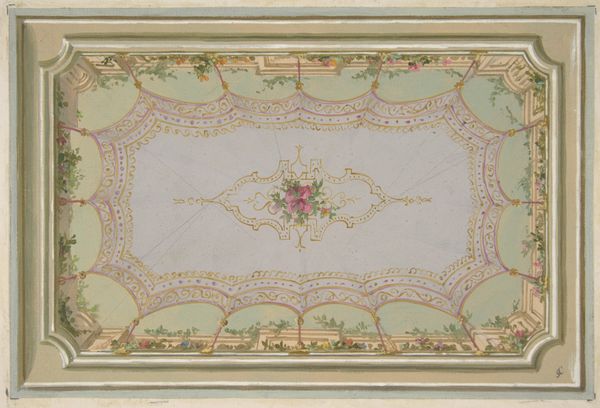
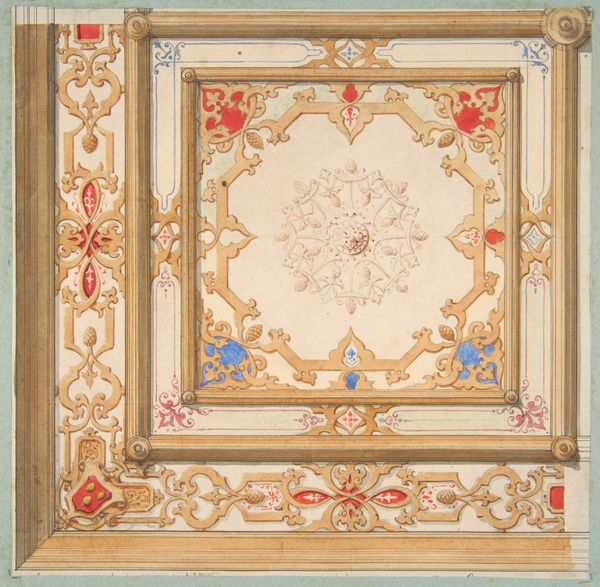
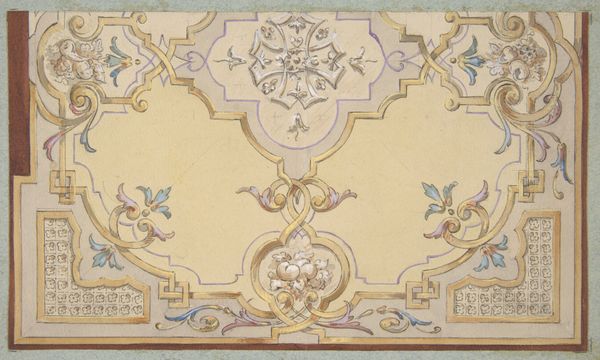
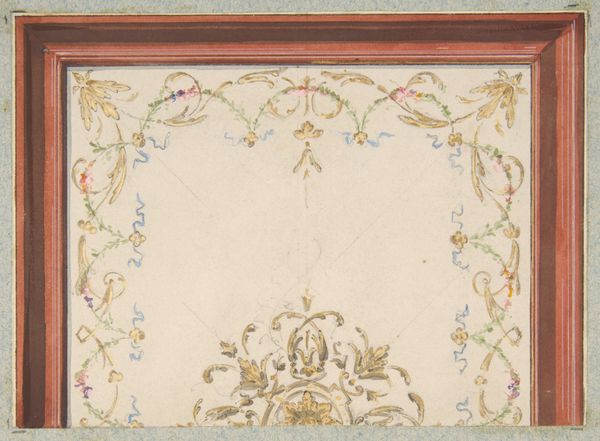
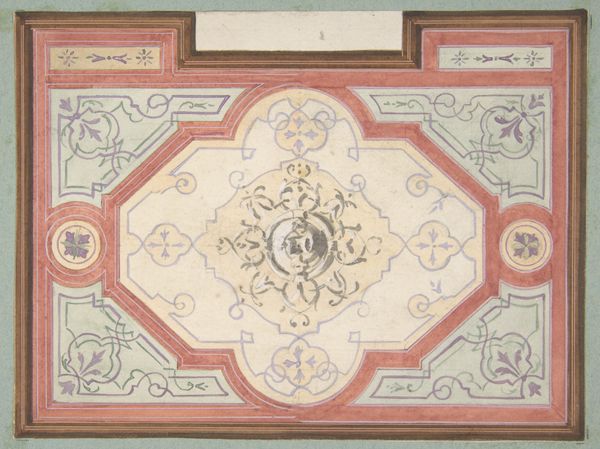
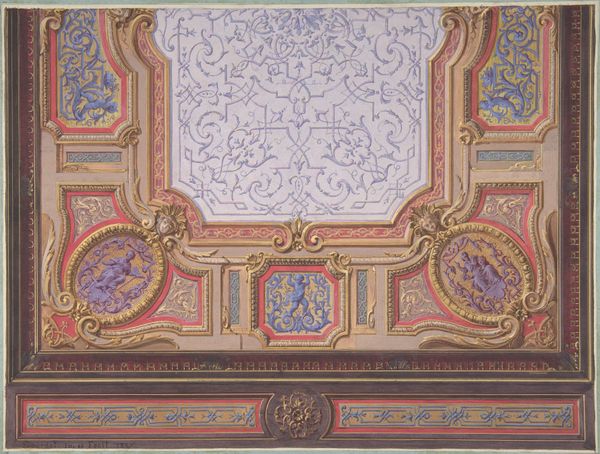
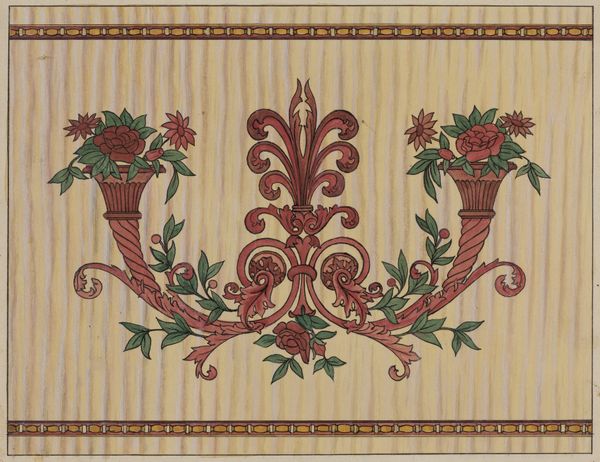
Editor: So, here we have Elias van Nijmegen's "Lacquer Room," dating from between 1695 and 1755. It's an intricate work of tempera, fresco, and relief, almost entirely ornamental. All those curving lines give me a sense of abundant growth, a garden perhaps. What do you see in this piece? Curator: I see a carefully constructed visual vocabulary reflecting Baroque sensibilities. Floral motifs become signifiers of prosperity and cultivated taste. Do you notice how the stylized blooms and foliage, rendered in both gilt and silver, occupy the pink field? Editor: I do. There's a strong symmetry, but also a looseness to the arrangements. Is that tension deliberate, you think? Curator: Perhaps. This carefully orchestrated imbalance speaks volumes. The striving for symmetry mirrored the Baroque era's search for order, but these deviations whispered of burgeoning change. The organic ornamentation served not just as a pretty backdrop but as an index of wealth and aspirations. Note the contrast in colour! It's deliberate. Can you tell me why that might be? Editor: Is it to showcase the tension between wealth and refinement perhaps? The tension that speaks to Baroque’s sensibility, one foot in the traditional values of the past, one stepping towards the changes ahead? Curator: Precisely. By understanding how van Nijmegen employed these visual symbols, we begin to understand how the aspirations and ideals of that period were articulated through visual design. Editor: That’s fascinating. I'll definitely look at Baroque art with new eyes now, considering the symbols they embed and what those symbols meant to audiences back then!
Comments

rijksmuseum over 2 years ago
⋮
This room was made for the Court of the Stadholders at Leeuwarden. It formed part of the apartment of the consort of the Frisian stadholder, Princess Albertine Agnes of Orange and Nassau. The walls are mounted with Chinese screens of Coromandel lacquer. In this enchanting room, filled with exotic furniture and porcelain, the princess liked to drink tea from China.


Join the conversation
Join millions of artists and users on Artera today and experience the ultimate creative platform.
 Collect
More like this