tempera, print, engraving
#
portrait
#
tempera
# print
#
figuration
#
11_renaissance
#
history-painting
#
northern-renaissance
#
engraving
Dimensions: height 456 mm, width 340 mm
Copyright: Rijks Museum: Open Domain
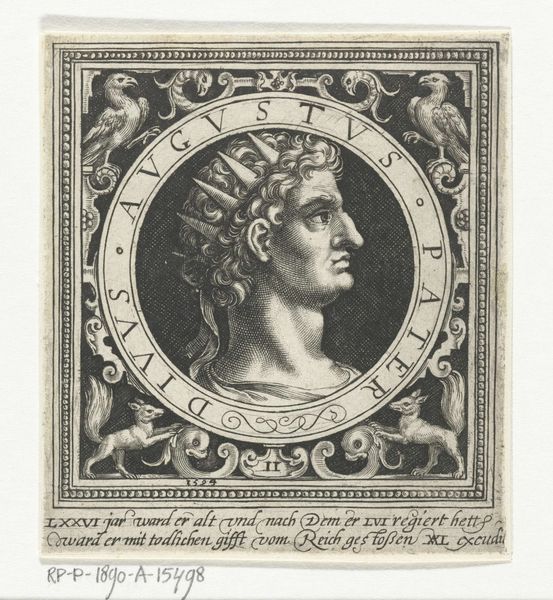
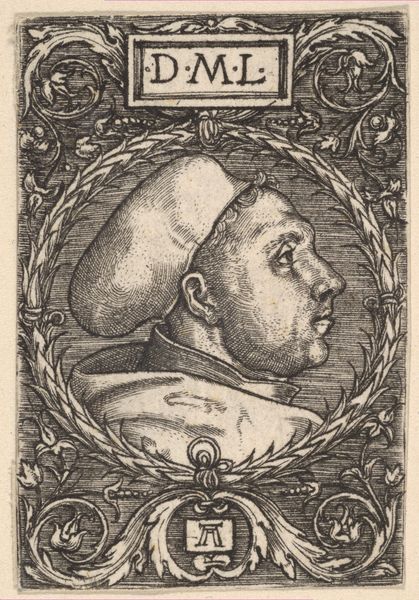
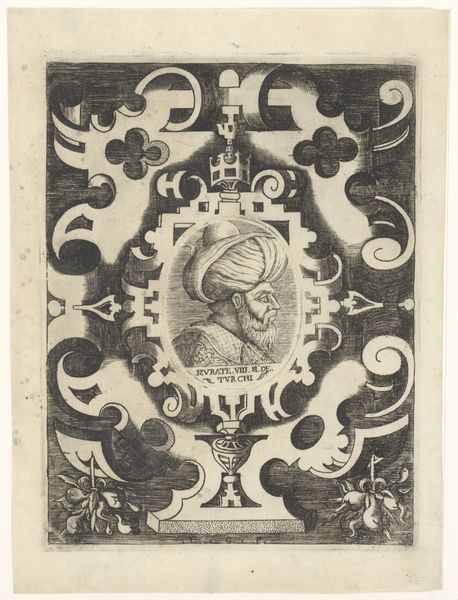
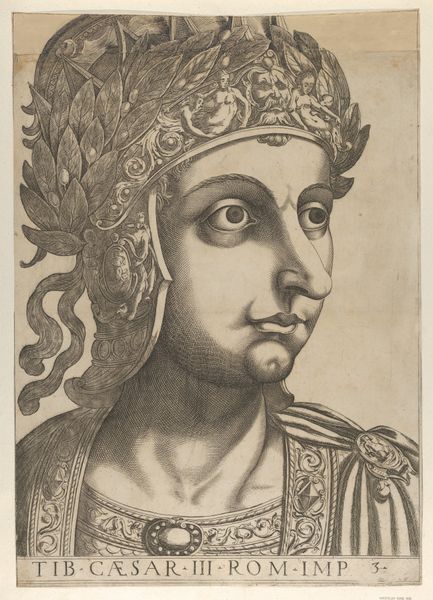
Editor: We’re looking at a 1559 portrait of Mauritius Cappadocius, surrounded by an elaborate architectural frame. It's tempera and engraving. The portrait feels very…official, very stately, but almost cartoonish, somehow. What do you see in this piece? Curator: Oh, it’s wonderfully strange, isn’t it? A collision of precision and whimsy. Look at how Mauritius is depicted: a stern profile, crowned, every line meticulously rendered. Then, boom!, he's framed by this almost playful architectural setting with vines and these cherubic figures peeking out. Editor: That contrast is what struck me! The seriousness inside the circle versus the decorative elements. Why do you think the artist chose this approach? Curator: Perhaps it's an attempt to soften the blow of power, or maybe it reflects the Renaissance fascination with juxtaposing classical ideals with contemporary sensibilities. The inscription below about avarice is fascinating, don’t you think? Almost as if we're meant to ponder the pitfalls of leadership. And the Northern Renaissance did love a moralizing tale! It's all quite a delightful puzzle, really. What’s *your* take on the cherubs? Mischievous commentators, perhaps? Editor: Maybe they're there to remind us that even emperors are just people. I’d never thought about portraiture that way – it isn’t *just* capturing someone's likeness. Curator: Precisely! It’s about crafting an image, telling a story, leaving us with more questions than answers. Which, to me, is the hallmark of truly engaging art. It sparks our curiosity and leaves us wondering. Editor: Definitely gave me something to think about. It's funny how one image can hold so many ideas at once. Curator: Indeed. A single image can hold the weight of an era. It whispers stories if you know how to listen.
Comments
No comments
Be the first to comment and join the conversation on the ultimate creative platform.
 Collect
 React
React Comment
More like this