About this artwork
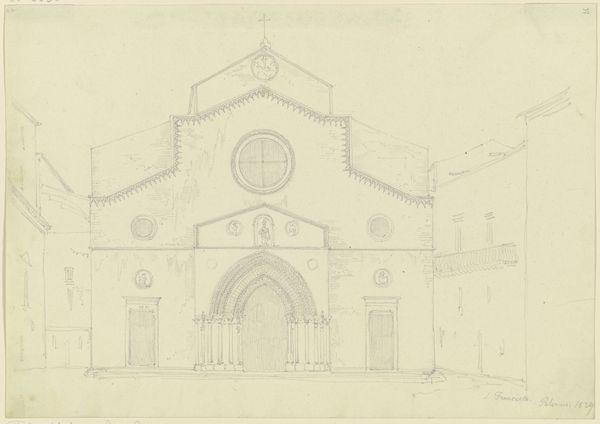
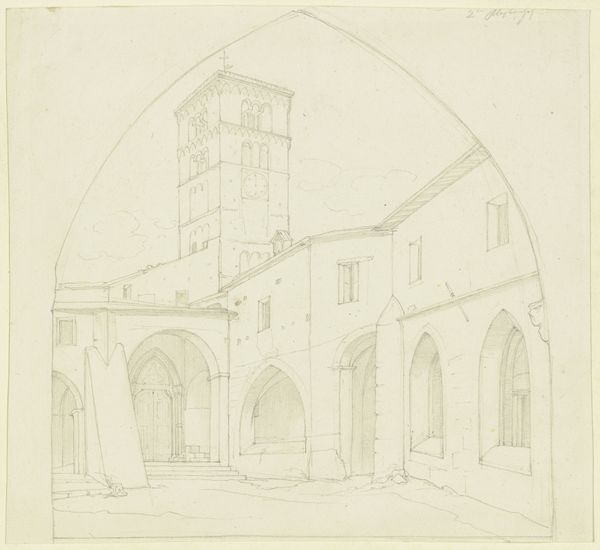
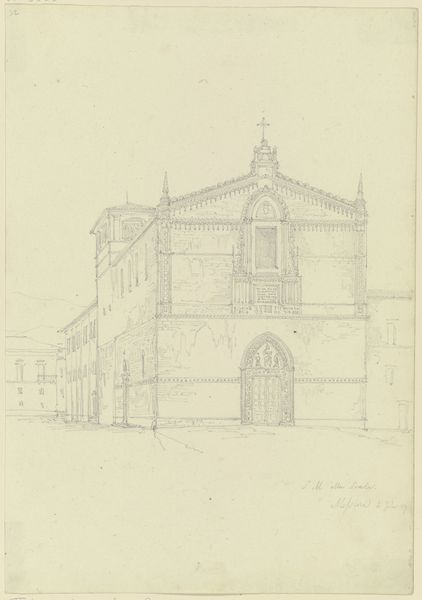
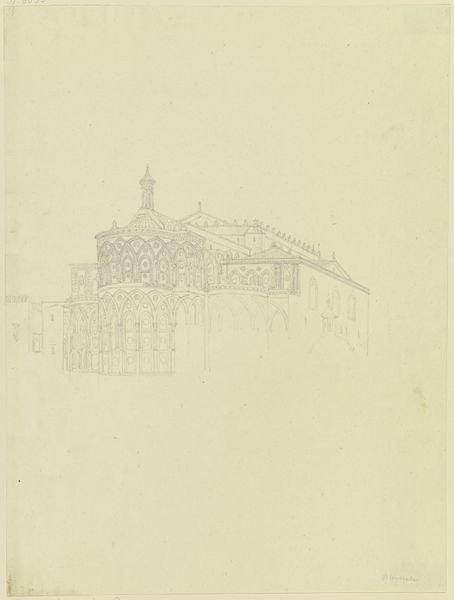
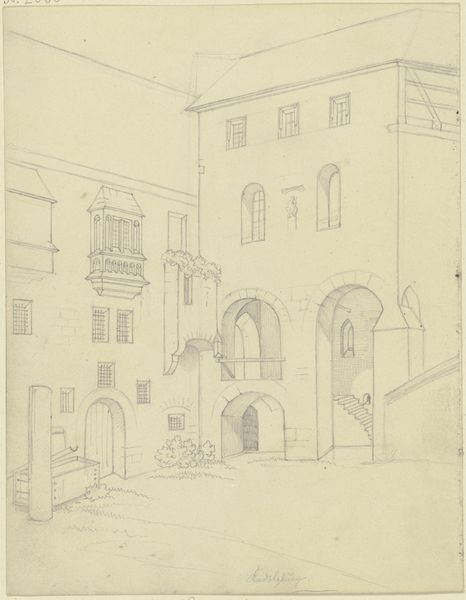
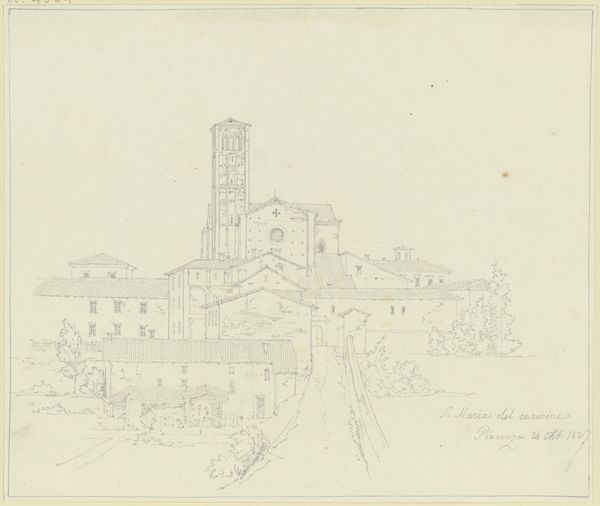
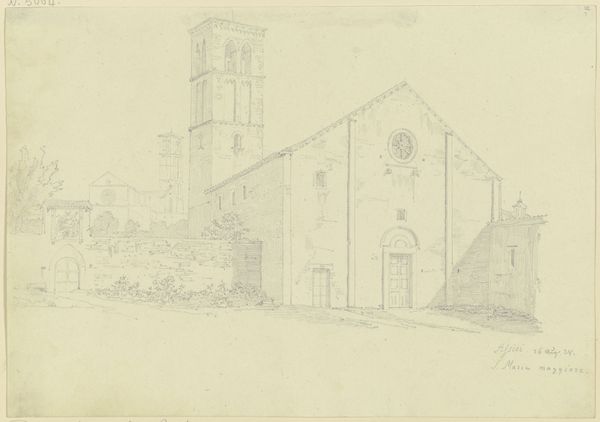
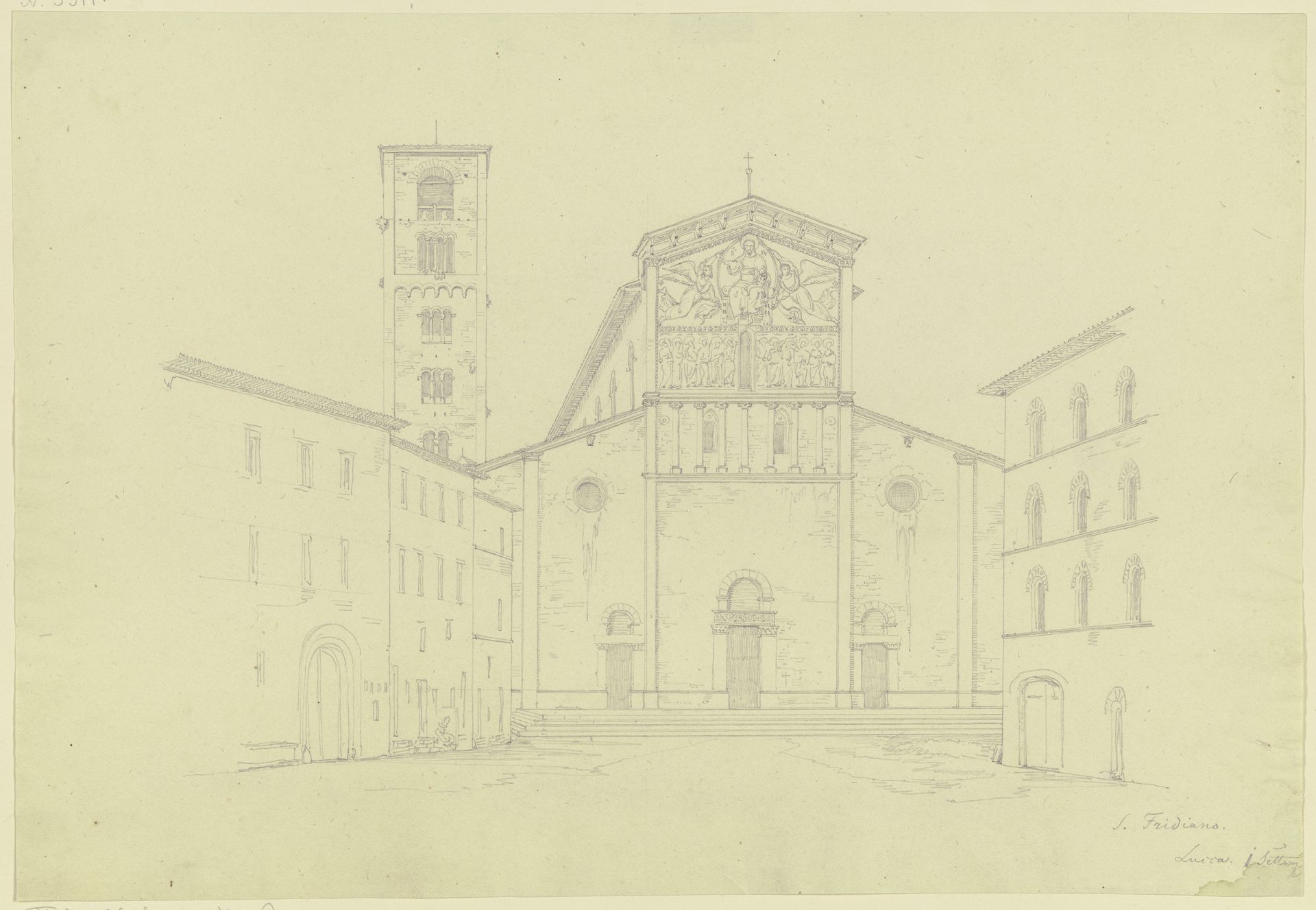
Editor: So, this is Friedrich Maximilian Hessemer's "St Frediano in Lucca," an etching and pencil drawing from 1830. It's a strikingly straightforward depiction of the church, almost like an architectural blueprint. What jumps out at you when you look at this piece? Curator: It reminds me of quiet mornings in Italy, sketching under the Tuscan sun with nothing but time and a few trusty pencils. But beyond the peacefulness, I see Hessemer wrestling with capturing the monumental nature of architecture. See how he uses delicate lines and precise angles? Almost as if he’s mapping out the spirit of the place rather than just its physical form. It’s neoclassicism at its finest - cool, collected, and concerned with order, yet never losing a spark of humanity. Do you find it cold or captivating? Editor: I wouldn't say it's cold exactly, but there's a definite lack of...life. No people, no real shadows. Does that strip away from its emotional impact? Curator: Perhaps, but absence, darling Editor, is a presence of its own. Think of it as Hessemer handing you a stage, empty except for this architectural protagonist. What stories bloom in your imagination when you fill in the gaps? Is it a bustling market day or a silent afternoon of contemplation? Editor: I guess I was so focused on what *wasn't* there, that I missed the opportunity to bring my own story to it. I like that, actually. Thanks! Curator: Art, like life, is what we make of it, right? It seems Herr Hessemer has granted us quite the collaborative adventure!
St Frediano in Lucca
1 - 1830


Artwork details
- Medium
- drawing, etching, pencil, architecture
- Location
- Städel Museum
- Copyright
- Public Domain
Tags
drawing
16_19th-century
neoclassicism
etching
etching
pencil
architectural drawing
cityscape
architecture
Comments
Be the first to share your thoughts about this work.
About this artwork
Editor: So, this is Friedrich Maximilian Hessemer's "St Frediano in Lucca," an etching and pencil drawing from 1830. It's a strikingly straightforward depiction of the church, almost like an architectural blueprint. What jumps out at you when you look at this piece? Curator: It reminds me of quiet mornings in Italy, sketching under the Tuscan sun with nothing but time and a few trusty pencils. But beyond the peacefulness, I see Hessemer wrestling with capturing the monumental nature of architecture. See how he uses delicate lines and precise angles? Almost as if he’s mapping out the spirit of the place rather than just its physical form. It’s neoclassicism at its finest - cool, collected, and concerned with order, yet never losing a spark of humanity. Do you find it cold or captivating? Editor: I wouldn't say it's cold exactly, but there's a definite lack of...life. No people, no real shadows. Does that strip away from its emotional impact? Curator: Perhaps, but absence, darling Editor, is a presence of its own. Think of it as Hessemer handing you a stage, empty except for this architectural protagonist. What stories bloom in your imagination when you fill in the gaps? Is it a bustling market day or a silent afternoon of contemplation? Editor: I guess I was so focused on what *wasn't* there, that I missed the opportunity to bring my own story to it. I like that, actually. Thanks! Curator: Art, like life, is what we make of it, right? It seems Herr Hessemer has granted us quite the collaborative adventure!
Comments
Be the first to share your thoughts about this work.