About this artwork
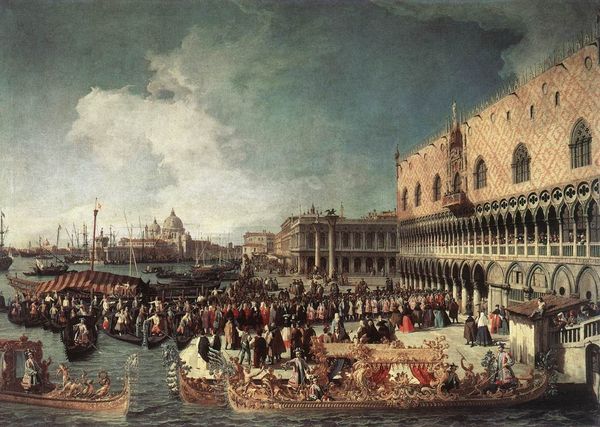
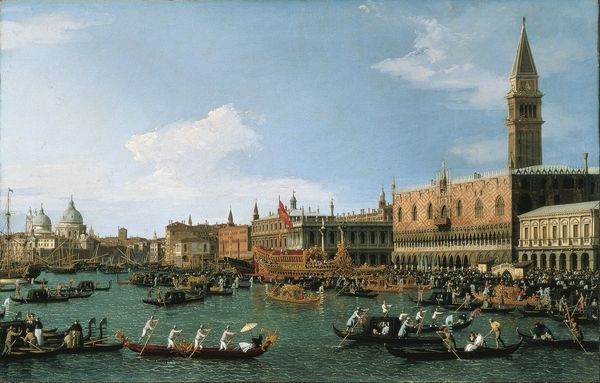
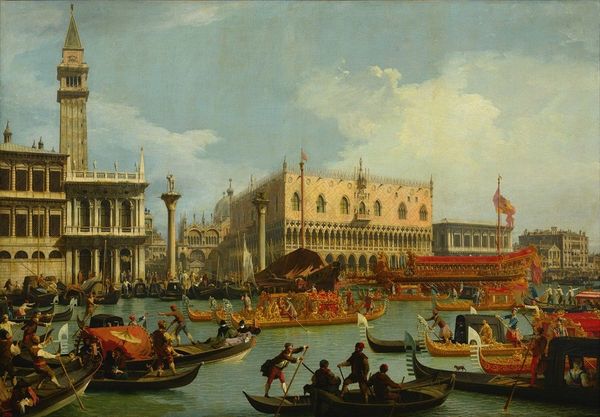
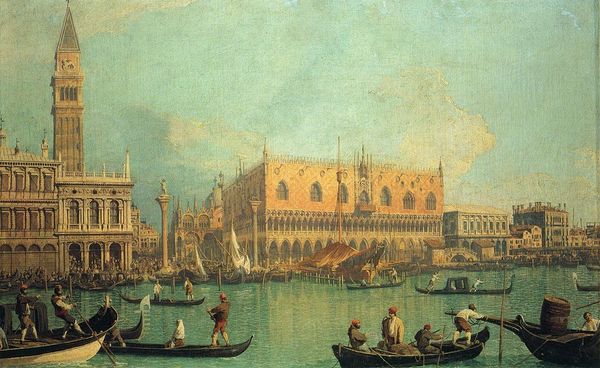
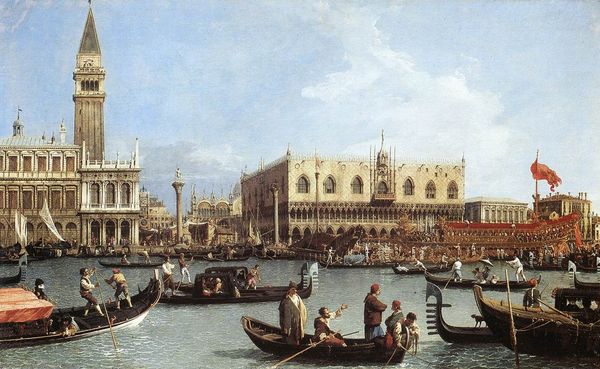
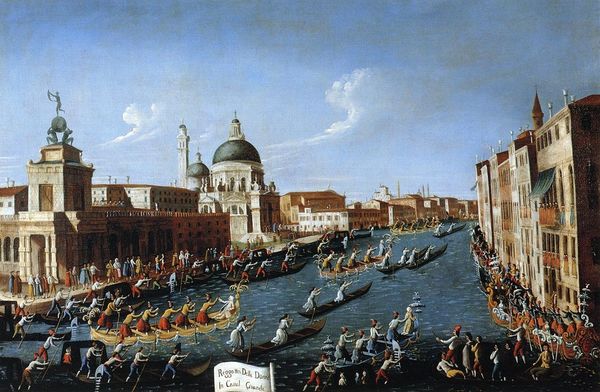
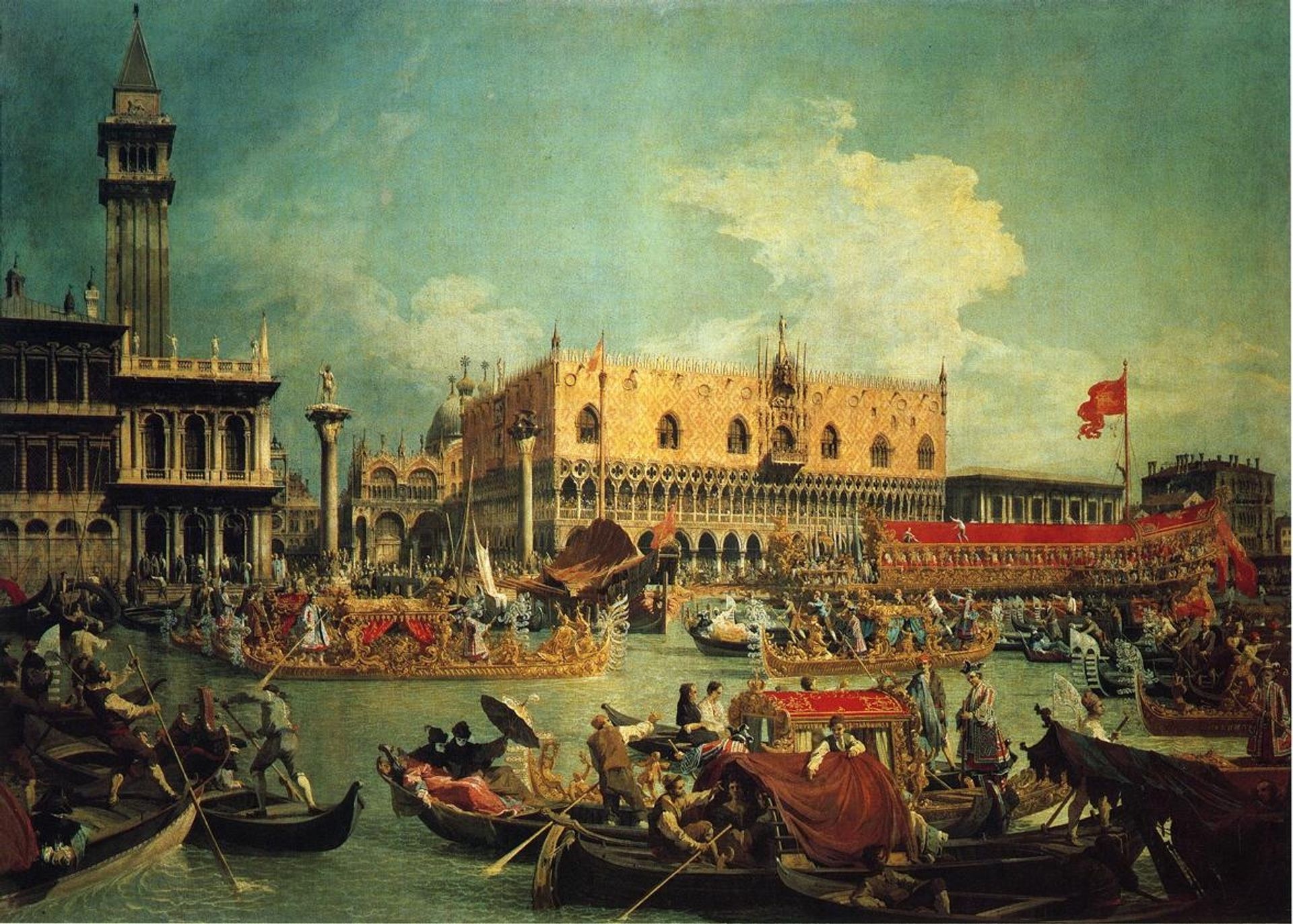
Canaletto painted ‘The Bucintoro by the Molo on Ascension Day’ using oil on canvas to capture a vibrant scene in Venice. The painting depicts the Doge’s annual ceremonial voyage on the Bucintoro, a state barge, to celebrate Venice’s symbolic marriage to the sea. This tradition, steeped in Venetian identity, was a powerful display of the city’s maritime dominance and wealth. We are positioned amidst a sea of gondolas, each carrying people from varied social strata. The bright colours and detailed rendering of the architecture and boats reflect a society deeply proud of its cultural traditions and economic power. Canaletto presents an idealized version of Venetian life. However, it’s worth noting that this image, while beautiful, doesn’t fully represent the lives of the working class, whose labor was essential to Venice’s prosperity. The painting serves as a window into a world of ritual, power, and pride, inviting us to consider the complexities of identity and representation.
The Bucintoro by the Molo on Ascension Day
1730

Canaletto
1697 - 1768Location
Private CollectionArtwork details
- Medium
- oil-paint
- Dimensions
- 182 x 29 cm
- Location
- Private Collection
- Copyright
- Public domain
Tags
gouache
venetian-painting
oil-paint
landscape
oil painting
cityscape
genre-painting
history-painting
rococo
Comments
Be the first to share your thoughts about this work.
About this artwork
Canaletto painted ‘The Bucintoro by the Molo on Ascension Day’ using oil on canvas to capture a vibrant scene in Venice. The painting depicts the Doge’s annual ceremonial voyage on the Bucintoro, a state barge, to celebrate Venice’s symbolic marriage to the sea. This tradition, steeped in Venetian identity, was a powerful display of the city’s maritime dominance and wealth. We are positioned amidst a sea of gondolas, each carrying people from varied social strata. The bright colours and detailed rendering of the architecture and boats reflect a society deeply proud of its cultural traditions and economic power. Canaletto presents an idealized version of Venetian life. However, it’s worth noting that this image, while beautiful, doesn’t fully represent the lives of the working class, whose labor was essential to Venice’s prosperity. The painting serves as a window into a world of ritual, power, and pride, inviting us to consider the complexities of identity and representation.
Comments
Be the first to share your thoughts about this work.