About this artwork
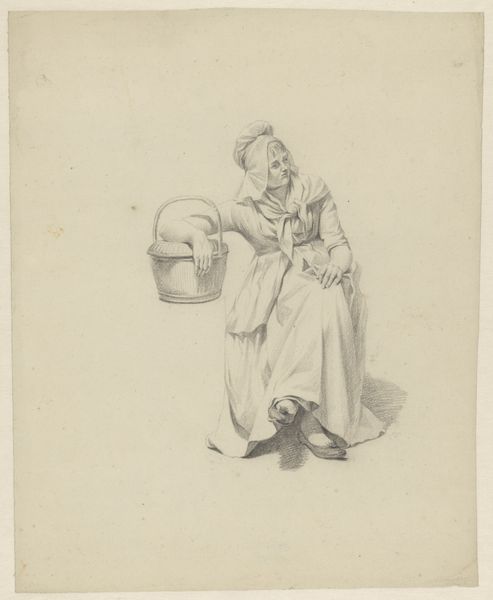
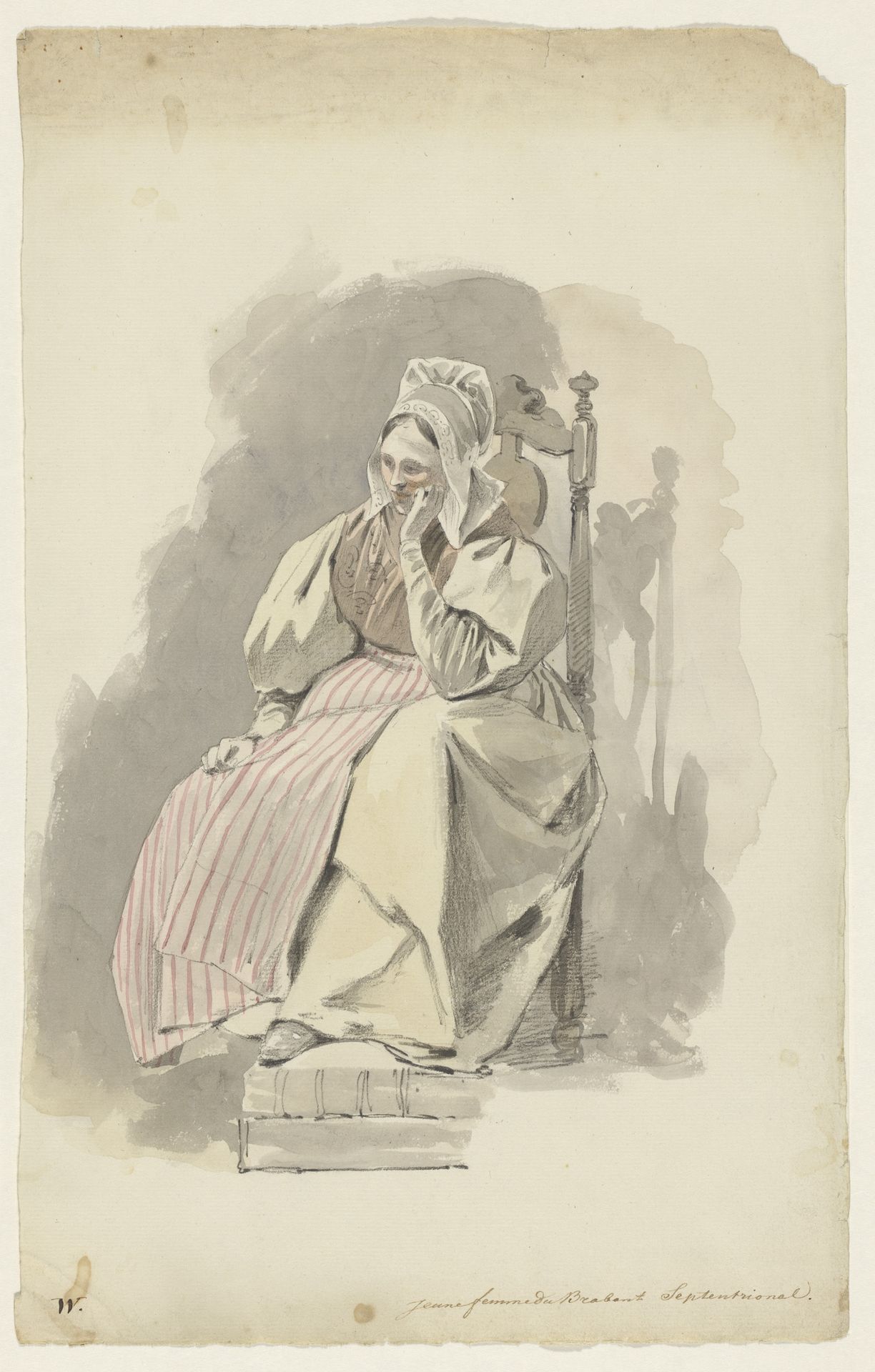
Pieter van Loon rendered this watercolor of a woman from North Brabant sitting on a chair, her face tilted slightly downward, with her hand gently touching her cheek. This gesture is more than a simple pose; it is loaded with historical and cultural significance. Consider the melancholic figures of antiquity, the pensive Madonnas in Renaissance paintings, or even portraits of philosophers deep in thought. The hand-to-cheek motif has long been associated with contemplation, introspection, and even sorrow. In the classical world, it was often a symbol of mourning or remembrance, a motif echoed in funerary art. Over time, the gesture evolved. Think of Rodin’s “The Thinker”, that modern figure representing the power of human intellect and the burden of knowledge. This motif persists, transforming and adapting across cultures and epochs. It appears again and again, each time imbued with new meaning, yet still resonating with the emotional weight of its predecessors. Observe how van Loon captures the woman’s state of mind. This is a scene of quiet reflection, engaging us with the human condition on a profound, subconscious level.
Vrouw uit Noord-Brabant, zittend op een stoel
1811 - 1873
Pieter van Loon
1801 - 1873Location
RijksmuseumArtwork details
- Medium
- drawing, watercolor
- Dimensions
- height 357 mm, width 223 mm
- Location
- Rijksmuseum
- Copyright
- Rijks Museum: Open Domain
Tags
Comments
Share your thoughts
About this artwork
Pieter van Loon rendered this watercolor of a woman from North Brabant sitting on a chair, her face tilted slightly downward, with her hand gently touching her cheek. This gesture is more than a simple pose; it is loaded with historical and cultural significance. Consider the melancholic figures of antiquity, the pensive Madonnas in Renaissance paintings, or even portraits of philosophers deep in thought. The hand-to-cheek motif has long been associated with contemplation, introspection, and even sorrow. In the classical world, it was often a symbol of mourning or remembrance, a motif echoed in funerary art. Over time, the gesture evolved. Think of Rodin’s “The Thinker”, that modern figure representing the power of human intellect and the burden of knowledge. This motif persists, transforming and adapting across cultures and epochs. It appears again and again, each time imbued with new meaning, yet still resonating with the emotional weight of its predecessors. Observe how van Loon captures the woman’s state of mind. This is a scene of quiet reflection, engaging us with the human condition on a profound, subconscious level.
Comments
Share your thoughts