About this artwork
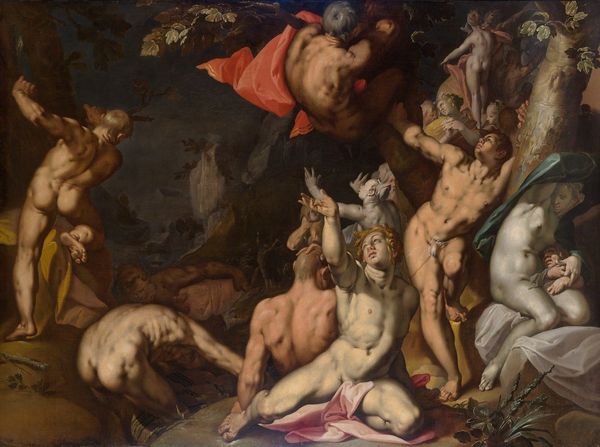
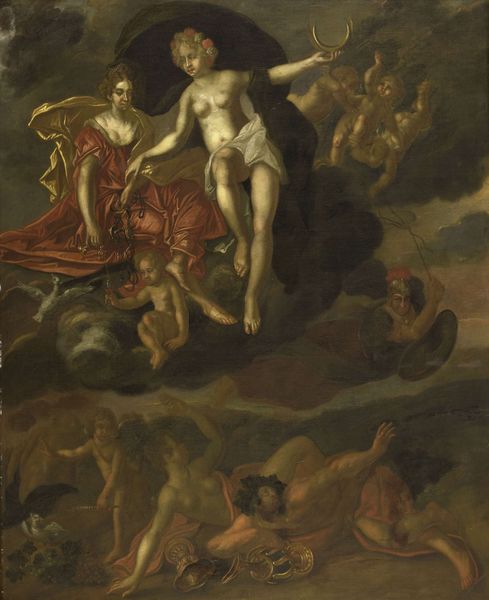
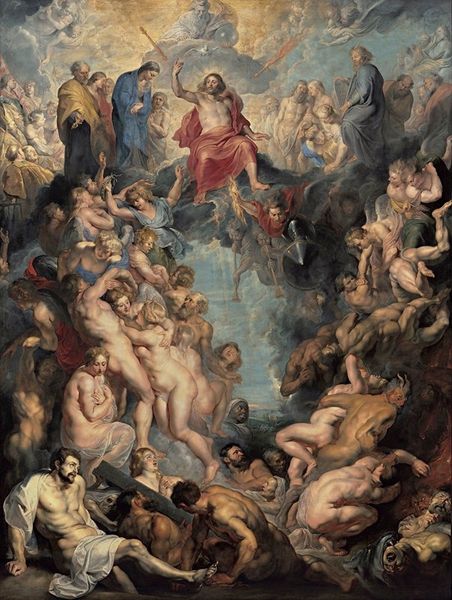
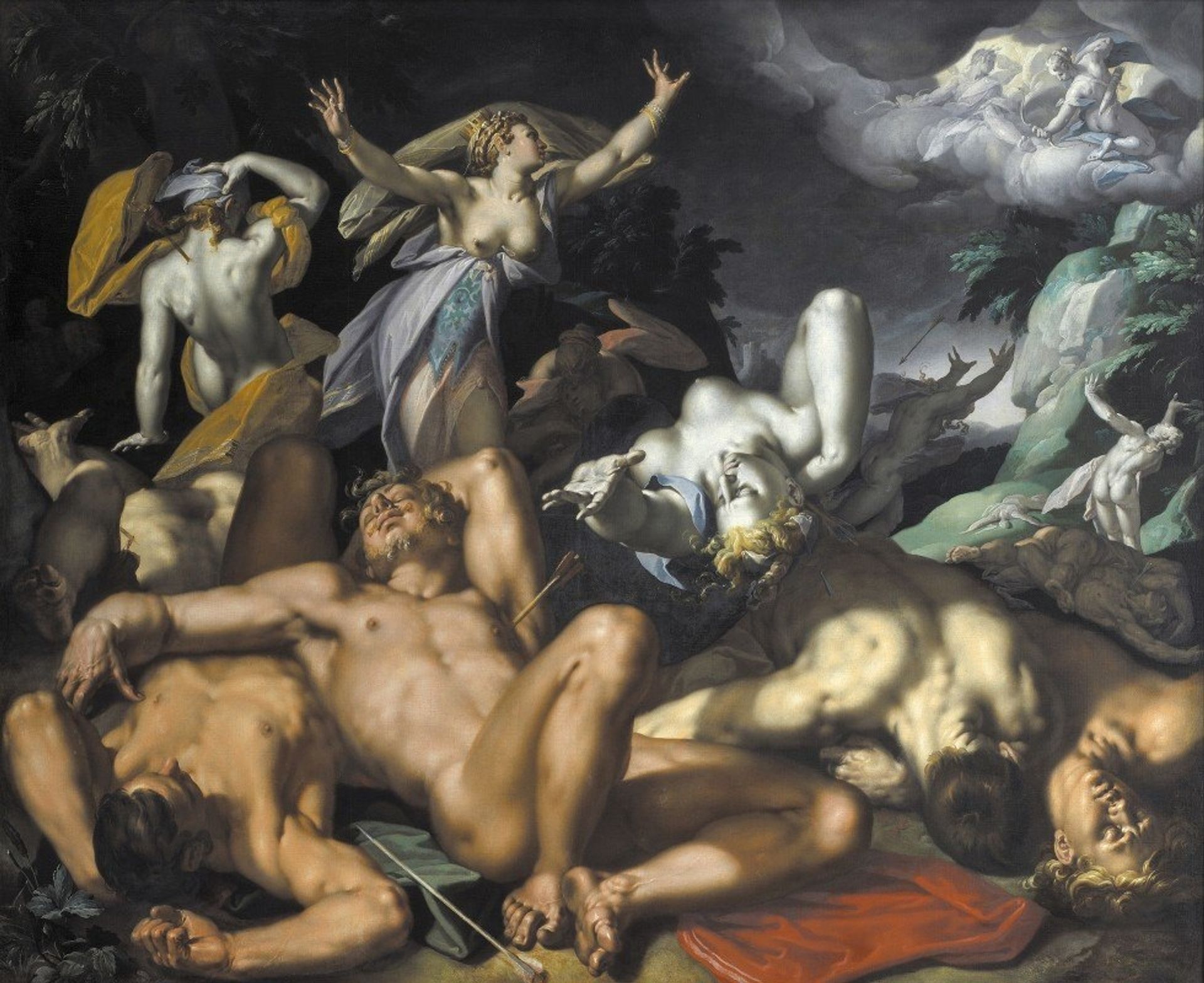
Abraham Bloemaert painted "Apollo and Diana Punishing Niobe by Killing her Children" with oil on canvas. The painting's composition is organized with a distinct layering of bodies, creating both depth and a sense of chaotic entanglement. The stark contrast between the pale, idealized bodies of the mortals and the darker, almost theatrical background enhances the drama. Apollo and Diana, positioned at the upper edges, frame the scene with their divine presence. Bloemaert destabilizes the classical ideals of beauty and heroism by presenting a scene of divine retribution, challenging the viewer to reconsider traditional narratives of power and morality. The bodies, arranged in disarray, disrupt the viewer's expectations of order and harmony, hinting at a deeper, more unsettling interpretation of the scene. The interplay between light and shadow, coupled with the dynamic arrangement of figures, creates an atmosphere of tension and impending doom. This tension underscores a larger discourse about the precarious nature of human existence in the face of divine will.

Artwork details
- Medium
- painting, oil-paint
- Copyright
- Public Domain: Artvee
Tags
Comments
Share your thoughts
About this artwork
Abraham Bloemaert painted "Apollo and Diana Punishing Niobe by Killing her Children" with oil on canvas. The painting's composition is organized with a distinct layering of bodies, creating both depth and a sense of chaotic entanglement. The stark contrast between the pale, idealized bodies of the mortals and the darker, almost theatrical background enhances the drama. Apollo and Diana, positioned at the upper edges, frame the scene with their divine presence. Bloemaert destabilizes the classical ideals of beauty and heroism by presenting a scene of divine retribution, challenging the viewer to reconsider traditional narratives of power and morality. The bodies, arranged in disarray, disrupt the viewer's expectations of order and harmony, hinting at a deeper, more unsettling interpretation of the scene. The interplay between light and shadow, coupled with the dynamic arrangement of figures, creates an atmosphere of tension and impending doom. This tension underscores a larger discourse about the precarious nature of human existence in the face of divine will.
Comments
Share your thoughts