1762 - 1821
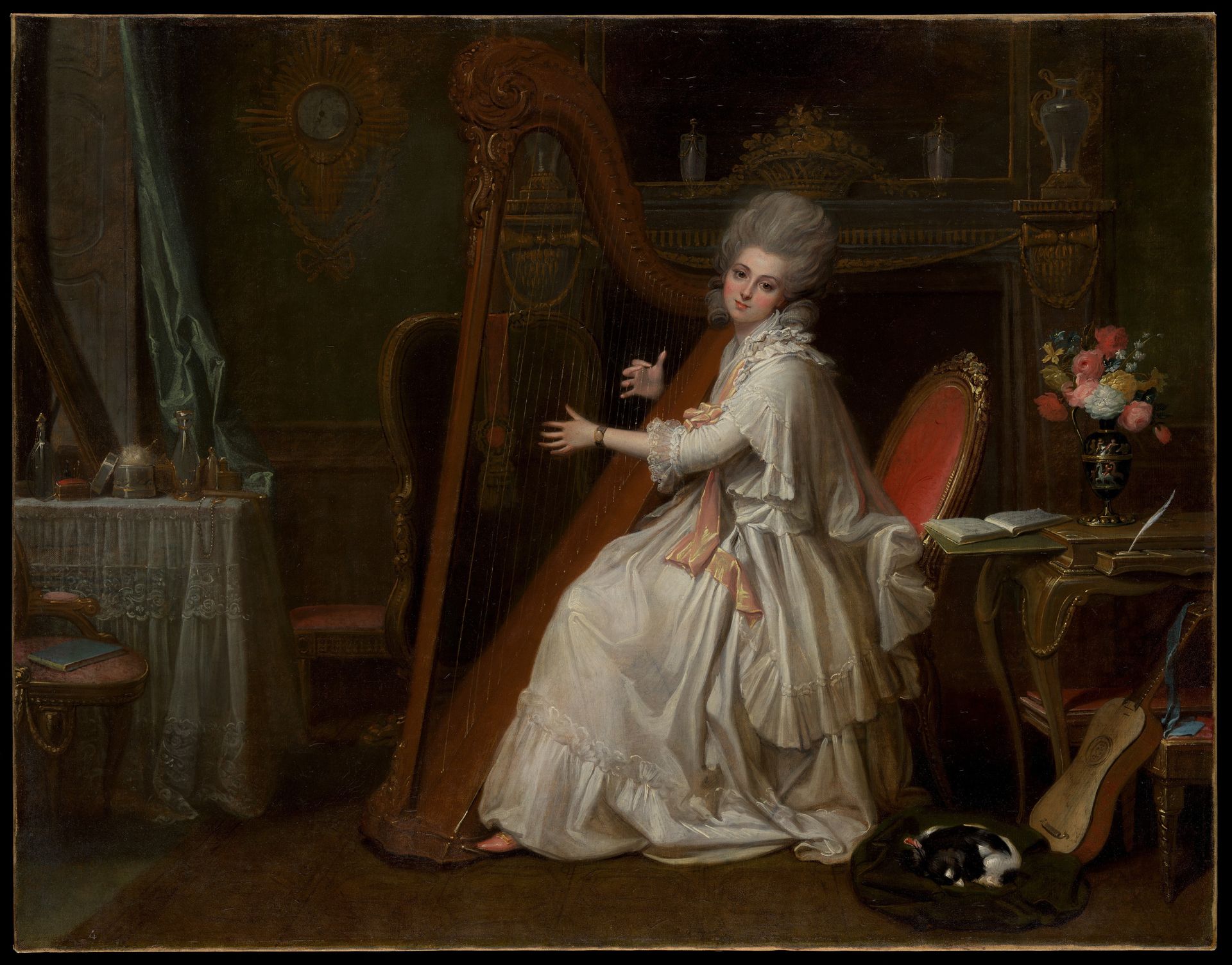
Marianne Dorothy Harland (1759–1785), Later Mrs. William Dalrymple


Listen to curator's interpretation
Curatorial notes
Editor: Here we have Richard Cosway’s portrait of Marianne Dorothy Harland, painted sometime between 1762 and 1821. I’m immediately struck by the way the artist has captured such a refined domestic scene; Marianne playing the harp, surrounded by luxurious fabrics and ornaments, even a snoozing pet. It all speaks of privilege and leisure, doesn’t it? How would you interpret all these symbols? Curator: Indeed. Each element here contributes to a specific cultural narrative. Think about the harp itself. In this era, it was less a musical instrument and more a symbol. What feelings do you associate with the image of a woman playing the harp? Consider its delicate strings and the soft music it produces. Editor: Grace, femininity, perhaps even unattainable beauty or a higher class? Curator: Precisely! It links Marianne to both classical muses and aristocratic accomplishment, an affiliation intensified by the Neo-Classical vase on the right. Even the dog symbolizes fidelity, underscoring her virtue. Ask yourself what values this carefully constructed imagery intended to convey to viewers. Editor: So it’s more than just a pretty picture, it’s a carefully constructed image projecting particular values about wealth and character. It also emphasizes what was thought important about a woman’s position. I had missed so much looking at it casually. Curator: Visual language is layered. Every object contributes to a greater whole, influencing our understanding. This form of representation carries the emotional, cultural, and psychological ideals of the time. Editor: It’s amazing to consider how portraits go beyond simple likenesses, embedding so much cultural information within their delicate brushstrokes.