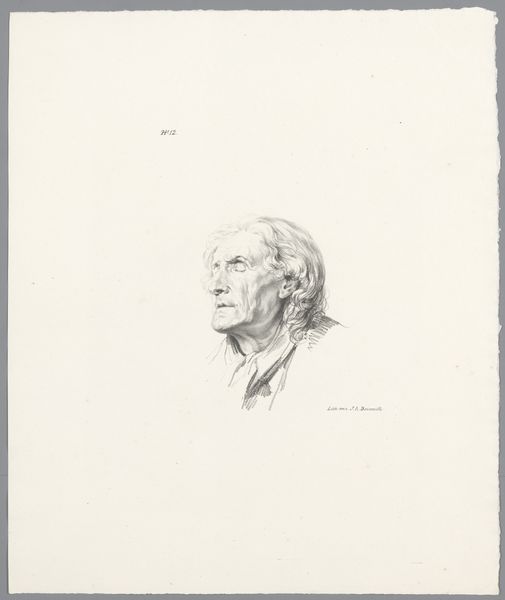
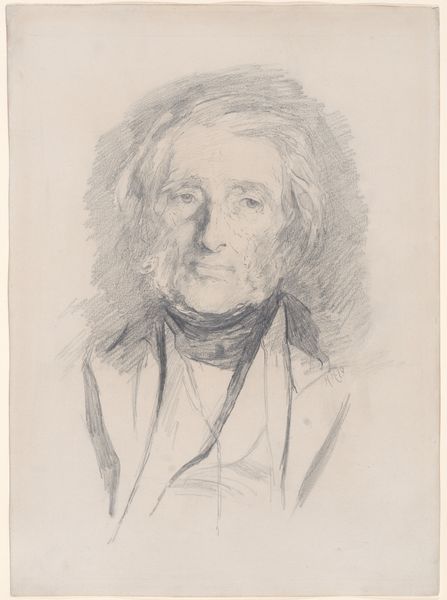
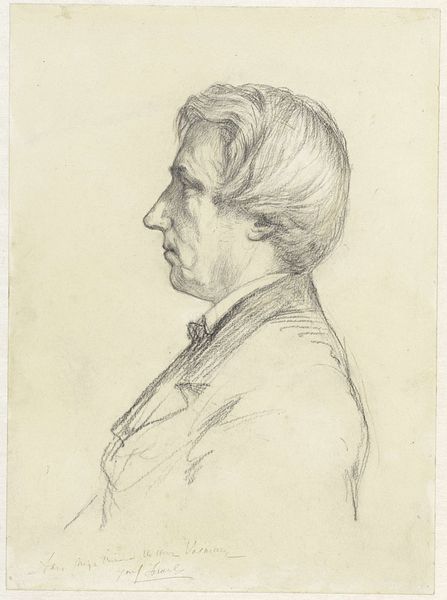
drawing, pencil
#
portrait
#
pencil drawn
#
drawing
#
pencil sketch
#
pencil
#
academic-art
#
realism
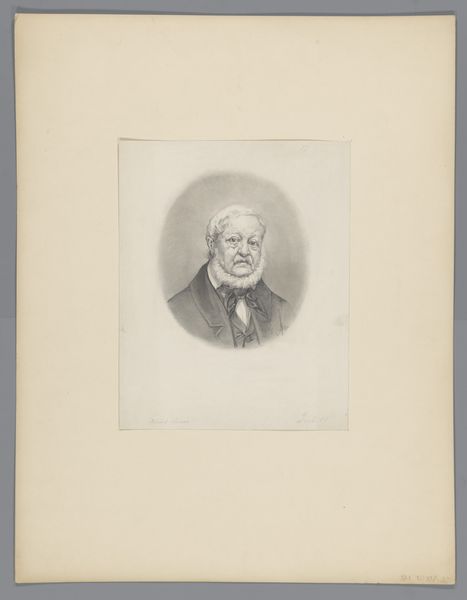
Dimensions: height 182 mm, width 136 mm
Copyright: Rijks Museum: Open Domain
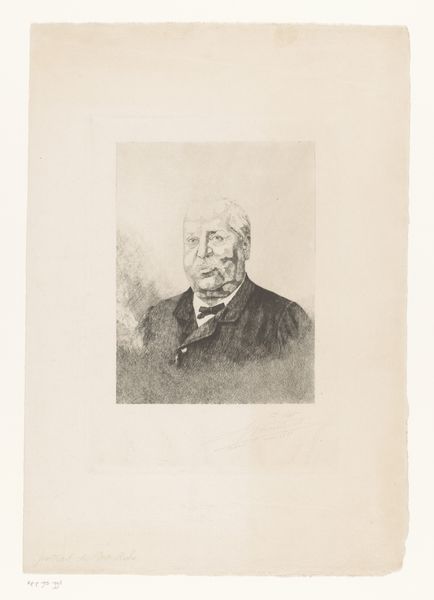
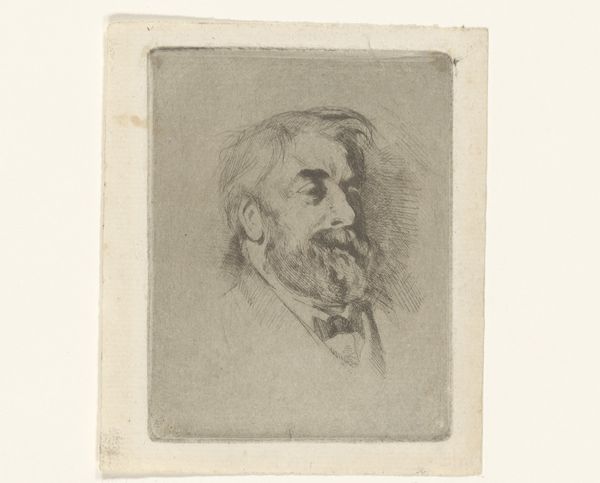
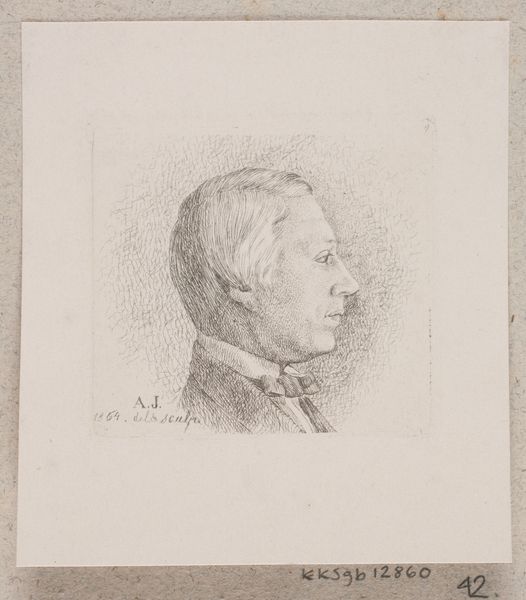
Willem Linnig the Younger created this print of an unknown man in 1864. The image is rendered through etching, a process that involves drawing with a needle on a waxy ground, then submerging the plate in acid. You can see the characteristically scratchy lines of the technique. The acid bites into the metal, creating recessed lines that hold ink, and yield an image when pressed to paper. Think of it as a form of industrial engraving. Compared to a drawing or painting, printmaking allowed for the possibility of wider distribution, aligning it with early industrial modes of production. Though artists have often sought to distance themselves from such associations, in fact, the techniques of printmaking have always had this double valence: both fine art, and potentially commercial at the same time. The image, the process, and the social context of the print are all crucial to its lasting resonance.
Comments
No comments
Be the first to comment and join the conversation on the ultimate creative platform.
 Collect
 React
React Comment
More like this