About this artwork
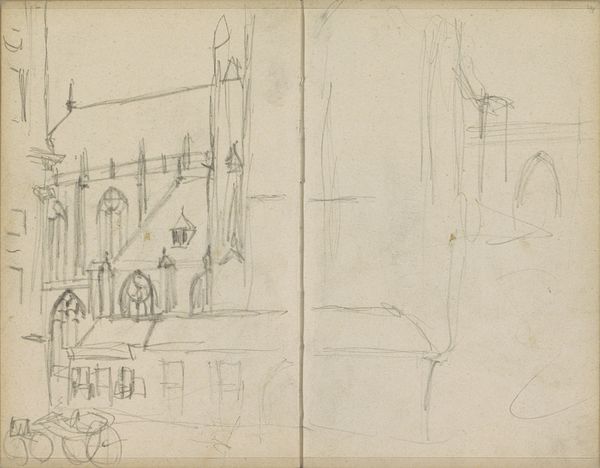
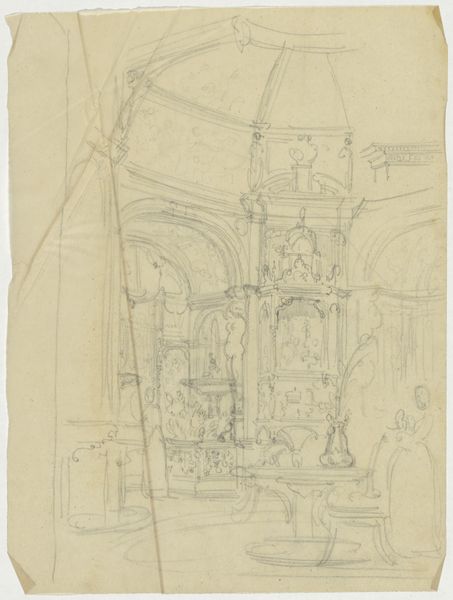
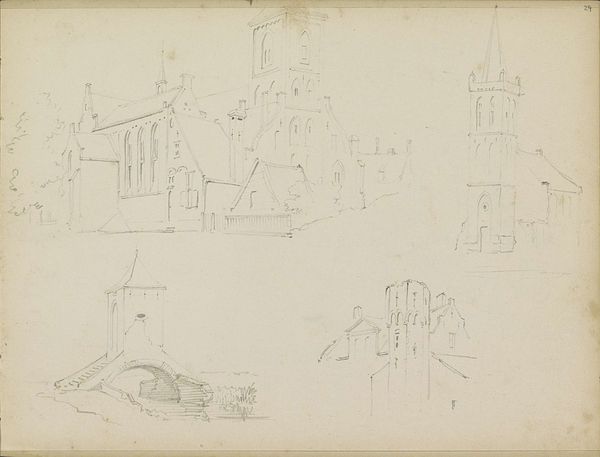
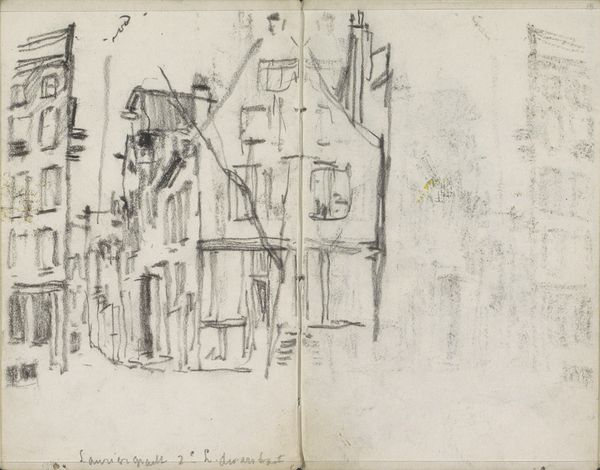
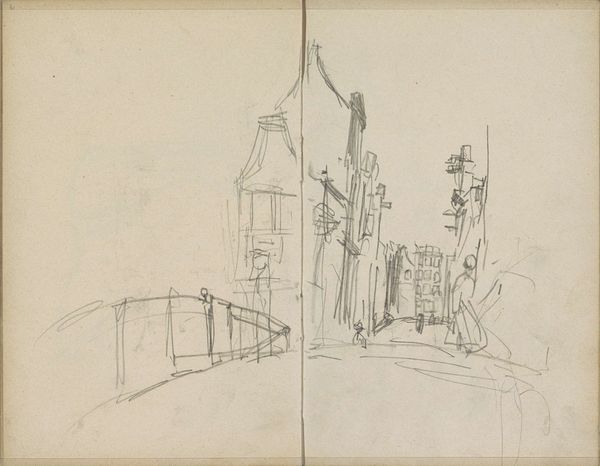
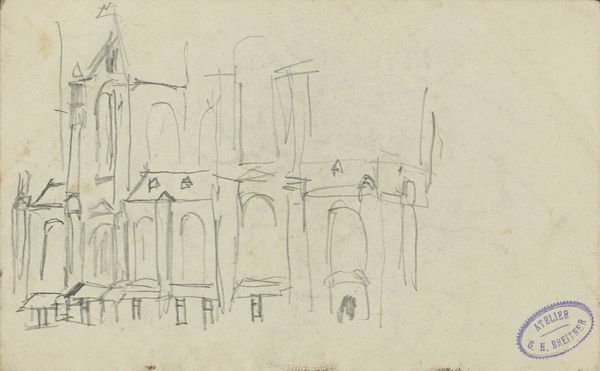
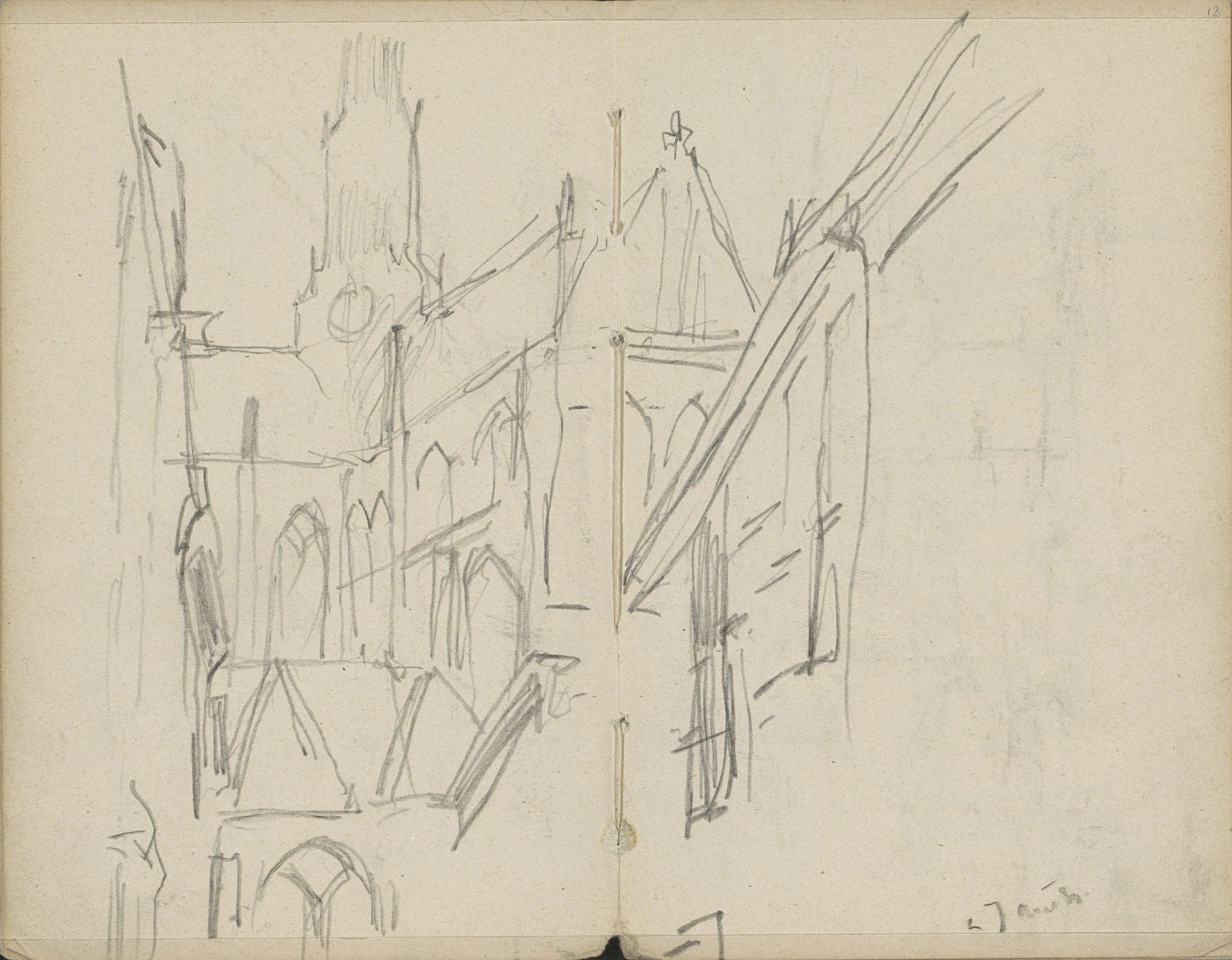
This is George Hendrik Breitner’s sketch of the Sint-Bavokerk in Haarlem. The drawing's power lies in its skeletal structure and geometric formalism. Look closely at how Breitner uses thin lines to suggest the grand architecture of the church, stripping it down to its most essential form. Notice the angular and stark lines, which give a sense of immediacy, as if the artist were capturing a fleeting impression. The sketch invites a semiotic reading, where lines become signs pointing to something beyond themselves. Here, Breitner destabilizes the traditional representation of architectural grandeur by reducing the church to an abstract interplay of lines and angles. This evokes the rapid industrial and social changes of the late 19th century, when artists began questioning established forms. Ultimately, the sketch encourages us to reconsider how we perceive architectural form and representation. It moves beyond mere imitation, challenging us to find new meanings in abstraction and re-interpretation.
Sint-Bavokerk te Haarlem, gezien vanuit de Jansstraat c. 1906 - 1923

George Hendrik Breitner
1857 - 1923Location
RijksmuseumArtwork details
- Location
- Rijksmuseum
- Copyright
- Rijks Museum: Open Domain
Comments
No comments
About this artwork
This is George Hendrik Breitner’s sketch of the Sint-Bavokerk in Haarlem. The drawing's power lies in its skeletal structure and geometric formalism. Look closely at how Breitner uses thin lines to suggest the grand architecture of the church, stripping it down to its most essential form. Notice the angular and stark lines, which give a sense of immediacy, as if the artist were capturing a fleeting impression. The sketch invites a semiotic reading, where lines become signs pointing to something beyond themselves. Here, Breitner destabilizes the traditional representation of architectural grandeur by reducing the church to an abstract interplay of lines and angles. This evokes the rapid industrial and social changes of the late 19th century, when artists began questioning established forms. Ultimately, the sketch encourages us to reconsider how we perceive architectural form and representation. It moves beyond mere imitation, challenging us to find new meanings in abstraction and re-interpretation.
Comments
No comments