print, photography, gelatin-silver-print
#
portrait
# print
#
photography
#
coloured pencil
#
gelatin-silver-print
Dimensions: height 187 mm, width 110 mm
Copyright: Rijks Museum: Open Domain
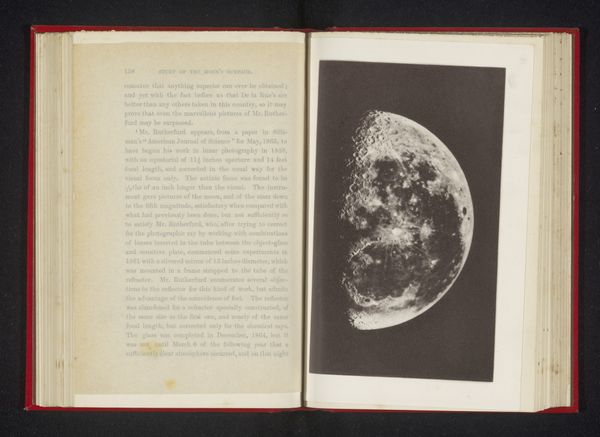
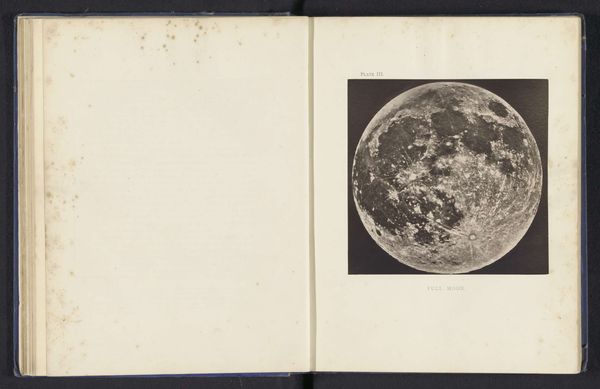
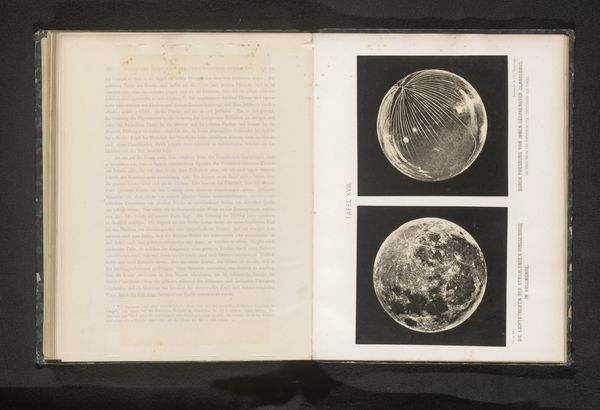
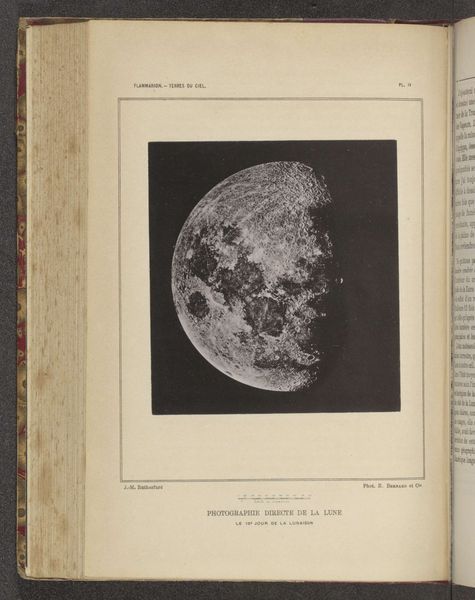
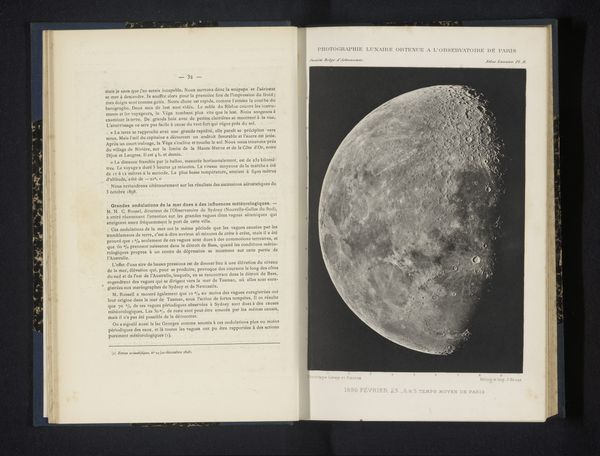
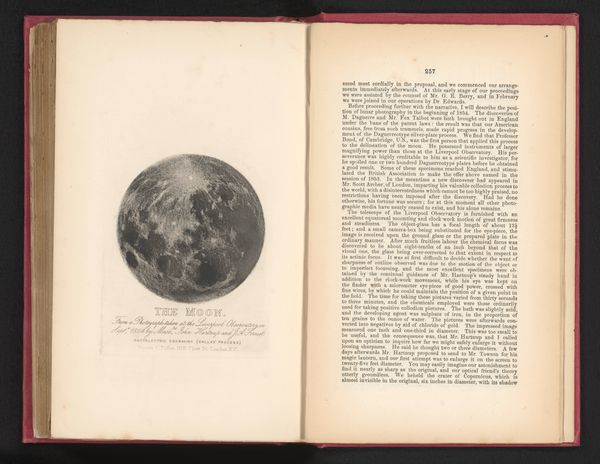
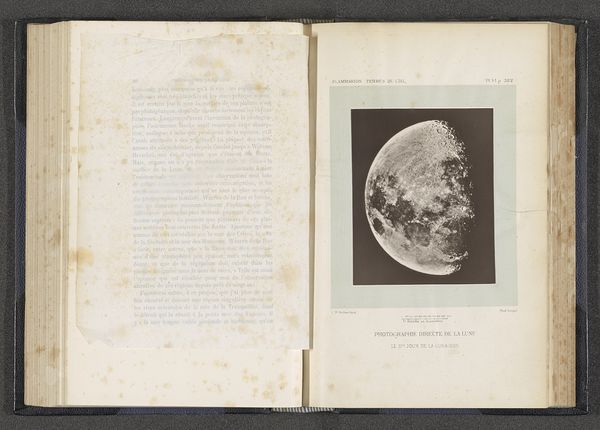
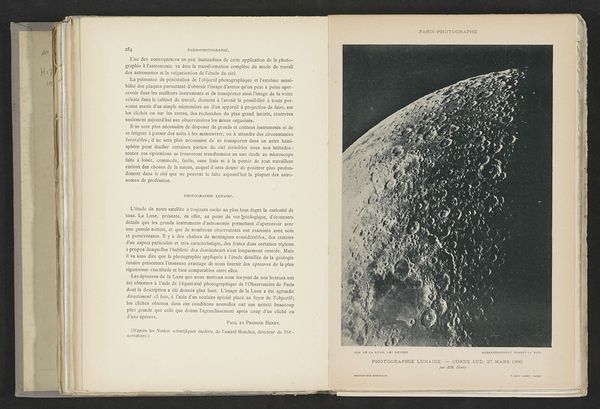
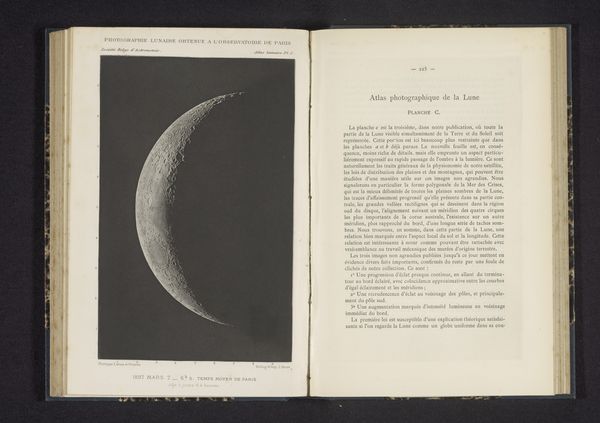
This photograph of the moon in its third quarter was made by Lewis M. Rutherford, using a technique that was cutting edge for its time. Rutherford’s work in lunar photography began in 1858, combining an equatorial of 11 1/4 inches aperture and 14 foot focal length, corrected for visual focus. The scientific focus was found to be 1/8ths of an inch longer than the visual. Through trial and error, Rutherford experimented with lenses and sensitive plates, ultimately using a silvered mirror mounted to the tube of the refractor. The image results from a highly specialized collaboration between science, labor, and capital. The telescope itself was a product of skilled engineering and glassmaking; the photographic process involved the work of chemists and technicians developing light-sensitive materials. It took years to complete the glass, and some time for the atmospheric conditions to permit a single negative. It serves as a potent reminder that even seemingly "natural" images of the moon are the products of complex production processes.
Comments
No comments
Be the first to comment and join the conversation on the ultimate creative platform.
 Collect
 React
React Comment
More like this