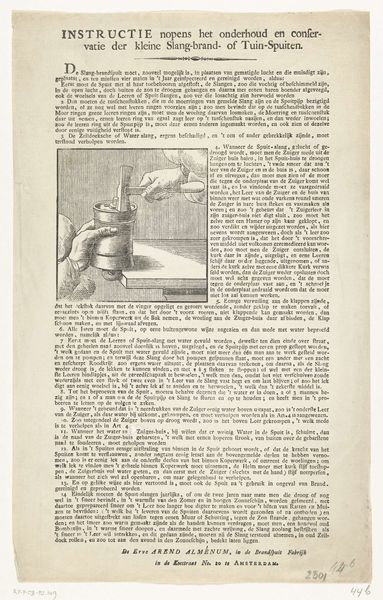
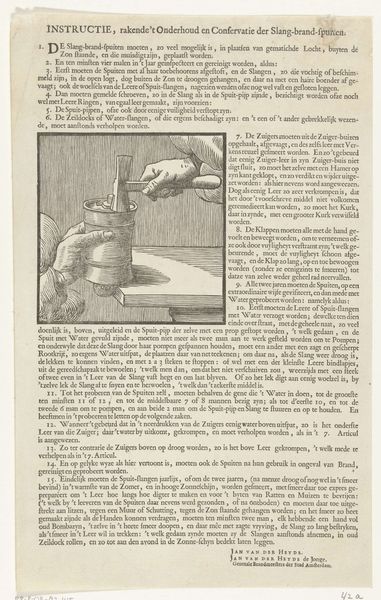
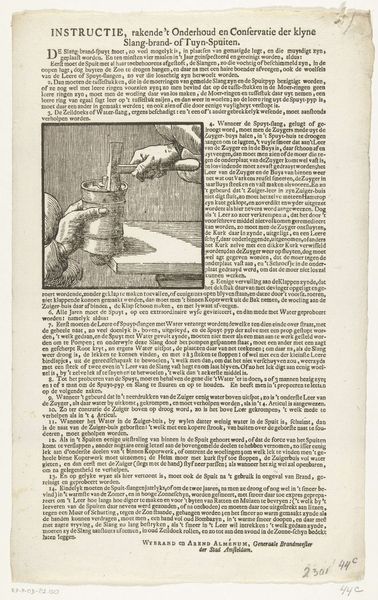
Instructie over het gebruik en onderhoud van de slangbrandspuiten op schepen, ca. 1800 1784 - 1830

drawing, print, textile, paper, engraving
drawing
dutch-golden-age
textile
paper
engraving
Dimensions: height 332 mm, width 422 mm
Copyright: Rijks Museum: Open Domain
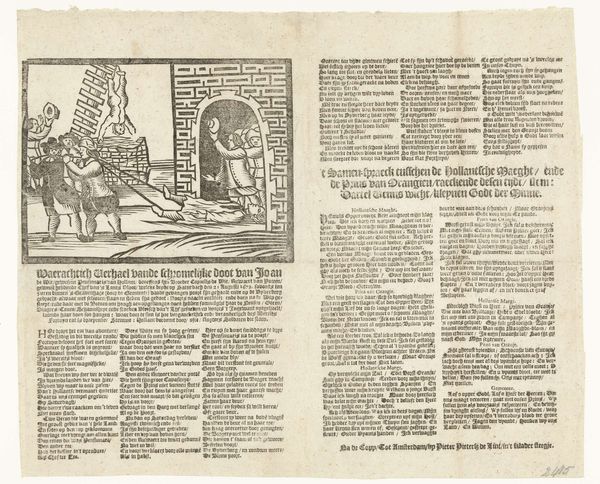
Editor: Here we have an engraving, likely from around 1800, entitled "Instructie over het gebruik en onderhoud van de slangbrandspuiten op schepen," or Instructions on using and maintaining hosepipe fire extinguishers on ships. It's a fascinating glimpse into a very practical, technical subject rendered as art. What strikes me is the density of the text and the somewhat rudimentary depiction of the pump. How do you interpret this work within its historical context? Curator: Well, immediately, it points to the growing importance of maritime trade and the associated risks. The engraving is essentially a public service announcement, but produced in an era before widespread literacy and visual communication. Consider who the intended audience might be - ship owners, captains, perhaps even the sailors themselves. What social or institutional needs was this trying to address? Editor: Perhaps to reduce ship fires and protect cargo? Curator: Precisely. And it’s crucial to see this object not in isolation, but as part of a larger system. It speaks volumes about shipbuilding technology, maritime regulations, and even early forms of insurance. Think about the relationship between the printed image and the oral tradition; information probably spread through demonstration and word of mouth in tandem with these sorts of instructional images. Are you thinking of the relationship of text to image? Editor: It seems that one cannot do without the other, each supports each other to get the message across! The placement and prominence of the Dutch text give a clue to this engravings target population. I see an author signature in the bottom, so that also denotes who could read at that time as well as who might be wealthy and powerful enough to commission such a piece. Curator: Exactly, the integration of visual and written language tells us volumes. Also look closely at the rendering of the pump – it may seem rudimentary to us, but it conveyed vital technical information in a visual culture with evolving conventions for representing three-dimensional objects. It served its public purpose. Editor: It's amazing how much information is embedded in what at first glance seems like a simple instructional diagram. It really broadens your perspective when you consider the social role of images! Curator: Absolutely! This print reveals the intersections between technology, commerce, and visual communication in the early modern period and that it serves an important role!
Comments
No comments
Be the first to comment and join the conversation on the ultimate creative platform.
 React
React Comment