c. 1855 - 1857
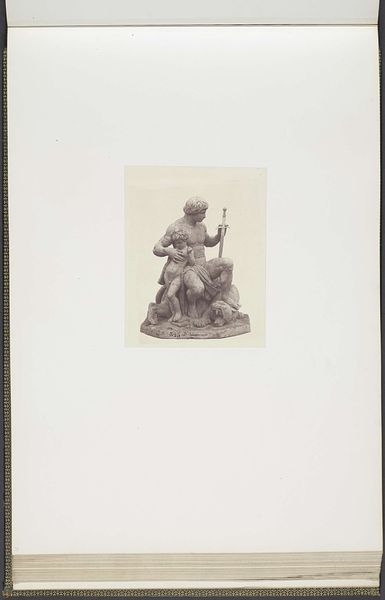
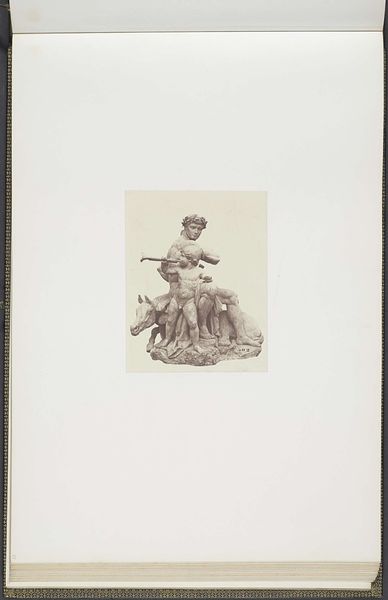
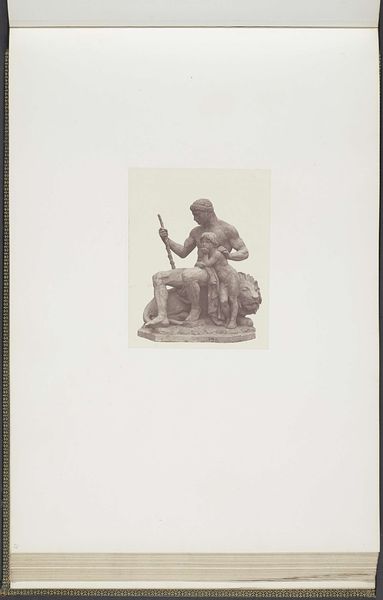
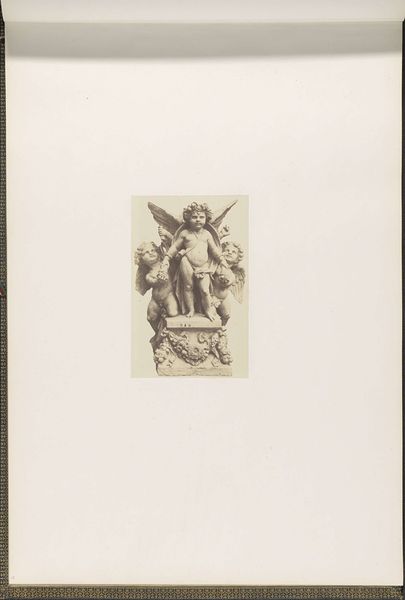
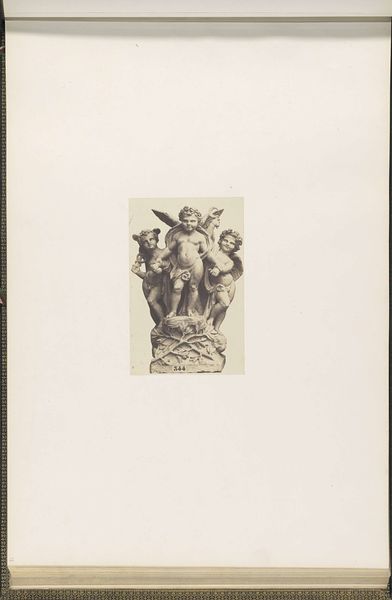
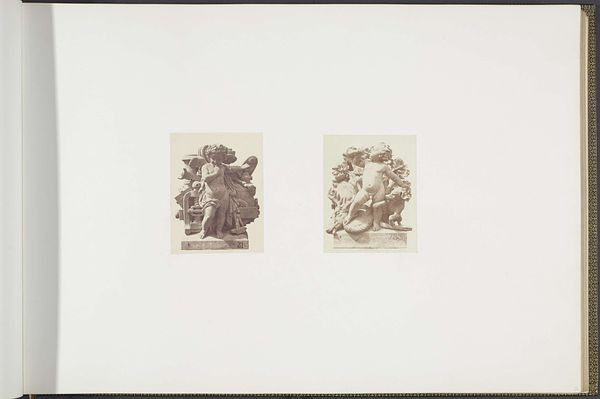
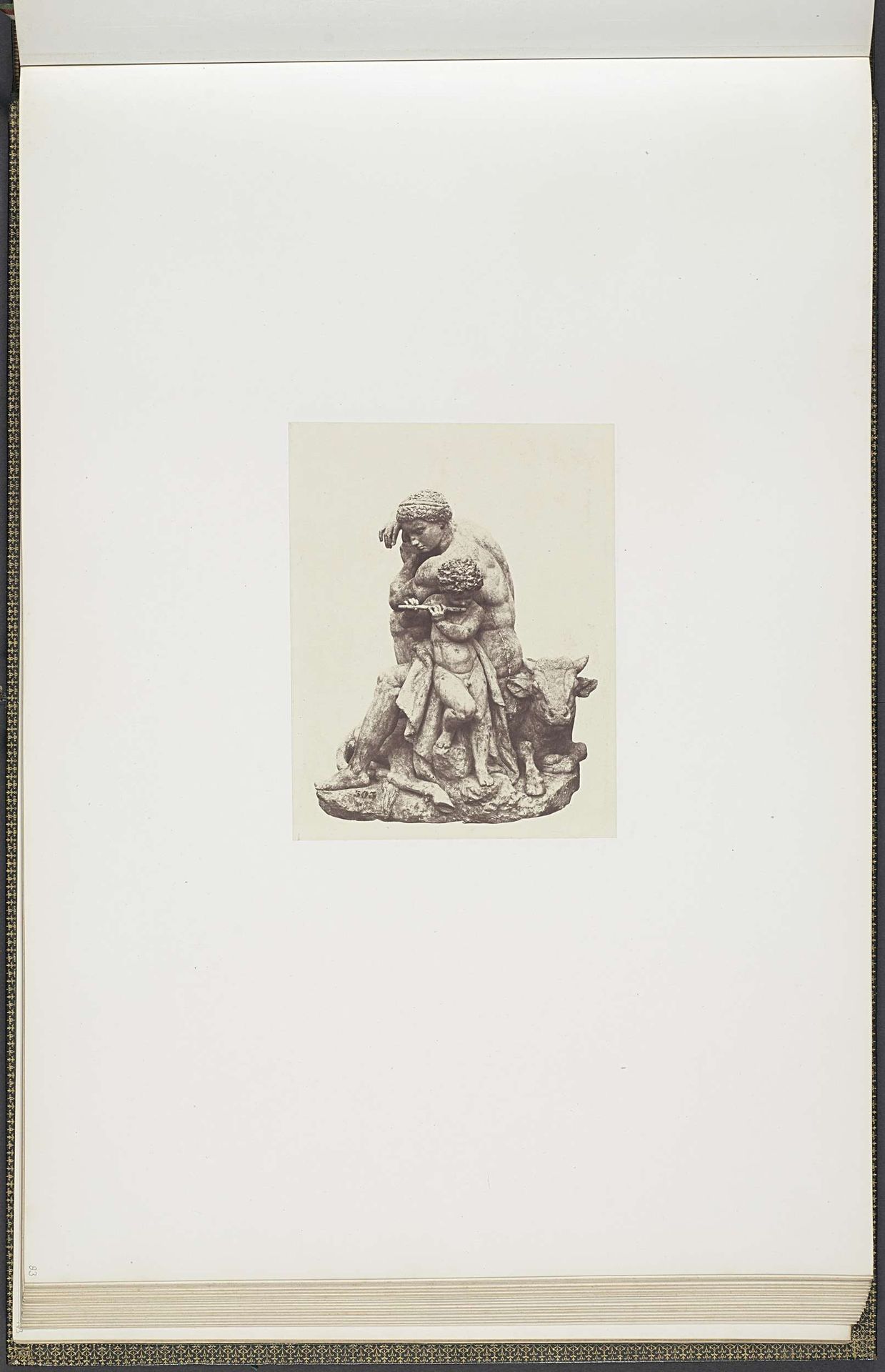
Gipsmodel voor beeldhouwwerk op het Palais du Louvre: "La Paix" door Antoine-Louis Barye

Edouard Baldus
1813 - 1889Location
RijksmuseumListen to curator's interpretation
Curatorial notes
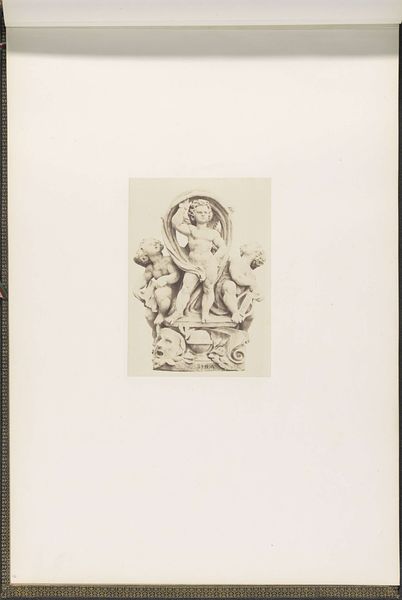
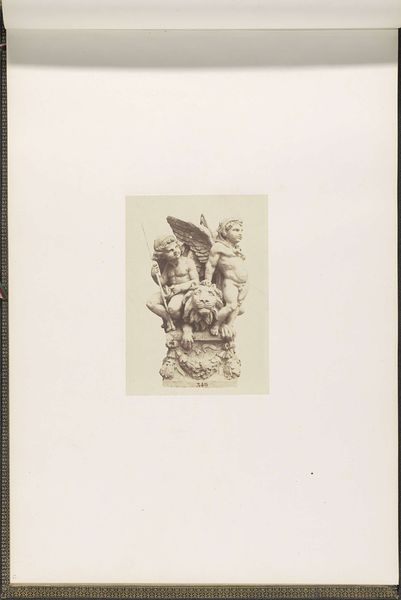
Curator: Here we have a photograph of Antoine-Louis Barye's plaster model, dating from around 1855 to 1857, for a sculpture intended for the Palais du Louvre, entitled "La Paix", or "Peace." Editor: It feels monumental, even in this photographic reproduction, doesn't it? A rugged figure dominates the scene, protectively embracing a child. The texture of the plaster, rendered in this monochromatic print, contributes to the work's almost primal energy. Curator: Indeed. Barye was commissioned to create sculptures emblematic of peace and war, intended to flank the exterior of the Louvre Palace. This particular work presents a muscular, possibly allegorical, male figure sheltering a child, beside what seems to be a bull. It exemplifies the Neoclassical style popular at the time. Editor: I see echoes of masculine power structures embedded in the visualization of 'peace.' The man's physique, the possessive gesture—it seems peace is guaranteed through a specific form of control and protection, one which prioritizes the patriarchal. Where are the women? What is their stake in maintaining “peace”? It speaks to nineteenth-century anxieties about gender and nationhood, really. Curator: Certainly. Barye's political affiliations played a key role in his public commissions. As a known supporter of Napoleon III, Barye understood how sculptural allegories could advance specific political goals, and Neoclassicism, with its imperial Roman motifs, was considered a potent visual language for his work. Note also that these sculptures, in their original placement on the Louvre, faced outward toward public spaces, thus contributing to France’s external and self-fashioning. Editor: Right. The image actively projects a carefully considered idea of civic harmony to its public, using powerful symbols and traditional sculptural methods, it creates, I think, something more like a statement of dominance. Looking at this, I wonder about the complexities of visual representation and how political narratives get molded and amplified through supposedly ‘neutral’ forms like public art. Curator: These photographic reproductions by Edouard Baldus also raise interesting points. Here is art object represented by early photograph, adding a documentary element. What do you take away after this short review? Editor: My initial perception, and thinking about how the language of strength and security influences our social understandings even now... the peace sculpture and our ideas continue.