c. 1900 - 1915
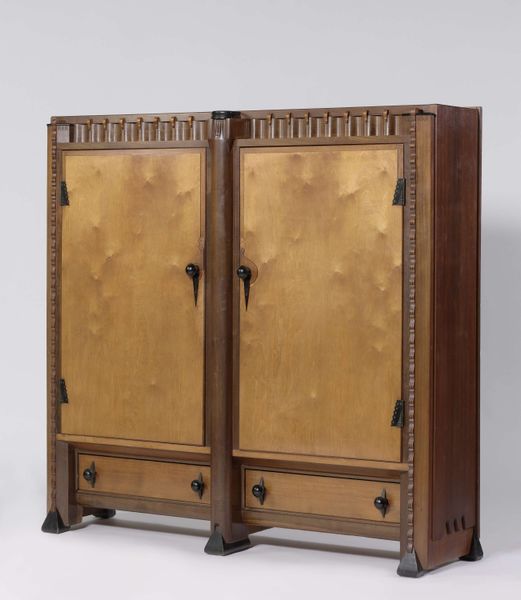
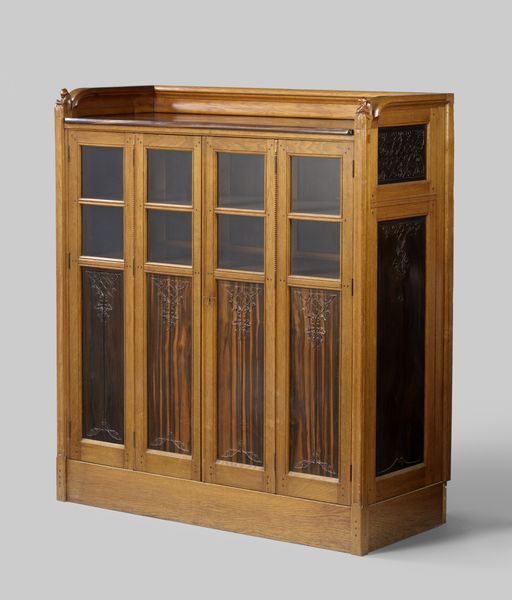
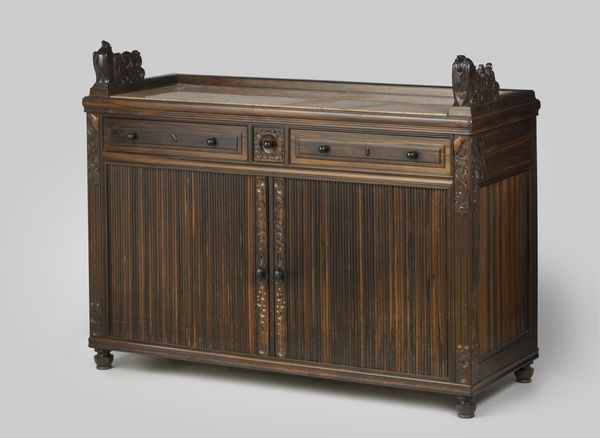
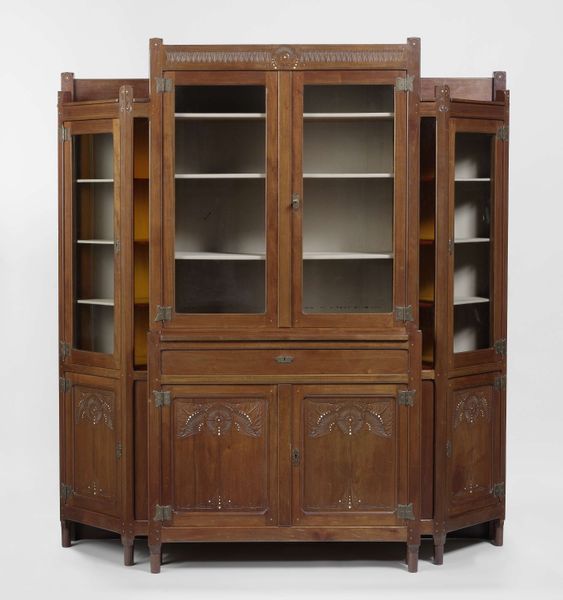
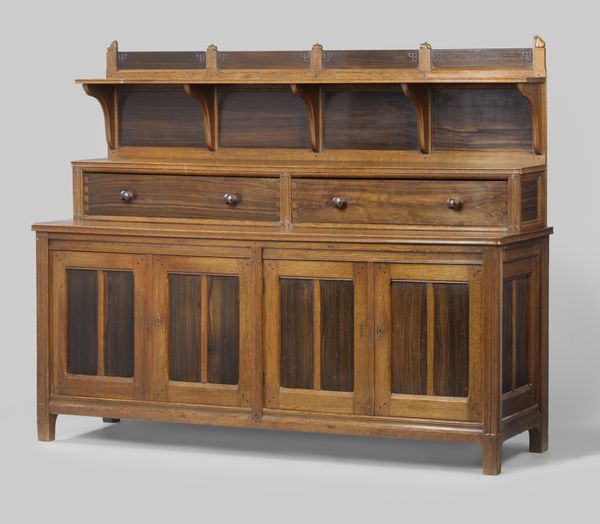
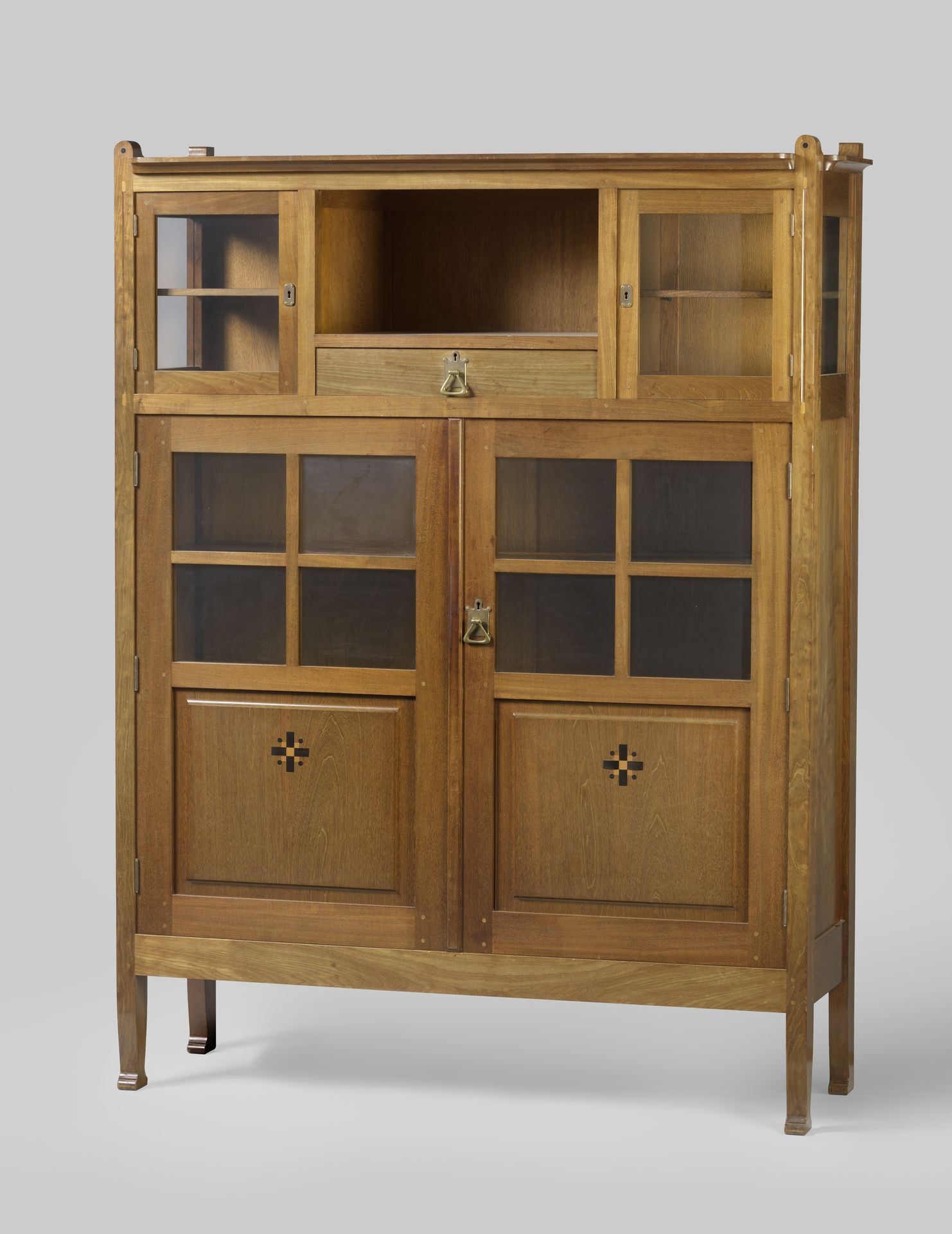
Buffetkast ingelegd met geometrisch motief op de panelen aan de onderzijde

Jacob Pieter van den Bosch
1868 - 1948Location
RijksmuseumListen to curator's interpretation
Curatorial notes
Editor: Here we have a buffet cabinet created by Jacob Pieter van den Bosch, probably sometime between 1900 and 1915. It's crafted from wood, and what immediately strikes me is its solid, dependable feel, grounded by those inlaid geometric motifs. What do you notice when you look at this piece? Curator: You know, it whispers "home" to me, that comfortable kind of turn-of-the-century domesticity. It’s so distinctly Arts and Crafts, isn't it? All that dedication to handcrafted detail – the visible joinery, the warm tones…it suggests an era that valued substance and sincerity. I can almost smell beeswax polish and woodsmoke looking at it. The geometric patterns – what do you make of them? Editor: I think they lend a touch of understated elegance. They're simple, but their repetition adds a visual rhythm, don’t you think? It’s a bit like folk art meets… early modernism? Curator: Exactly! There’s that embrace of vernacular design, that "truth to materials" ethos so central to the movement, alongside a certain restraint and order that points towards the future. The warm colour palette feels incredibly comforting. Editor: So, what would this piece have meant to the people who owned it? Curator: Oh, I imagine it would have been the heart of the dining room, filled with cherished family heirlooms or the finest porcelain. Something beautiful *and* functional. It embodies the idea of art integrated seamlessly into everyday life, something made to last, made to be loved. A world away from today's flat-pack furniture. It feels, dare I say, almost… spiritual? Editor: That’s an interesting take – I hadn’t considered its spiritual dimension before! I see so much more in it now than when I started. Curator: Me too, actually! I hadn’t really focused on how those geometric motifs are almost talismanic. I might need a lie-down.