


Curatorial notes
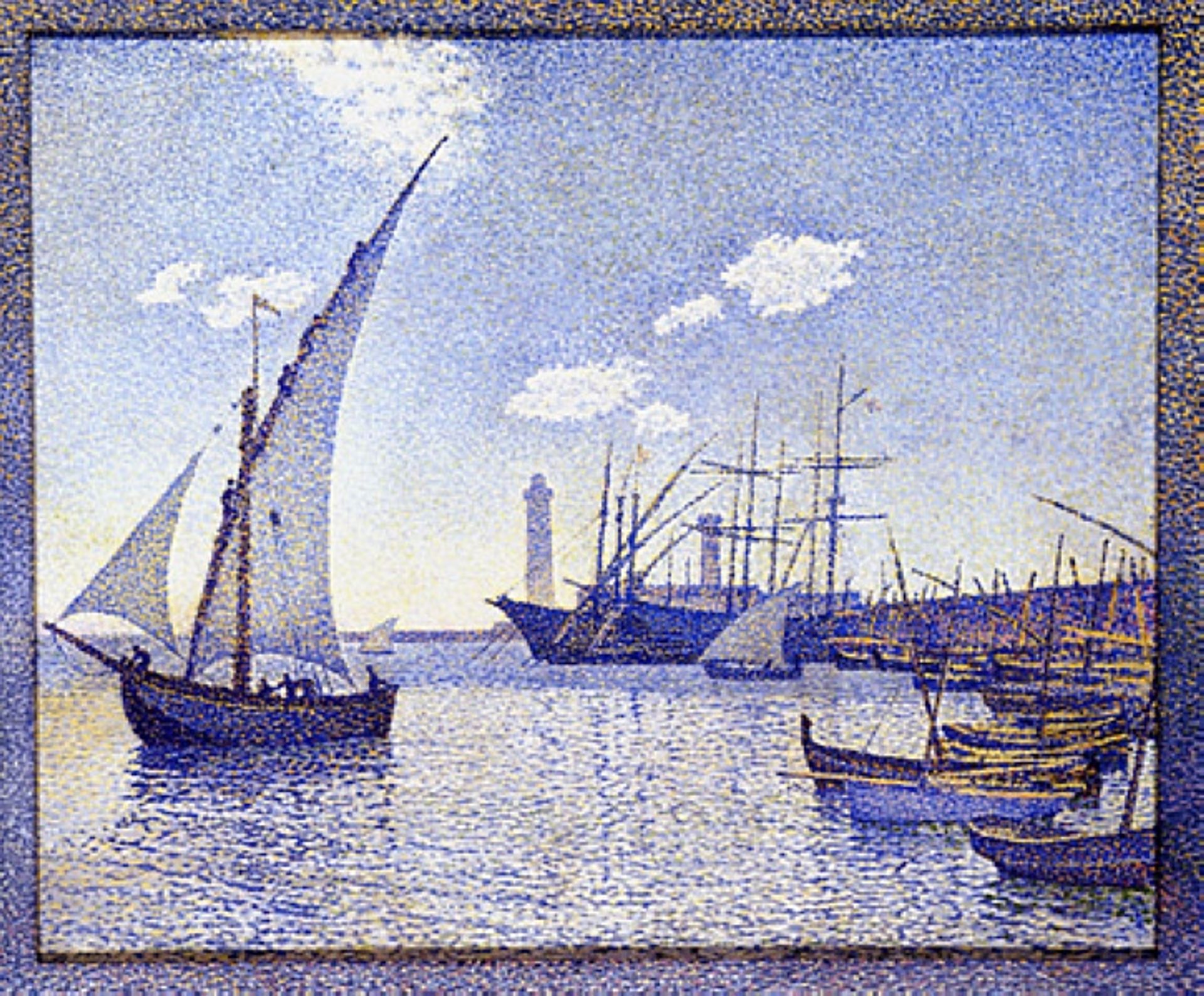
Theo van Rysselberghe created this painting of the Port de Cette using oil on canvas with a pointillist style. Pointillism emerged in France in the late 19th century and was seen as a progressive, even scientific approach to art. It's easy to get lost in the aesthetic beauty of the scene, but it's important to remember that this was a time of great social and economic change in France. The Industrial Revolution was in full swing, and traditional ways of life were being challenged. The port of Cette was a hub of trade and commerce, and the painting reflects the energy and dynamism of this bustling port city. The pointillist technique itself can be seen as a metaphor for the modern world: individual points of color coming together to create a larger image, much like the way individuals come together to create a society. The painting is also a product of the art world, with its galleries, critics, and collectors. By studying the social and institutional history of art, we can gain a deeper understanding of its meaning and significance. Resources such as historical archives, critical reviews, and biographical information can all shed light on the context in which a work of art was created.