About this artwork
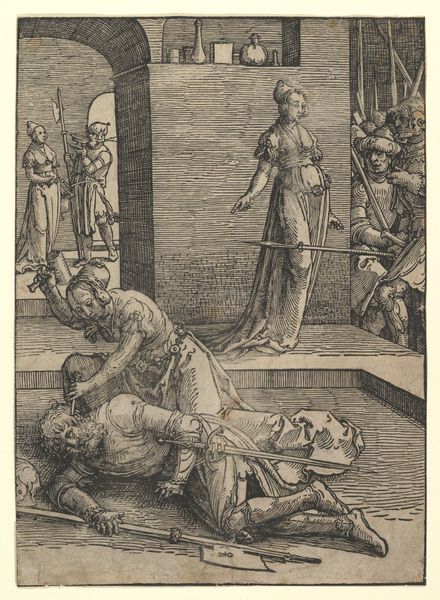
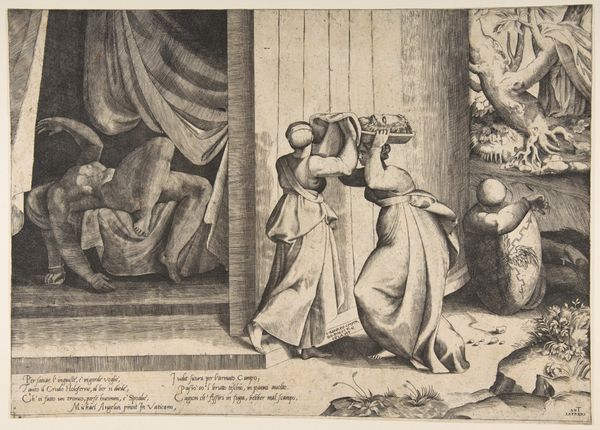
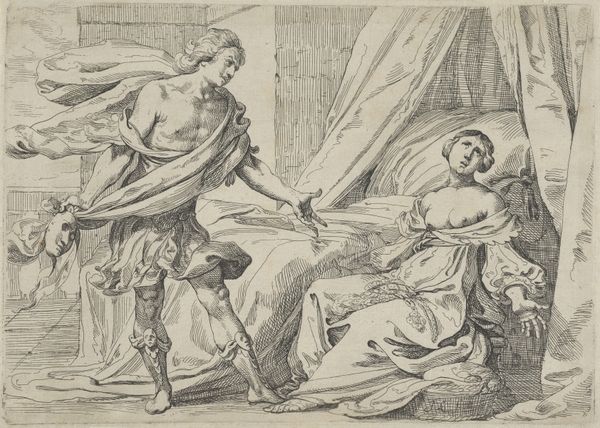
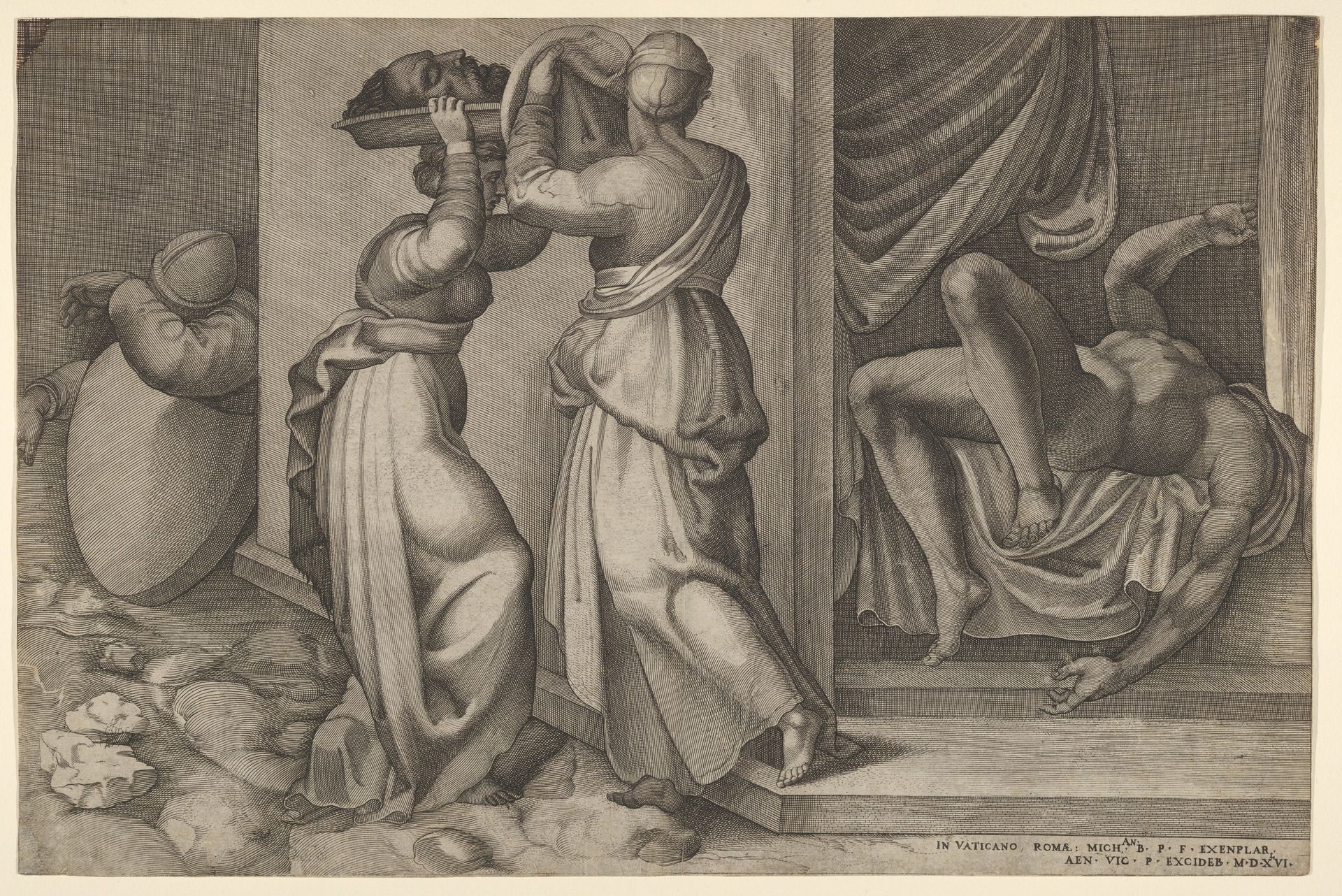
This print, made by Enea Vico in the mid-16th century, presents the biblical scene of Judith beheading Holofernes. But rather than paint, marble or gold, Vico used a humble sheet of paper and a burin, a steel tool used for engraving. The linear quality of the image comes from the slow, deliberate process of incising lines into a copper plate, which would then be inked and printed. Look closely, and you can almost feel the pressure of Vico's hand as he creates the scene. This emphasis on line and form is characteristic of engraving, where the material itself dictates the aesthetic. Engraving also had a social significance. As a relatively inexpensive medium, prints like this made art accessible to a wider audience. It was a reproductive medium, often used to disseminate the designs of others. Vico's skilled labor is evident in the precise rendering of the scene, which also served a broader purpose of distributing imagery in early modern Europe. The work invites us to consider how materials and processes can democratize art and shape cultural understanding.
Judith giving the head of Holofernes on a platter, which is about to be covered with a cloth, to her servant, with the foreshortened, naked body of Holofernes at right
1546


Artwork details
- Medium
- drawing, print, engraving
- Dimensions
- Sheet: 11 1/8 x 16 3/4 in. (28.3 x 42.6 cm)
- Location
- Metropolitan Museum of Art, New York, NY
- Copyright
- Public Domain
Tags
Comments
Share your thoughts
About this artwork
This print, made by Enea Vico in the mid-16th century, presents the biblical scene of Judith beheading Holofernes. But rather than paint, marble or gold, Vico used a humble sheet of paper and a burin, a steel tool used for engraving. The linear quality of the image comes from the slow, deliberate process of incising lines into a copper plate, which would then be inked and printed. Look closely, and you can almost feel the pressure of Vico's hand as he creates the scene. This emphasis on line and form is characteristic of engraving, where the material itself dictates the aesthetic. Engraving also had a social significance. As a relatively inexpensive medium, prints like this made art accessible to a wider audience. It was a reproductive medium, often used to disseminate the designs of others. Vico's skilled labor is evident in the precise rendering of the scene, which also served a broader purpose of distributing imagery in early modern Europe. The work invites us to consider how materials and processes can democratize art and shape cultural understanding.
Comments
Share your thoughts