

n.d.
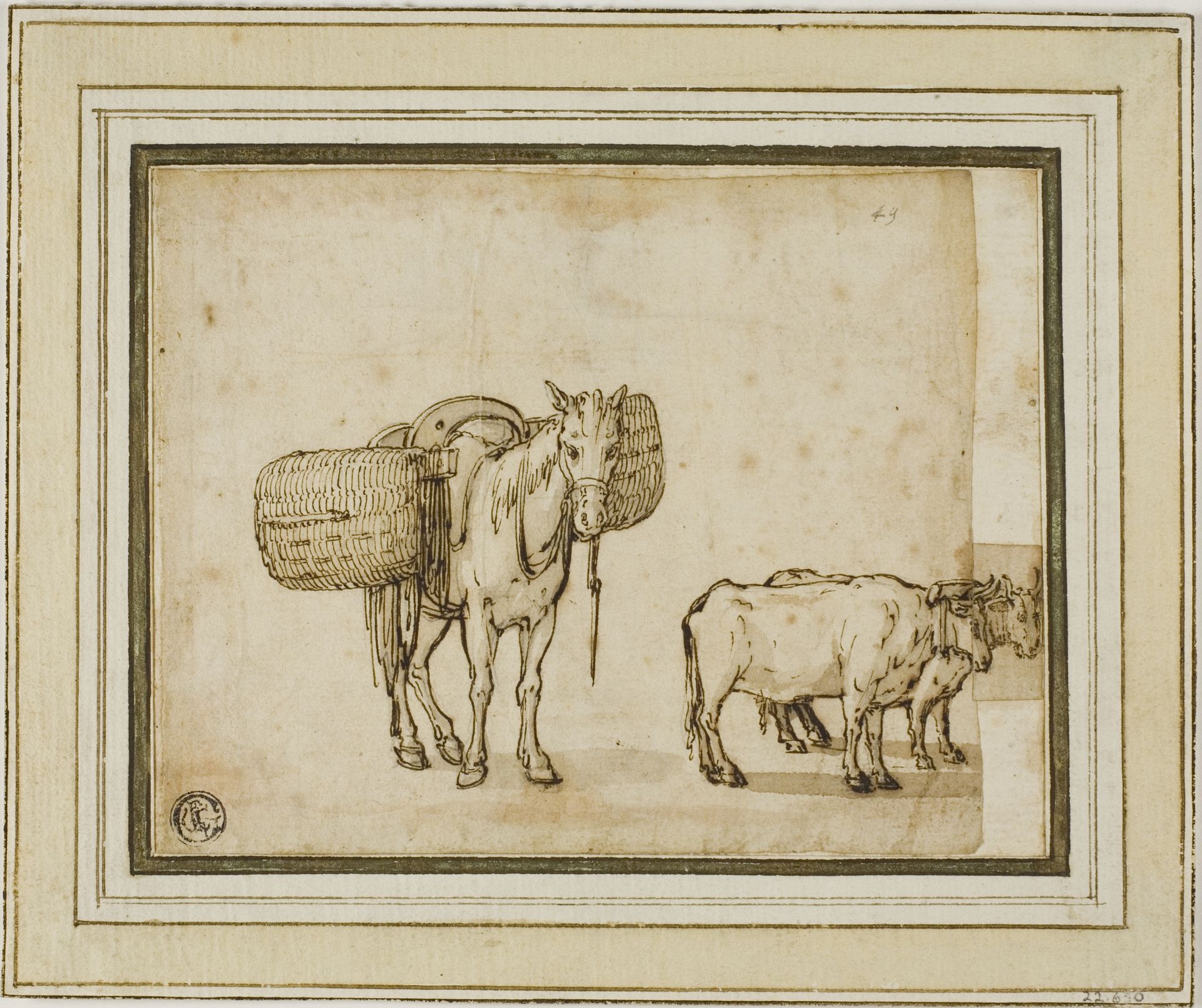
Two Sketches: Mule Carrying Baskets, Pair of Yoked Oxen


Listen to curator's interpretation
Curatorial notes
Curator: Before us is a drawing by Cornelis de Wael titled "Two Sketches: Mule Carrying Baskets, Pair of Yoked Oxen," created with pen, ink, and chalk on paper. Editor: The initial impact is quiet and understated. The tones are muted, yet there's a raw energy in the quick, almost nervous lines that define the animals. It feels honest. Curator: Absolutely. These rapid sketches, rather than formal portraits, offer insights into daily life. De Wael was known for genre scenes depicting ordinary people and their activities, and this perfectly embodies that focus. Such art made its mark on a rising middle class. Editor: Indeed. And consider the symbolism here. The mule burdened with baskets immediately brings to mind themes of labor and service. The yoked oxen suggest shared burdens and agricultural tradition. It evokes a world of agrarian routine. Curator: It’s fascinating how De Wael often situated his work within a larger visual culture. Think of the booming print market at the time. His drawings likely served as models or preparatory studies for prints which were widely disseminated. The impact went beyond gallery walls. Editor: That's an insightful point. Looking at the style, there's an almost timeless quality. Animals carrying the burdens of mankind. It strikes at something ancient and ever-present. Curator: I concur. There is a certain stoicism about the composition. This unpretentious rendering gives us access to the era’s socio-economic realities, of work that was expected, unquestioned. It really reveals much about the cultural attitudes of the period. Editor: Ultimately, De Wael gives permanence to moments that are anything but, elevating these animals and their burdens to something almost…archetypal. Curator: A perceptive reading. De Wael's art serves not merely as observation but becomes a quiet statement about societal roles and expectations. Editor: It certainly shifts my understanding beyond a mere record of farm life. The sketch transforms into a cultural touchstone.