About this artwork
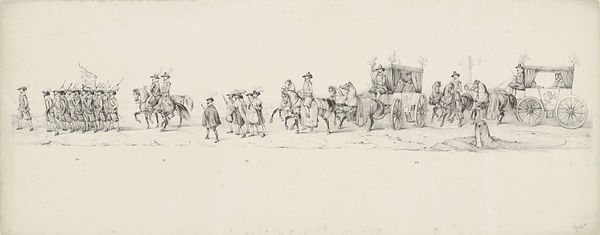
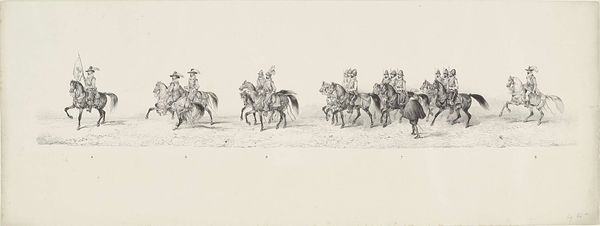
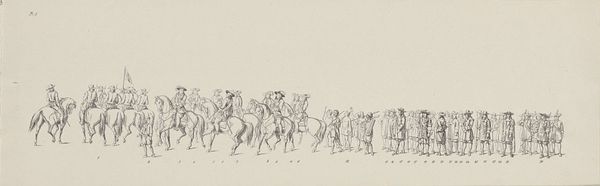
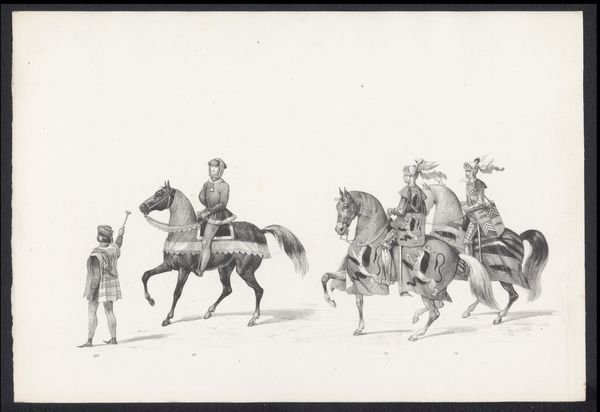
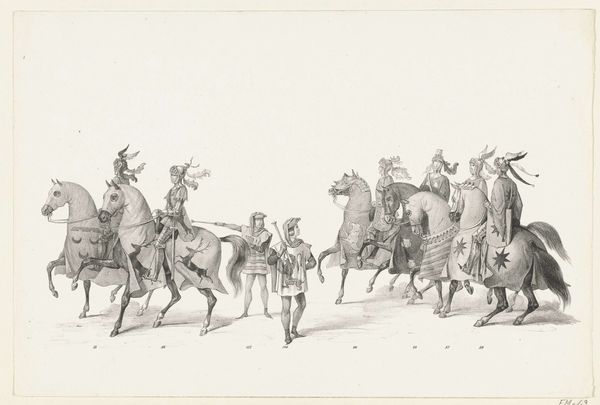
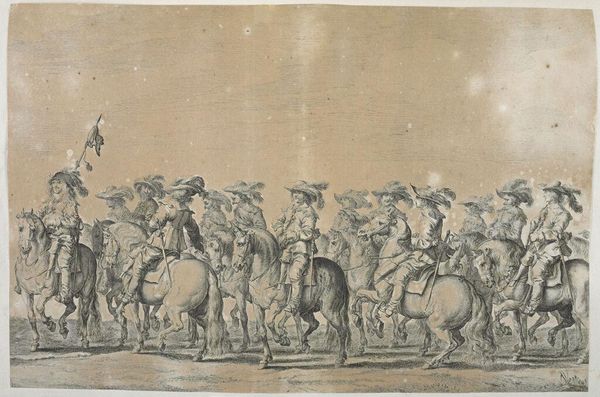
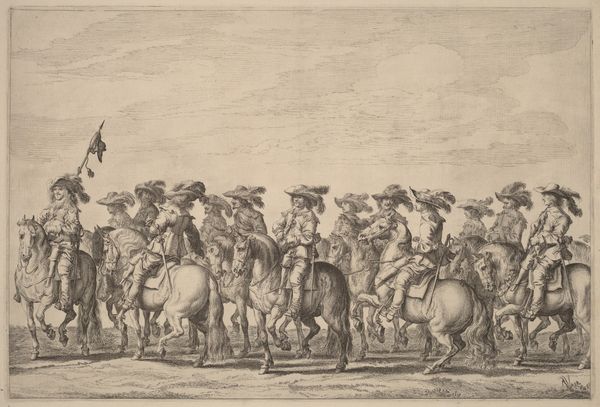
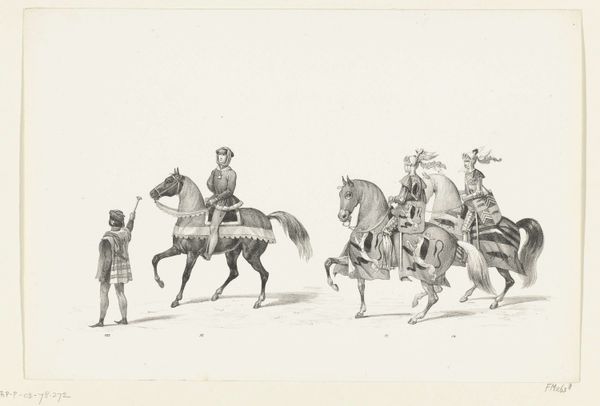
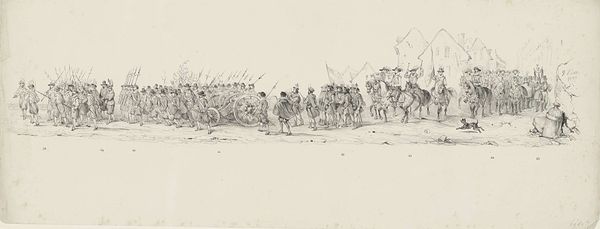
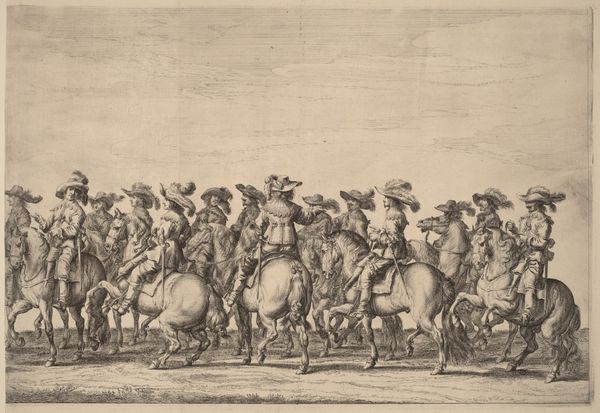
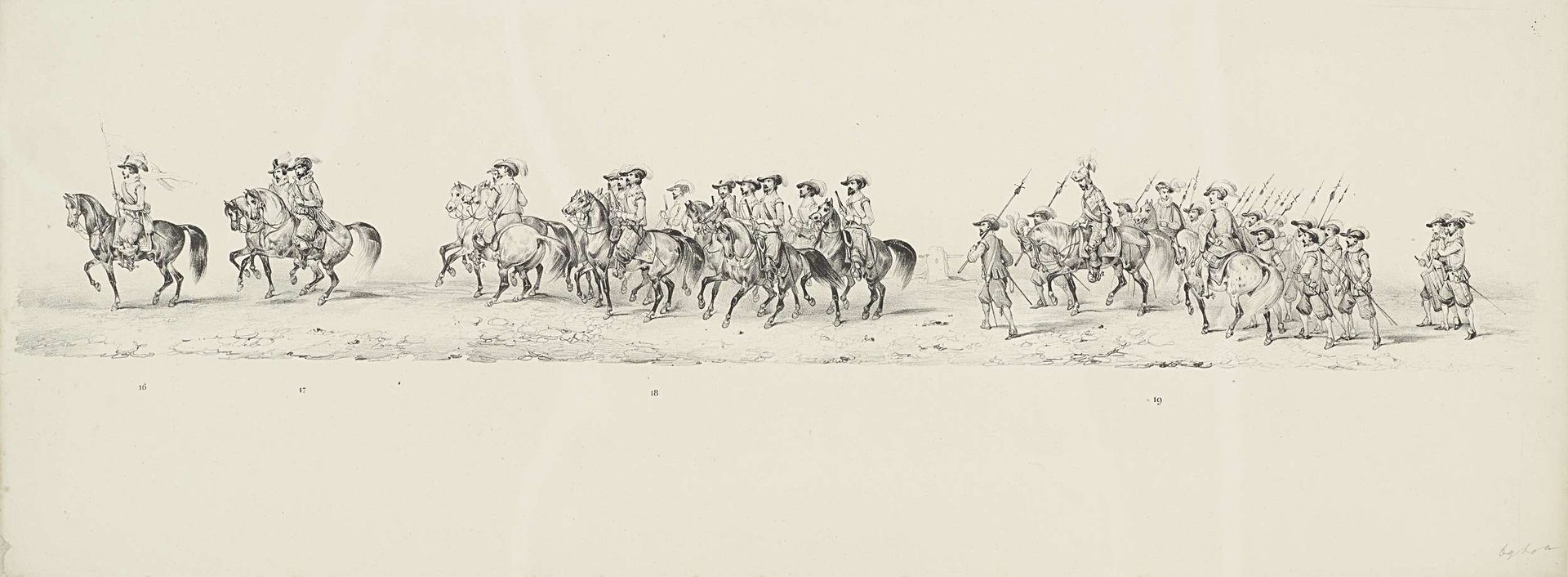
Victor Adam created this print in 1836, commemorating the bicentennial of Utrecht University. This event occurred within the context of the Netherlands, a constitutional monarchy seeking to establish a strong national identity following the Napoleonic era. Note how the artist depicts the procession, a carefully staged performance meant to project power and tradition. The riders on horseback, likely members of the academic and political elite, are presented in a way that emphasizes their authority and connection to the university's history. But who is missing from this picture? The working class, women, and people of color would have been excluded from such displays of power, their stories absent from the dominant narrative being constructed. Consider how the print might have been received by different groups within Dutch society. For the elite, it likely served as a celebration of their status and the university's importance. For others, it may have been a reminder of their exclusion from the corridors of power.
Historische optocht bij het tweede eeuwfeest van de Utrechtse Hogeschool, 1836 (plaat 5)
1837

Victor Adam
1801 - 1866Location
RijksmuseumArtwork details
- Medium
- drawing, pen
- Dimensions
- height 240 mm, width 640 mm
- Location
- Rijksmuseum
- Copyright
- Rijks Museum: Open Domain
Tags
Comments
Share your thoughts
About this artwork
Victor Adam created this print in 1836, commemorating the bicentennial of Utrecht University. This event occurred within the context of the Netherlands, a constitutional monarchy seeking to establish a strong national identity following the Napoleonic era. Note how the artist depicts the procession, a carefully staged performance meant to project power and tradition. The riders on horseback, likely members of the academic and political elite, are presented in a way that emphasizes their authority and connection to the university's history. But who is missing from this picture? The working class, women, and people of color would have been excluded from such displays of power, their stories absent from the dominant narrative being constructed. Consider how the print might have been received by different groups within Dutch society. For the elite, it likely served as a celebration of their status and the university's importance. For others, it may have been a reminder of their exclusion from the corridors of power.
Comments
Share your thoughts