About this artwork
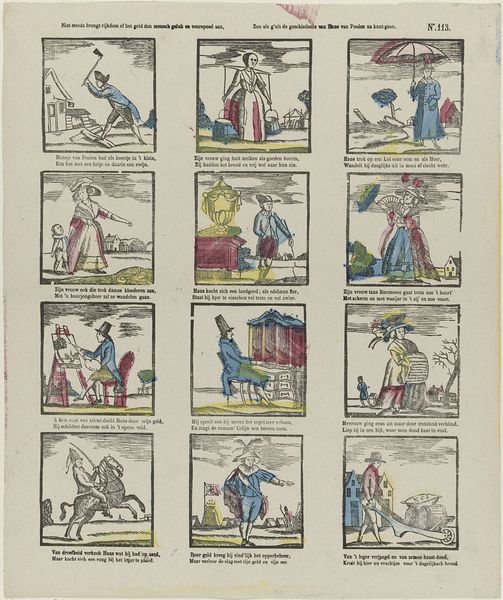
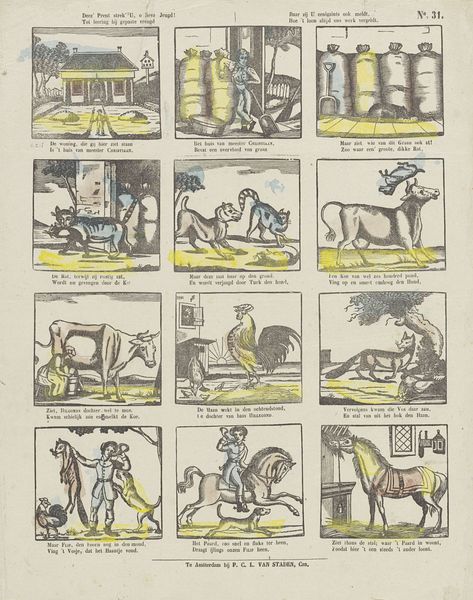
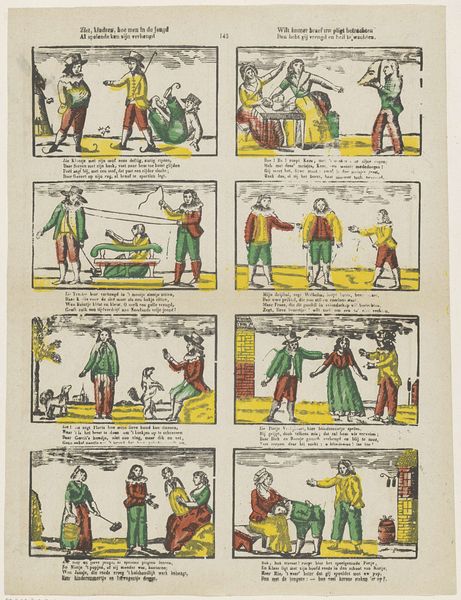
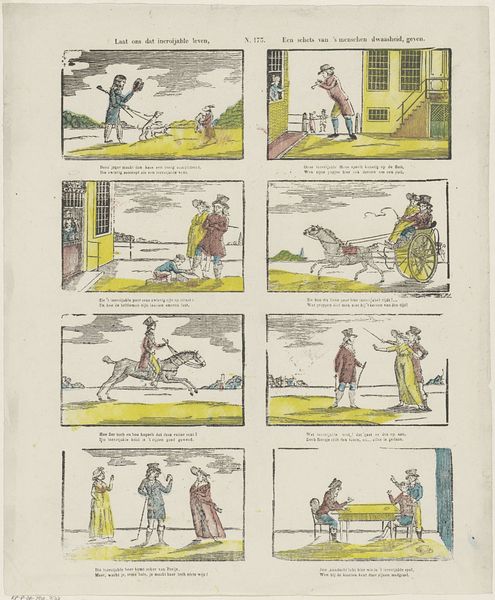
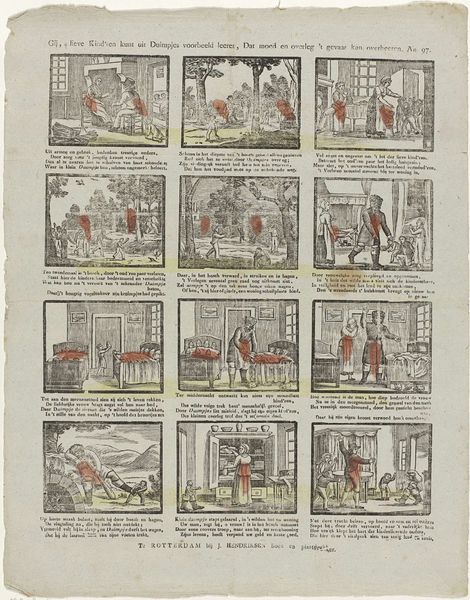
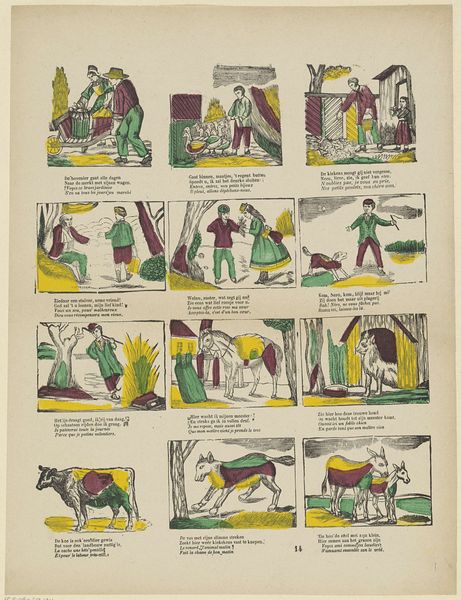
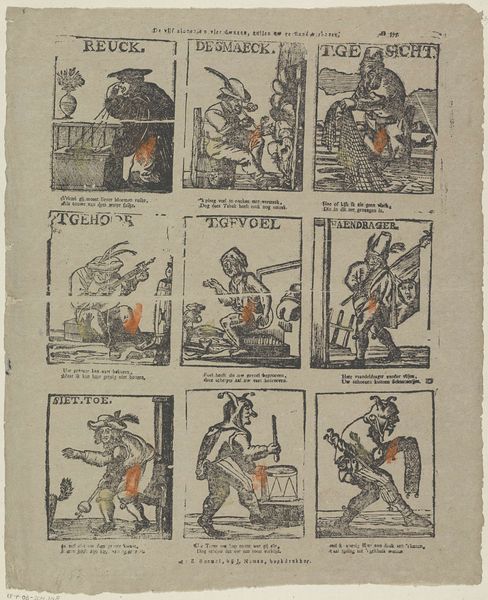
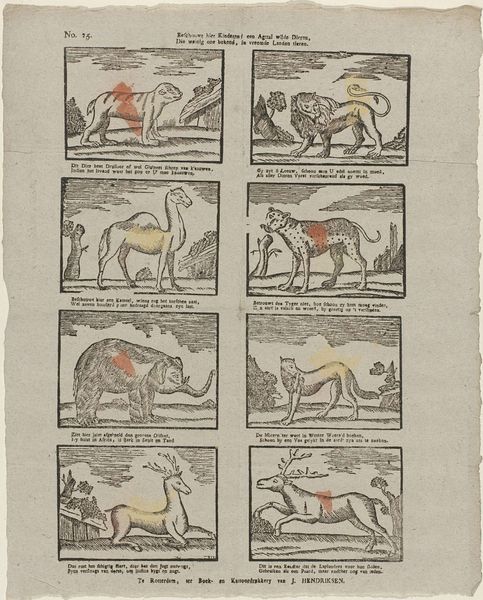
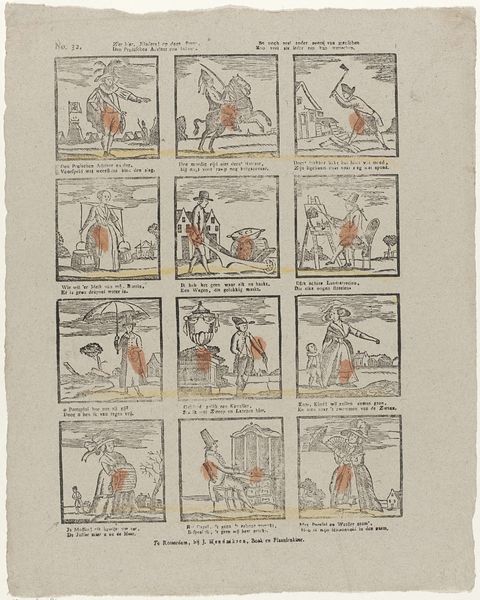
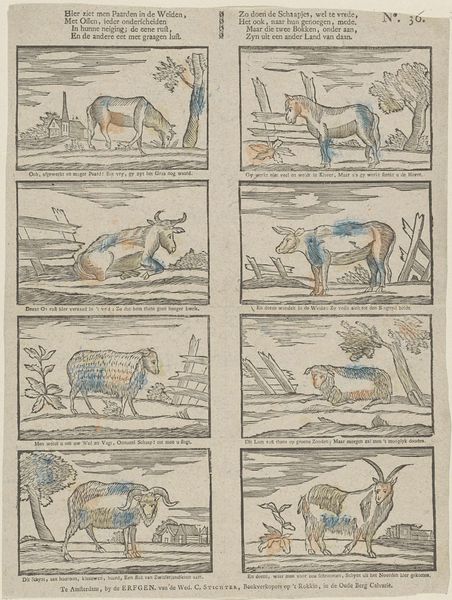
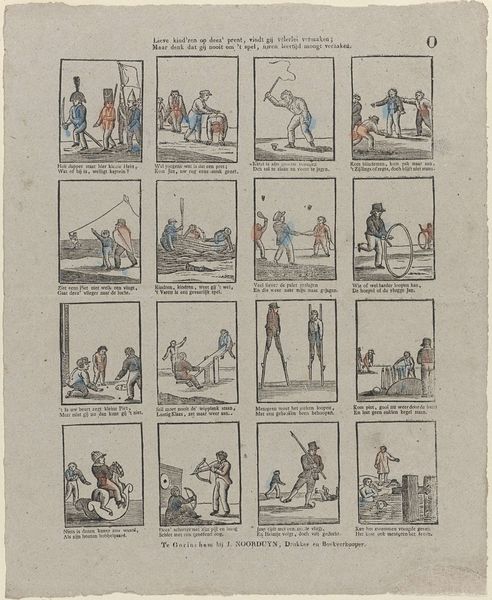
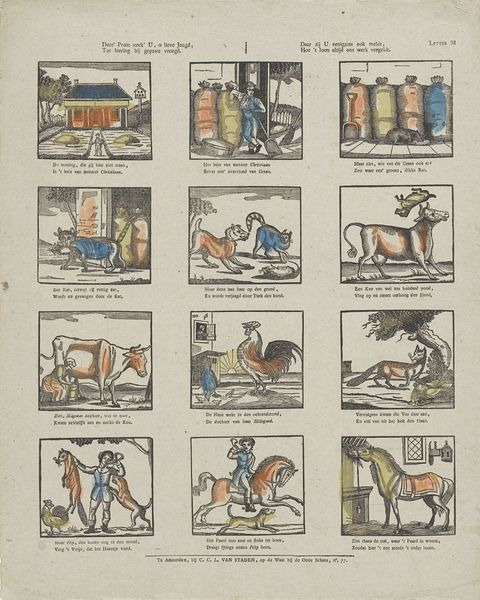
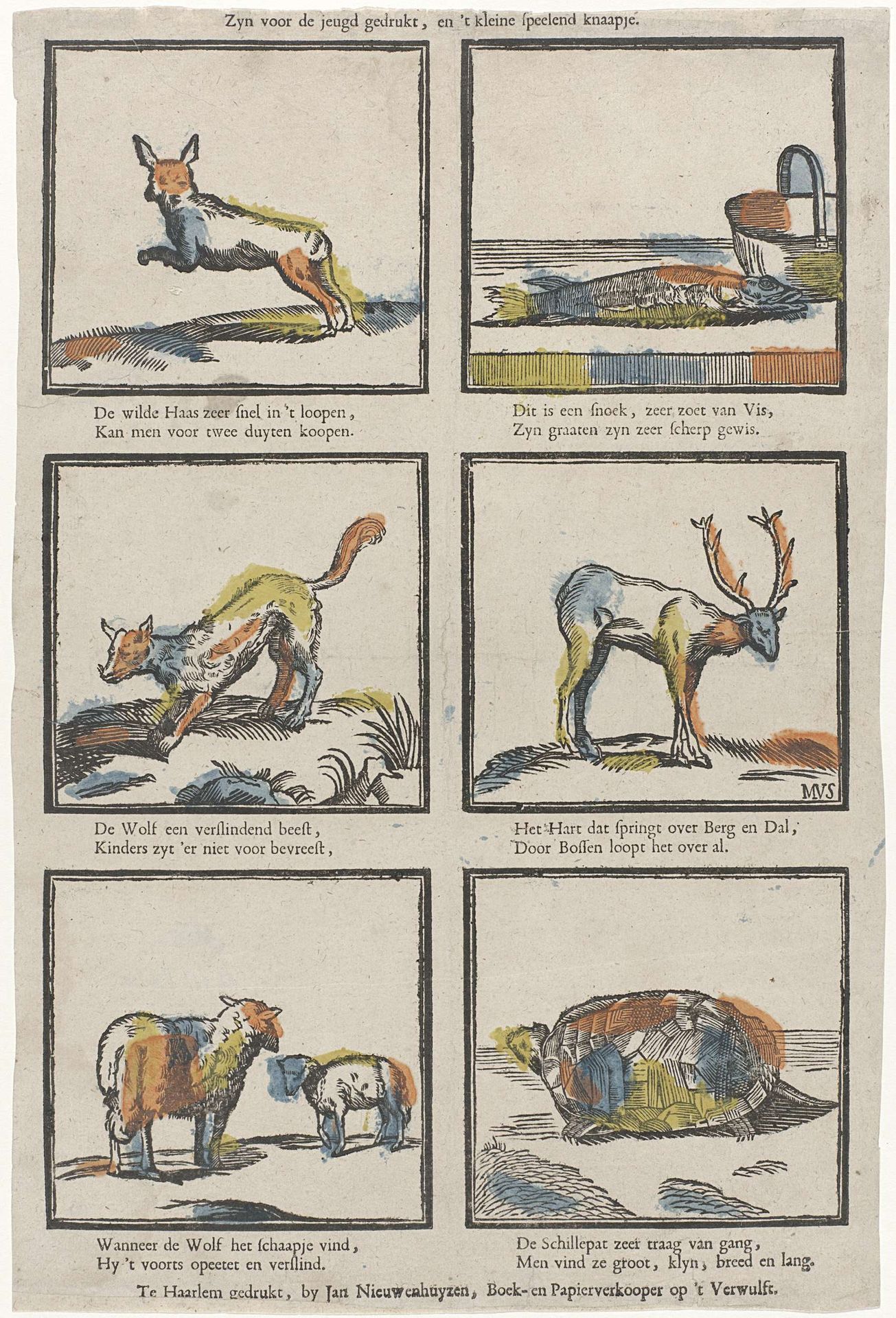
This image, printed by Jan Nieuwenhuyzen in Haarlem, is made from paper, ink, and a printing press. These were the tools of mass communication in the 18th century. The print features six panels depicting animals, accompanied by moralizing Dutch verses. The method of production has a profound influence on its aesthetic. Note the black lines that crisply define each figure and the blocks of color that have been manually applied to each. This kind of image was relatively cheap to produce, and was marketed toward children. The animals depicted – fox, fish, wolf, deer, sheep, and turtle – are presented as allegorical figures that point to the social conditions of the time. Each image subtly encodes questions of labor, politics, and consumption. Ultimately, the meaning of this artwork rests not only in its imagery, but also in the social and economic context of its making. It calls for us to reconsider the boundaries between commerce, craft and fine art.
(...) / Zyn voor de jeugd gedrukt, en 't kleine speelend knaapje
1743 - 1758

Jan Nieuwenhuyzen
1724 - 1806Location
RijksmuseumArtwork details
- Medium
- print, engraving
- Dimensions
- height 389 mm, width 259 mm
- Location
- Rijksmuseum
- Copyright
- Rijks Museum: Open Domain
Tags
Comments
Share your thoughts
About this artwork
This image, printed by Jan Nieuwenhuyzen in Haarlem, is made from paper, ink, and a printing press. These were the tools of mass communication in the 18th century. The print features six panels depicting animals, accompanied by moralizing Dutch verses. The method of production has a profound influence on its aesthetic. Note the black lines that crisply define each figure and the blocks of color that have been manually applied to each. This kind of image was relatively cheap to produce, and was marketed toward children. The animals depicted – fox, fish, wolf, deer, sheep, and turtle – are presented as allegorical figures that point to the social conditions of the time. Each image subtly encodes questions of labor, politics, and consumption. Ultimately, the meaning of this artwork rests not only in its imagery, but also in the social and economic context of its making. It calls for us to reconsider the boundaries between commerce, craft and fine art.
Comments
Share your thoughts