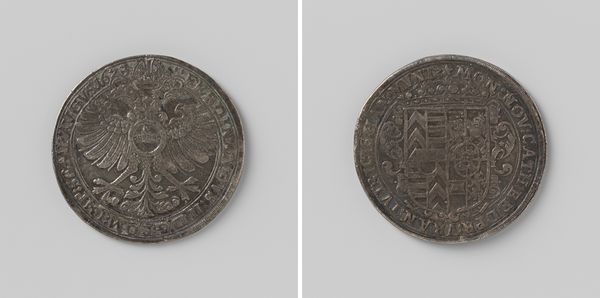
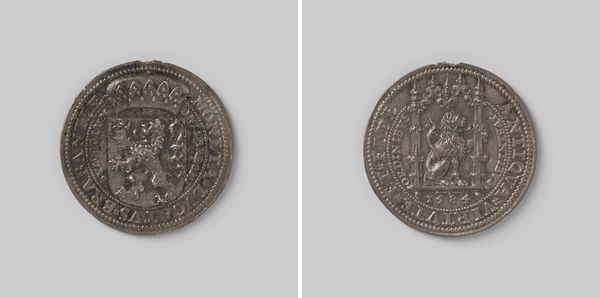
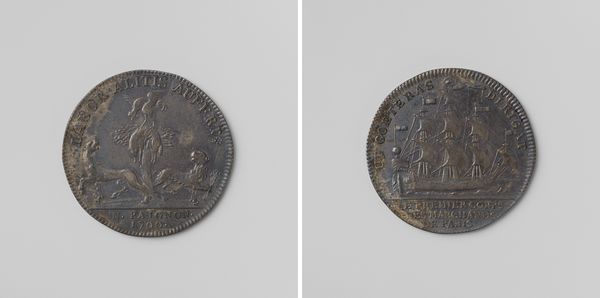
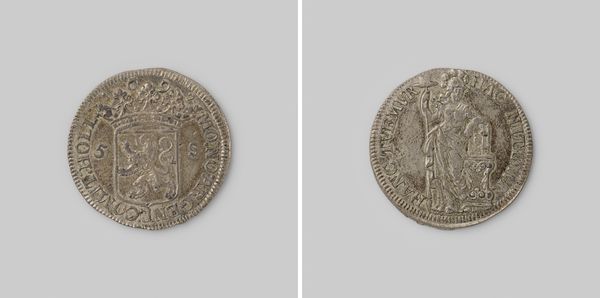
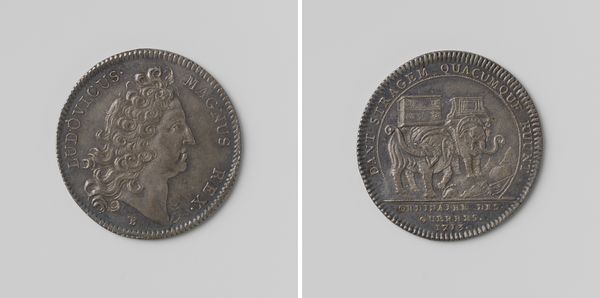
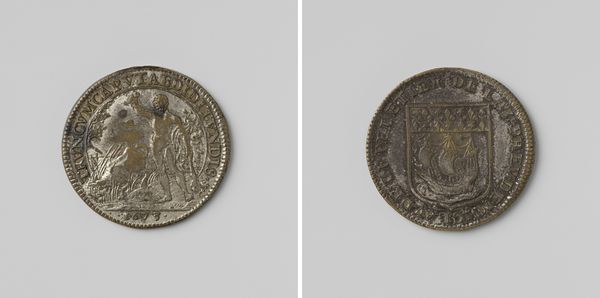
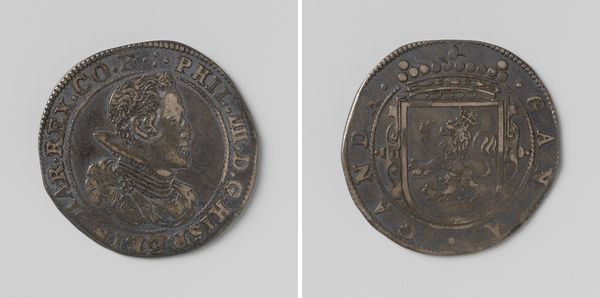
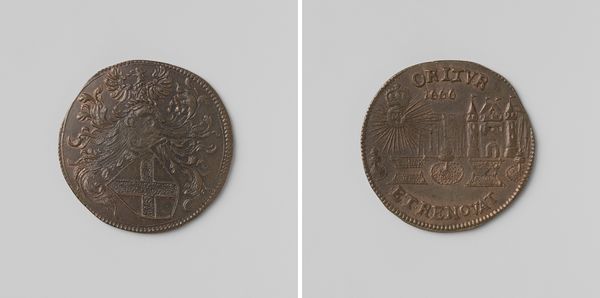
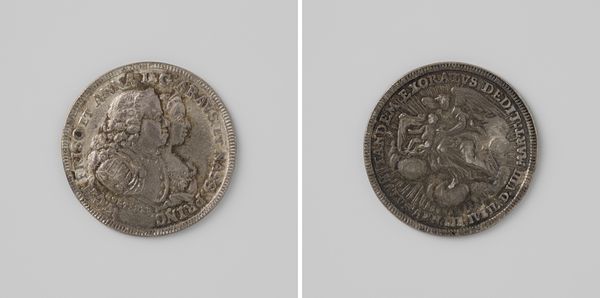
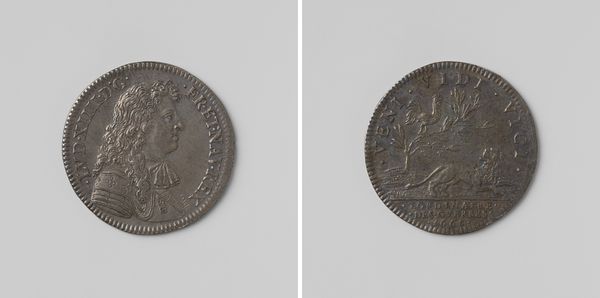
Huwelijk van Lodewijk XIV en Maria Theresia, koning en koningin van Frankrijk, penning uitgestrooid onder de aanwezigen 1660
0:00
0:00

print, metal, sculpture
#
portrait
#
baroque
# print
#
metal
#
sculpture
#
sculpture
#
history-painting
Dimensions: diameter 2.7 cm, weight 7.26 gr
Copyright: Rijks Museum: Open Domain
Curator: Before us we have a medal from 1660, crafted to commemorate the wedding of Louis XIV and Maria Theresa. It was designed by Jean Warin, a prominent sculptor and medalist of the era. Editor: It feels incredibly austere for a wedding, doesn't it? Cold, metallic... not exactly celebratory. I wonder if that was intentional? Curator: The solemnity comes, I think, from the medium. Consider the sharp delineation of line and the incised details; the profile portraits are crisp, precise. Warin's mastery is evident in the delicate rendering of their features. Editor: True, their individual likenesses are captured rather nicely. But it still lacks warmth. What about the imagery on the reverse? It appears to be rain falling upon... land? Curator: Indeed. It's an allegory. The inscription reads "NON LETIOR ALTER," meaning "No other will be more fruitful." The rain symbolizes prosperity and the promise of a fruitful union, secured by this political alliance. Louis' marriage to Maria Theresa, after all, consolidated power and ensured stability. Editor: So, a public relations exercise cast in metal, literally. The medal wasn't merely celebratory, it was a piece of statecraft designed to broadcast power and continuity. I find that fascinating; such objects are very revealing. Curator: Precisely. Notice too the conscious employment of Baroque aesthetics, common for the time; its emphasis on grandeur to further express monarchial authority. Editor: So much encoded meaning in a small object. The coldness, now, I interpret as intentional gravitas... a visual strategy emphasizing power over warmth. Thanks, I think I have a much clearer idea now. Curator: And I hope listeners also now see how intertwined art and historical circumstance could become in defining visual presentation and expression.
Comments
No comments
Be the first to comment and join the conversation on the ultimate creative platform.
 Collect
 React
React Comment
More like this