About this artwork
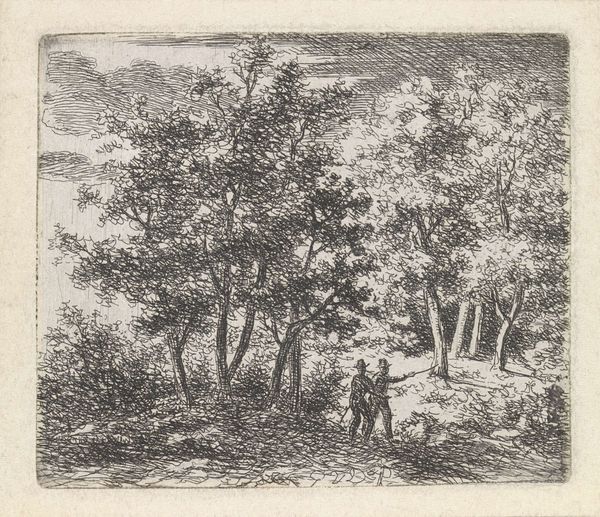
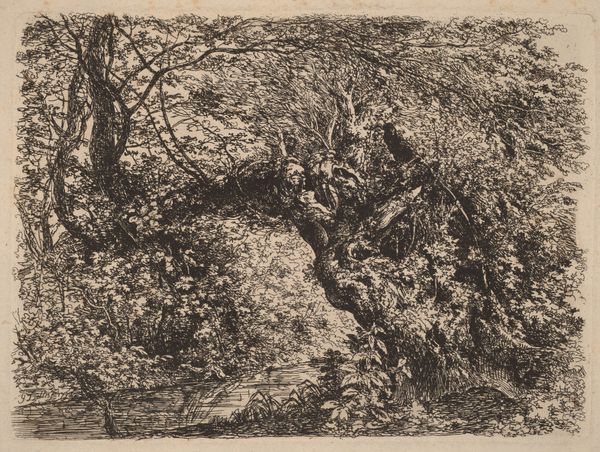
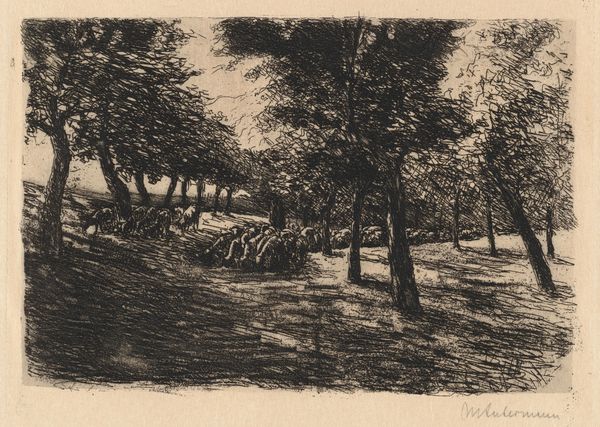
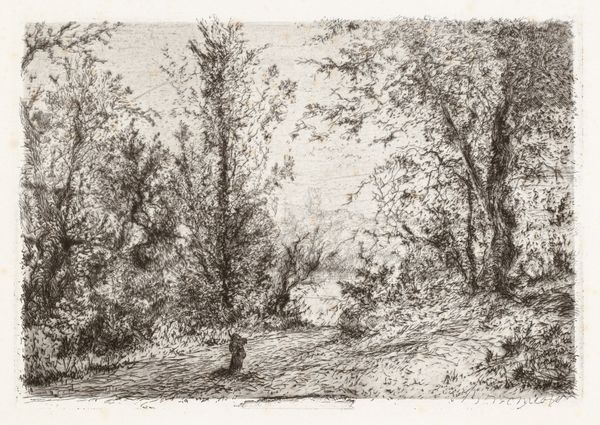
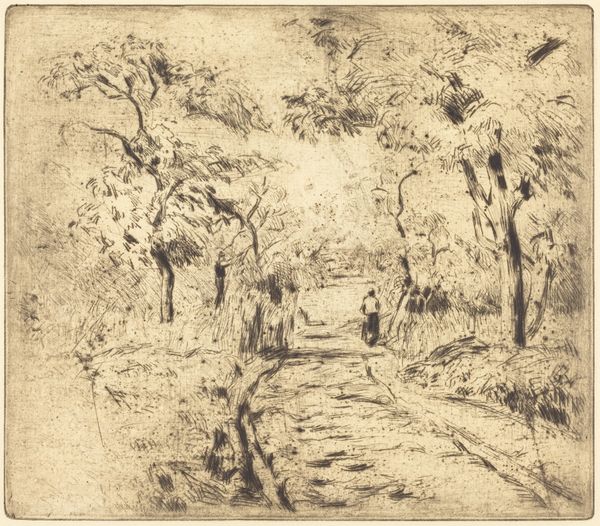
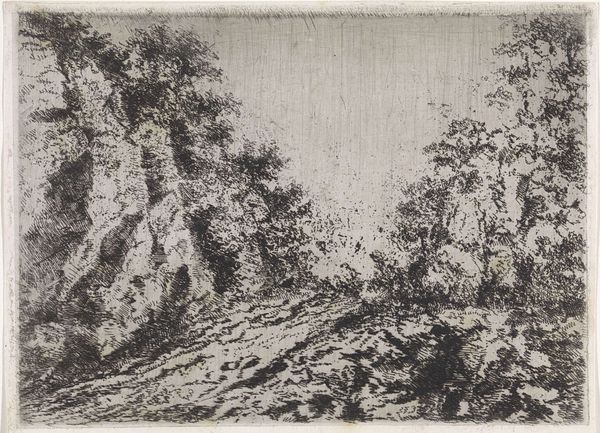
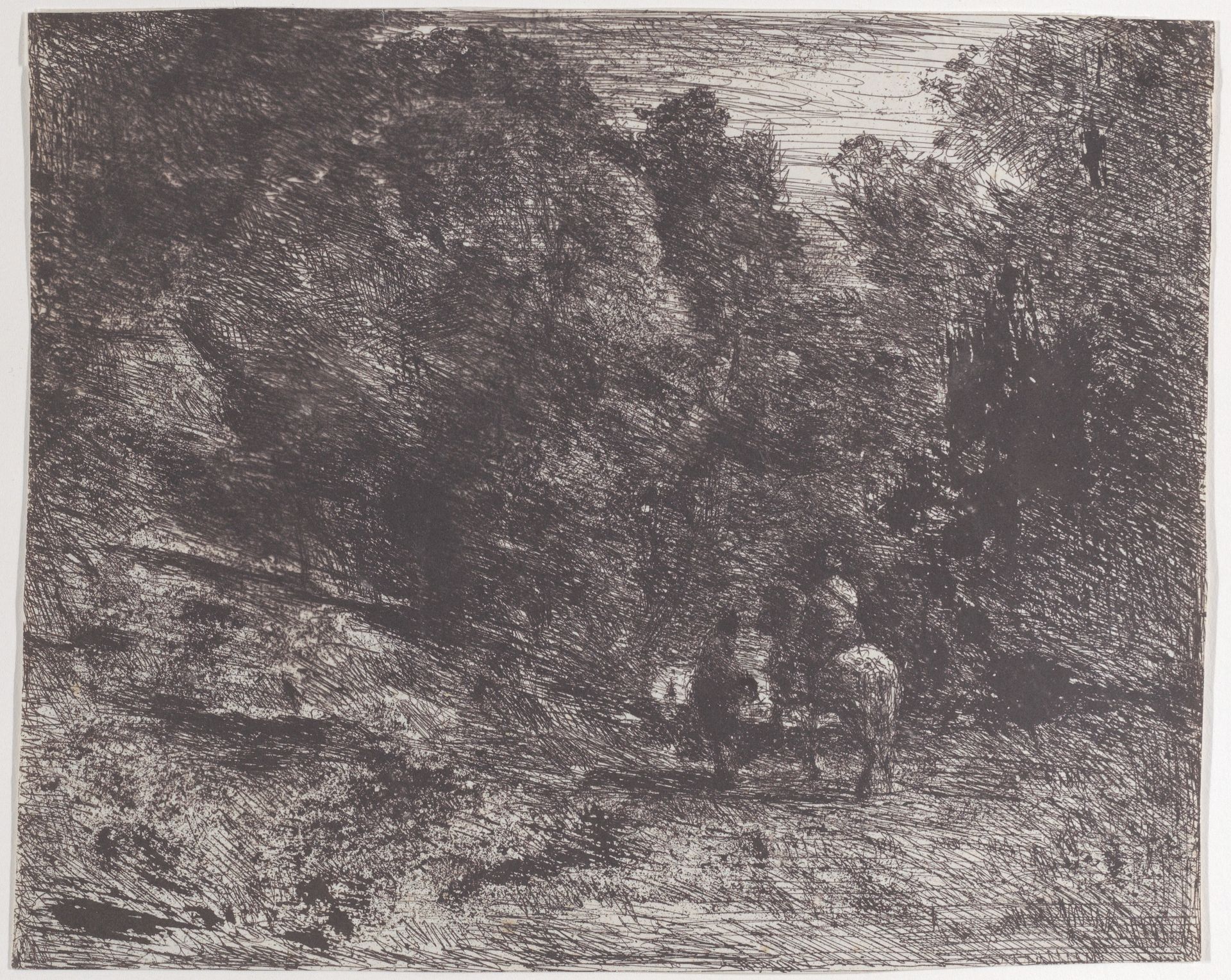
This print, "Two Travelers in a Forest," was made by Camille Corot, sometime in the mid-19th century. Corot lived through considerable political upheaval in France. Revolutions and shifting social structures were a constant backdrop to his life. Here, a horse and rider pause alongside a figure on foot, deep within a densely wooded area. The forest, in its romantic appeal, could almost be said to be the main subject. The figures seem secondary, rendered with less detail. The print captures a moment of respite. But, consider the social implications of travel in this era; the stark realities of class and access. The rider on horseback, a symbol of privilege, is contrasted with the pedestrian, suggesting a social hierarchy inherent even in leisure. Despite its tranquil surface, this work subtly reflects the complex social dynamics of 19th-century France, inviting us to consider the unseen stories and inequalities that shape our perception of even the simplest pastoral scene.
Two Travelers in a Forest (Le Cavalier en forêt et le piéton)
1854


Artwork details
- Dimensions
- Sheet (Trimmed): 5 3/4 × 7 3/8 in. (14.6 × 18.7 cm)
- Location
- Metropolitan Museum of Art, New York, NY
- Copyright
- Public Domain
Comments
Share your thoughts
About this artwork
This print, "Two Travelers in a Forest," was made by Camille Corot, sometime in the mid-19th century. Corot lived through considerable political upheaval in France. Revolutions and shifting social structures were a constant backdrop to his life. Here, a horse and rider pause alongside a figure on foot, deep within a densely wooded area. The forest, in its romantic appeal, could almost be said to be the main subject. The figures seem secondary, rendered with less detail. The print captures a moment of respite. But, consider the social implications of travel in this era; the stark realities of class and access. The rider on horseback, a symbol of privilege, is contrasted with the pedestrian, suggesting a social hierarchy inherent even in leisure. Despite its tranquil surface, this work subtly reflects the complex social dynamics of 19th-century France, inviting us to consider the unseen stories and inequalities that shape our perception of even the simplest pastoral scene.
Comments
Share your thoughts