1497
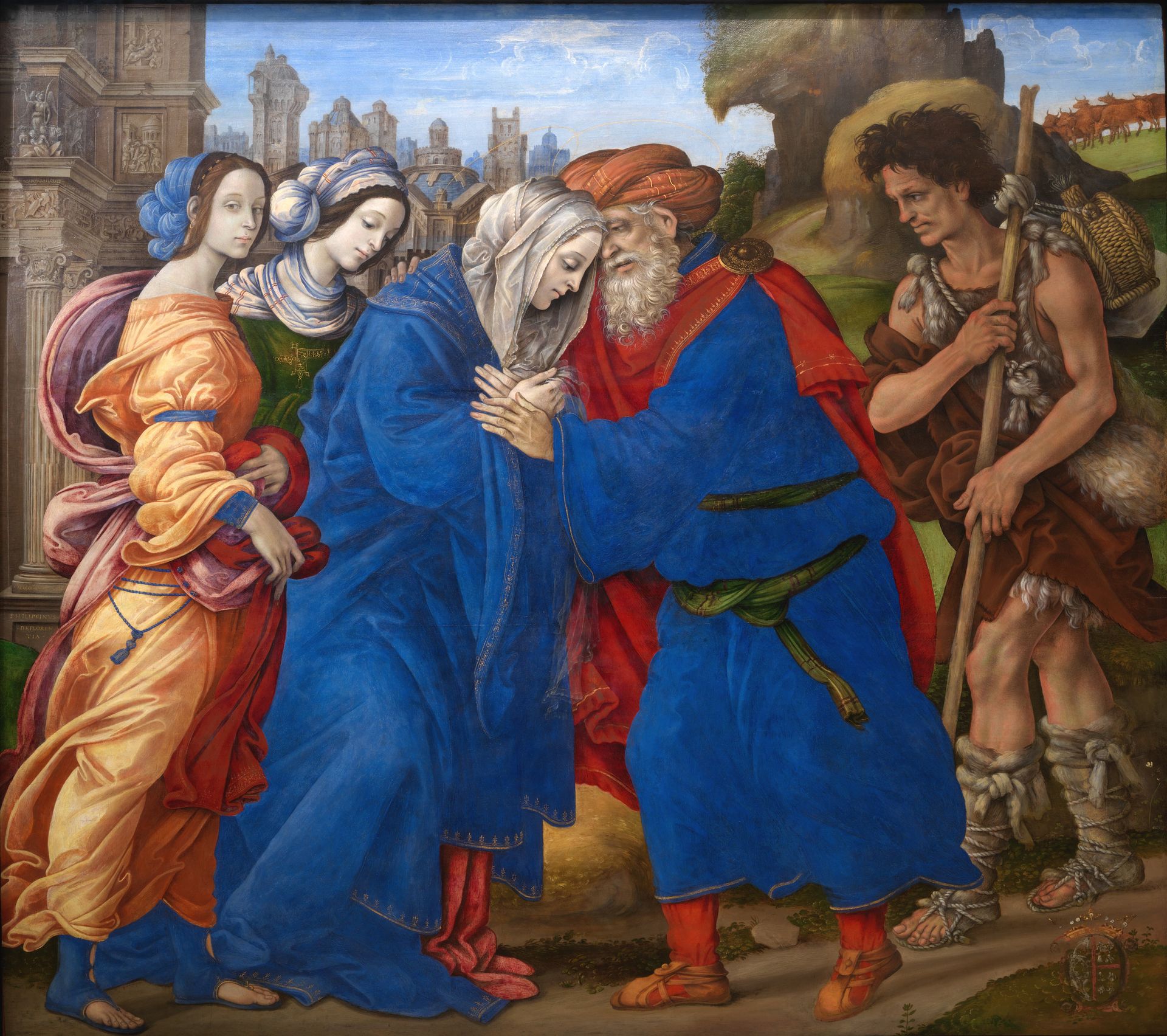
The Meeting of Joachim and Anne outside the Golden Gate of Jerusalem


Listen to curator's interpretation
Curatorial notes
Curator: Welcome. Here we have Filippino Lippi’s 1497 oil-on-wood painting, "The Meeting of Joachim and Anne outside the Golden Gate of Jerusalem." Editor: It's beautiful. It evokes a sense of profound serenity despite what I assume is a historical subject laden with potential drama. The colours are surprisingly vibrant. Curator: Indeed, Lippi captures a pivotal moment from the apocryphal Gospel of James – the reunion of Joachim and Anne. Barren until their later years, their embrace symbolizes hope and the imminent conception of Mary. The subject matter would have resonated deeply within the prevailing patriarchal framework of Florentine society during the Quattrocento period in that only women could produce future family heirs, thereby granting men status within their respective lineages. Editor: Right, and notice how Lippi has rendered this meeting not as a spectacle but an intimate and rather ordinary affair. The gazes of the women surrounding Anne seem filled with empathy rather than reverence or awe. To your point about lineage, this composition, in the absence of strong emotion, shifts its focus from mere reproduction onto what might otherwise be considered everyday relationships in Renaissance Italy. Curator: And one can’t ignore the setting, carefully situated just outside Jerusalem, marking a transition from worldly life, depicted to the left with architectural motifs, to spiritual life in the right, implied by a passing shepherd leading his flock into verdant and rolling hills. Editor: Yes, it almost suggests a journey beyond constraints imposed by societal structures towards a world of potential change. And consider how Lippi subverts this trope by presenting these biblical figures not as divinely chosen subjects but rather subjects embedded within very real, ordinary lives of men and women seeking self-determination. Curator: That's an astute reading. Lippi, in portraying Joachim and Anne's meeting, uses a realistic style, embedding the painting's overall theme with very human characteristics, challenging the perception of divine events as entirely removed from the common human experience. Editor: The painting prompts me to reflect on how individuals are often at odds between external expectations, such as familial duties in 15th century Italy, and internal aspirations of pursuing other types of life-affirming opportunities beyond just family inheritance. Curator: By intertwining elements of social realism and spiritual narrative, this work not only reflects its time but offers enduring commentary on individual journeys of the interior self, framed within historical imperatives. Editor: It seems to encourage ongoing reflections on themes of freedom and expectation and on individual identity within wider community narratives.